







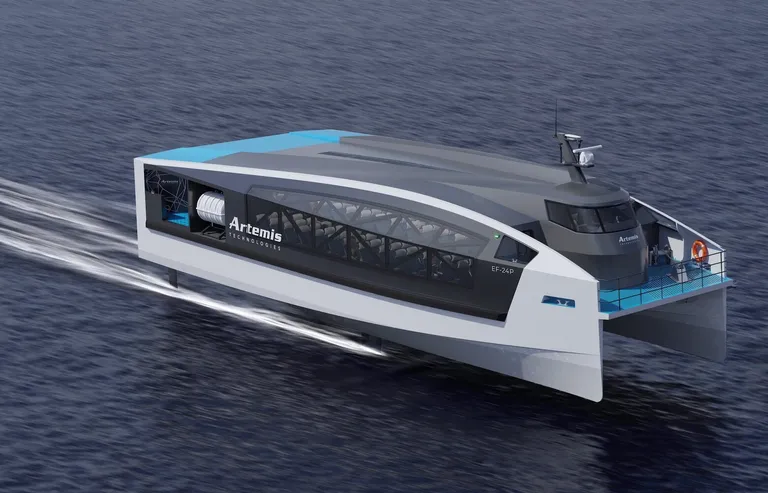
In the 1800s, ferries thrived as essential modes of transportation, with steamboats lining the coasts to carry passengers. However, their prominence diminished as trains and automobiles emerged. Today, urban congestion and a renewed interest in waterfront areas are sparking a ferry renaissance, offering commuters an appealing alternative that is now evolving with innovative technology and sustainable solutions.


I. The Modern Appeal of Ferry Commutes
1. Ferries Regain Popularity
As urban areas experience worsening traffic and waterfront zones are revitalized, ferries are becoming an attractive option again. Operators like Uber Boat by Thames Clippers view the waterways as a “blue superhighway” that remains underutilized.


2. Passenger Satisfaction Surges
In major cities such as New York, San Francisco, Stockholm, and Auckland, ferry commuting has surpassed other forms of public transit in customer satisfaction. Ferries offer conveniences like spacious seating, room for bicycles, and scenic skyline views. In fact, they were the first public transport mode to recover to pre-pandemic ridership levels.
II. Overcoming Speed and Sustainability Challenges
1. The Need for Speed
Despite their perks, ferries still face one major hurdle—speed. Commuters expect rapid transit, which diesel-powered ferries struggle to provide. According to Jakob Kuttenkeuler, a naval architecture professor at Sweden’s KTH Royal Institute of Technology, speed is a top priority for travelers.
2. The Electric Hydrofoil Solution
To meet these demands, Stockholm has introduced the world’s first electric hydrofoil ferry, developed by Swedish startup Candela. This 30-seat vessel, the P-12, has dramatically reduced the travel time between Ekero and Stockholm’s City Hall from nearly an hour to just 30 minutes across an 11-mile route.

3. Environmental and Energy Advantages
Beyond speed, the P-12 is revolutionizing ferry travel with its eco-friendly performance. Stockholm’s public transport authority (SL) reports that the hydrofoil produces 95% fewer emissions and consumes 80% less energy than traditional diesel ferries.
III. The Rise of Hydrofoil Technology
1. Expanding Beyond Commuting
Hydrofoil technology is gaining ground not just in public transit, but also in competitive sports. In London, backers of the E1 electric boat racing series showcased their hydrofoil-equipped vessels on the River Thames to highlight their performance and minimal environmental impact.
2. Sustainable Innovation in Motion
Supporters argue that hydrofoils’ efficiency and green credentials will attract more users. Gustav Hasselskog, Candela’s founder and CEO, was inspired to pursue clean marine technology after realizing his speedboat used 15 times more fuel than his car. This prompted him to seek more sustainable, high-speed alternatives.
3. The Science Behind Hydrofoils
Hydrofoils are wing-like structures beneath the boat’s hull that lift the vessel above water as it speeds up—similar to how airplane wings work in air. This lift reduces water resistance, significantly boosting speed and energy efficiency.
IV. From Past to Present: A Hydrofoil Comeback
1. A Once-Forgotten Technology Returns
Hydrofoils were previously used in the 1980s but faded due to high operational costs. Kuttenkeuler, who also invented the Efoil (an electric hydrofoil surfboard), noted that today’s advancements in materials, sensors, and digital controls have sparked a resurgence.
2. Seamless, Comfortable Travel
Modern electric hydrofoils offer more than environmental benefits. They use compact batteries, which lessen the need for extensive charging infrastructure. Their wave-free movement prevents shoreline erosion and disturbances to moored boats or windsurfers. Controlled by onboard computers, the ferries maintain stability and minimize seasickness.
Conclusion
The return of ferry commuting, powered by cutting-edge hydrofoil technology, represents a blend of nostalgia and innovation. As cities aim for greener, faster, and more pleasant transit solutions, electric hydrofoils may redefine how people experience daily travel across water.








