








After a prolonged diplomatic freeze, China and India have taken a significant step toward defusing one of Asia’s most volatile flashpoints. On Wednesday, top officials from both countries convened in Beijing for the first formal border talks in five years, reviving a process aimed at resolving a decades-old territorial conflict.


I. Reopening Lines of Communication
1. First Border Dialogue Since 2019
Chinese Foreign Minister Wang Yi and Indian National Security Adviser Ajit Doval resumed their roles as special representatives on the border issue, meeting face-to-face for the first time since late 2019. This engagement marks a crucial shift in the bilateral dynamic following years of simmering tensions.

2. Background of the Dispute
The meeting came against the backdrop of a deadly 2020 clash in the Galwan Valley, where a hand-to-hand fight resulted in the deaths of at least 20 Indian soldiers and four Chinese troops. That incident significantly deteriorated relations, freezing high-level dialogue and escalating military deployments along the Line of Actual Control (LAC), the unofficial but disputed boundary between the two nuclear-armed nations.
II. Concrete Commitments and Strategic Intent
1. Renewed Agreement on Disengagement
Both sides reaffirmed their dedication to implementing a mutual disengagement agreement reached in October. They underscored the importance of ensuring that ongoing border tensions do not hinder the broader relationship. According to China’s Foreign Ministry, the two countries will seek a “fair, reasonable and mutually acceptable” resolution to the territorial dispute.

2. Emphasis on Peace and Stability
The joint statements from both capitals highlighted a shared desire to preserve stability in the border areas. Beijing emphasized that managing the dispute effectively was key to the overall health of bilateral relations, while New Delhi noted the necessity of maintaining calm on the ground to enable normal diplomatic progress.
3. Rebuilding Confidence Through People-to-People Initiatives
The two representatives also agreed to boost civilian and cultural exchanges, including resuming pilgrimages by Indian nationals to Tibet and revitalizing border trade at the Nathula Pass in the Indian state of Sikkim. The resumption of these exchanges, paused during the standoff, is viewed as a symbolic step toward restoring mutual trust.
III. Strategic Recalibration Amid Geopolitical Realignments
1. A Region in Flux
This diplomatic revival takes place as China embarks on a broader campaign to repair ties with key US allies, including Japan and Australia. With Donald Trump set to return to the White House, the Indo-Pacific is becoming an increasingly contested geopolitical arena. Re-engagement with India—a major regional power—aligns with Beijing’s efforts to manage multiple fronts of strategic competition.
2. Xi-Modi October Meeting Set the Tone
Observers see this week’s meeting as a follow-up to the informal dialogue between President Xi Jinping and Prime Minister Narendra Modi in Russia last October during the BRICS summit. That encounter laid the groundwork for Wednesday’s talks by reaffirming the leaders’ commitment to long-term, strategic management of bilateral relations.
3. Learning From Past Escalations
The Indian side emphasized that lessons from the 2020 conflict should inform future approaches. According to India’s Foreign Ministry, both officials reviewed options to strengthen border management and prevent further confrontations in areas still classified as “buffer zones,” where previous patrol routes have been suspended.
IV. Historical Context and Lingering Frictions
1. A Disputed Frontier Since 1962
China and India share a 2,100-mile (3,379-kilometer) stretch of contested border, much of which remains undefined. The territorial dispute dates back to their 1962 war, and sporadic flare-ups have continued ever since. Despite numerous rounds of talks, many disagreements remain unresolved.
2. Military Buildup Continues
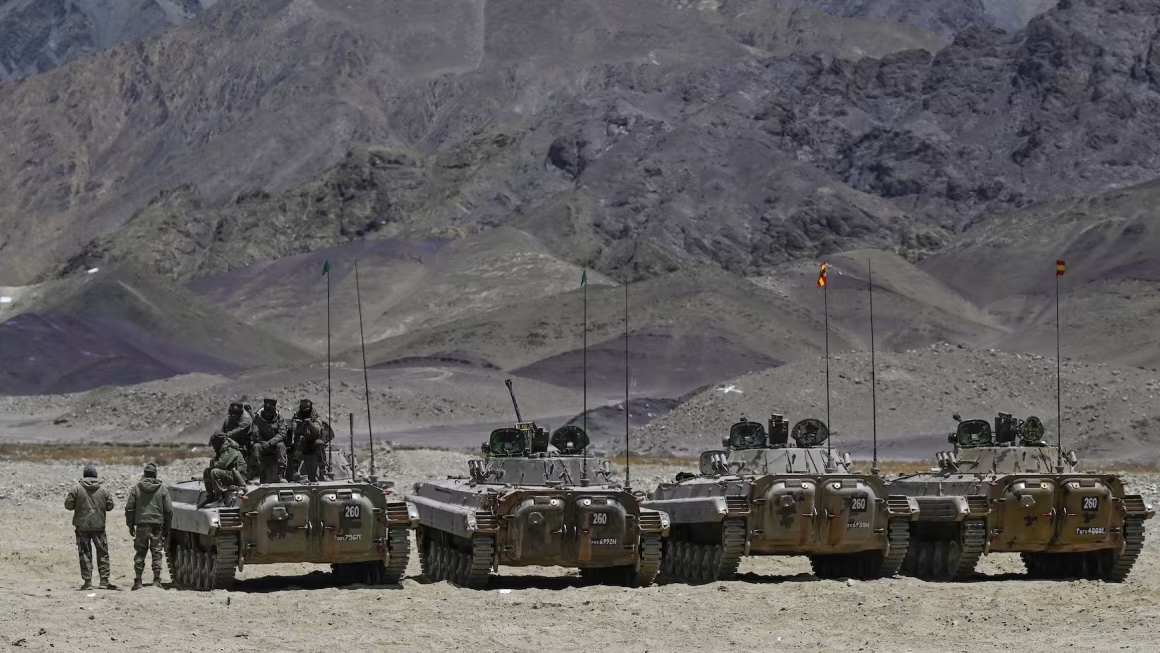
Even as diplomatic efforts proceed, both nations maintain a heavy military presence along the LAC. The physical and psychological scars of the 2020 Galwan Valley clash—considered the deadliest in decades—still loom large over any negotiations. Experts caution that progress in diplomacy must be matched by restraint on the ground.
3. Buffer Zones and Patrol Restrictions
One key issue still under discussion is the creation of buffer zones, areas where neither side is allowed to patrol. While these zones help avoid direct confrontations, they also signify a loss of operational control for both militaries, making them a point of contention in negotiations.
V. Diplomatic Outlook
1. A “Hard-Won” Return to Dialogue
Wang Yi described the resumption of talks as a “timely and powerful” move to implement the October consensus reached by Xi and Modi. He stressed that the current global climate made this dialogue particularly meaningful and emphasized the need for strategic foresight in managing relations between the two rising powers.
2. Managing Expectations
Despite the positive tone, analysts caution that major breakthroughs remain elusive. The dialogue’s value lies more in signaling mutual willingness to avoid escalation than in resolving every aspect of the territorial dispute. Both governments appear focused on stabilizing ties, not necessarily settling all differences.
3. Mutual Interests in Stability
As regional and global dynamics grow more complex, both Beijing and New Delhi recognize that unchecked tensions could have far-reaching consequences. With economic growth, regional influence, and national security at stake, neither side benefits from prolonged hostility.
Conclusion
The resumption of high-level border talks between China and India represents a cautious yet meaningful step toward easing tensions that have threatened regional stability for years. While many challenges remain unresolved, the commitment to dialogue and disengagement is a critical signal of shared interest in maintaining peace and rebuilding trust. As both nations navigate an evolving global landscape, their ability to manage this sensitive relationship will remain essential to the broader balance of power in Asia.








