






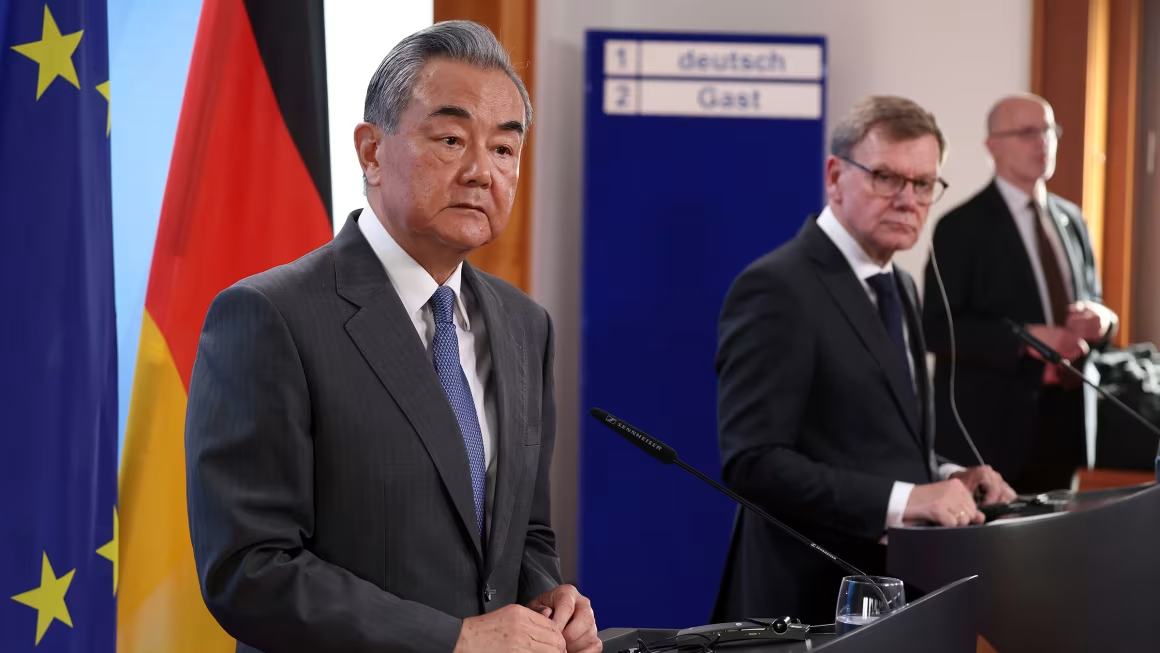
During a recent closed-door meeting with EU foreign policy chief Kaja Kallas in Brussels, Chinese Foreign Minister Wang Yi reportedly stated that Beijing cannot allow Russia to lose its war in Ukraine. This revelation, according to an official familiar with the discussion, contradicts China’s public claims of neutrality and highlights Beijing’s deeper geopolitical concerns—specifically, that a Russian defeat could shift the United States’ strategic focus entirely onto China.

I. Wang Yi’s Private Remarks Contradict Public Neutrality
1. Prolonged Conflict May Serve China’s Interests
In what was described as a four-hour conversation marked by candid yet respectful exchanges, Wang Yi expressed concerns that a loss for Russia would embolden the U.S. to intensify its rivalry with China. This position suggests that China may benefit from a prolonged conflict in Ukraine, as it diverts American resources and attention away from East Asia.

2. China’s Official Stance Remains Unchanged
When asked about the meeting during a Friday press briefing, Chinese Foreign Ministry spokesperson Mao Ning reiterated China’s public position: Beijing is not directly involved in the Ukraine conflict and continues to advocate for peace through negotiations and a swift ceasefire. “China’s position is objective and consistent,” she stated.

II. Beijing’s Dual Approach to the War
1. Strategic Alignment with Russia
Despite portraying itself as a neutral actor, Beijing has maintained strong ties with Moscow. Just weeks before Russia’s full-scale invasion of Ukraine, President Xi Jinping announced a “no limits” partnership with Russia. Since then, both political and economic collaboration between the two nations has intensified.
2. Peacebroker Image vs. Geopolitical Stakes
While China has offered to mediate peace, critics argue that it has significant geopolitical investments in Russia’s survival. CNN and other outlets have reported that China’s primary concern may not be peace in Ukraine, but the preservation of a strategic counterweight to the United States.
III. Accusations of Indirect Chinese Involvement
1. Technology and Component Supply Allegations
Although China denies providing military support to Russia, Ukraine has imposed sanctions on several Chinese firms accused of supplying drone parts and missile technology. Following a major drone attack on Kyiv, Ukraine’s Foreign Minister Andrii Sybiha posted images of drone debris allegedly labeled “Made in China,” dated June 20.
2. Diplomatic Fallout and Regional Security
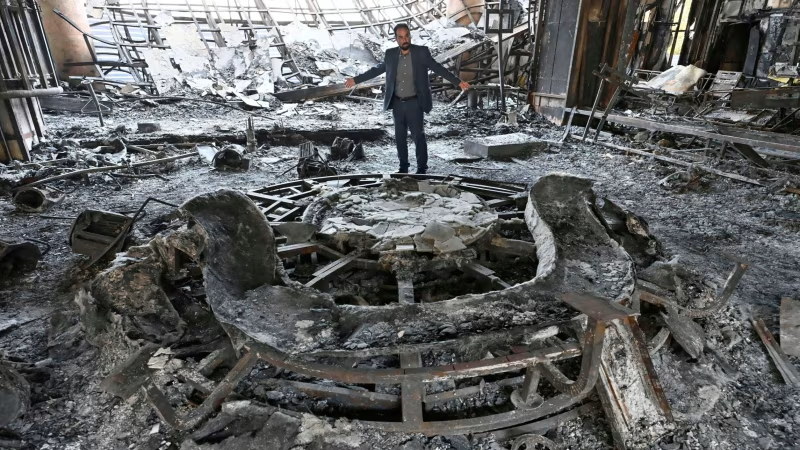
Sybiha also noted that a Russian missile strike on Odesa had caused minor damage to the Chinese Consulate General. He described it as a powerful metaphor for the expanding scope of the war, highlighting Russia’s use of weapons from Iran and North Korea, along with alleged supplies from Chinese manufacturers. “Security in Europe, the Middle East, and the Indo-Pacific is deeply interconnected,” he stated.
3. Reports of Chinese Nationals Fighting
There have also been unverified claims that Chinese citizens are fighting alongside Russian forces in Ukraine. Beijing has categorically denied this and reiterated that Chinese nationals are prohibited from participating in any armed conflict.
Conclusion
China’s outward commitment to neutrality in the Ukraine war belies a more intricate geopolitical calculus. Privately, Chinese officials appear to see a Russian defeat as a strategic threat, one that could intensify U.S. pressure on Beijing. While publicly pushing for peace, China continues to walk a fine line—balancing diplomatic optics with its alliance with Moscow. As accusations of indirect support mount and diplomatic tensions grow, China’s role in the conflict appears far less neutral than its official statements suggest.