








In the face of rising global economic tensions and the imposition of US tariffs, the UK government has introduced a new trade plan designed to strengthen exports and shield domestic industries from potential threats. Business Secretary Jonathan Reynolds presented the strategy as a dual-purpose approach that aims to dismantle trade barriers abroad while simultaneously reinforcing the UK’s defences against market disruptions caused by cheap imports.

As international trade becomes increasingly complex, the UK’s strategy reflects both a proactive and reactive stance—seeking opportunities to expand while protecting vulnerable sectors from external shocks.

I. Strengthening Trade Offensively and Defensively
1. Export Support and Market Expansion
A key component of the government’s offensive trade policy is to provide stronger financial backing for exporters. To that end, UK Export Finance, the country’s export credit agency, will see its lending capacity increase from £60 billion to £80 billion. This significant boost is expected to empower UK businesses to compete more effectively on the global stage, particularly in emerging markets where access to financing can be a key determinant of success.
In addition to funding, exporters will also receive enhanced support in navigating international trade regulations. The goal is to simplify complex legal frameworks and make it easier for British firms to understand and comply with the varied trade laws of different countries.

2. Defending UK Industries From Import Pressure
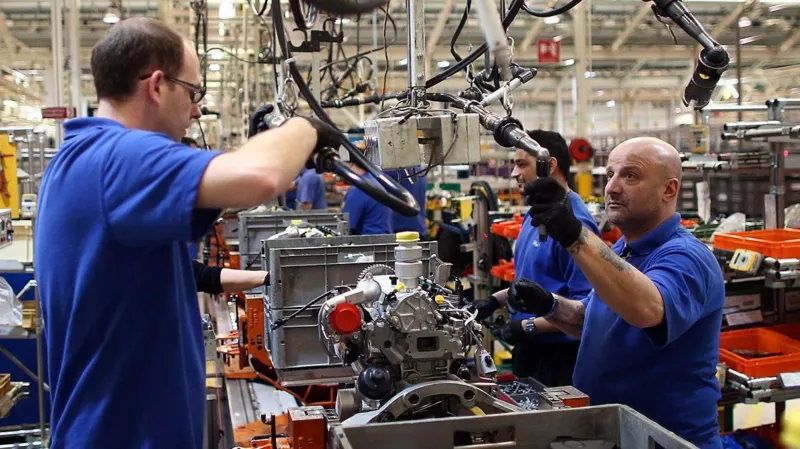
On the defensive front, the strategy acknowledges growing concerns that tariffs imposed by the US—especially on steel and automotive goods—could lead to a redirection of these products to UK markets. Industries worry that cheaper cars and steel originally bound for the United States could end up flooding the UK, undercutting local producers.
To address this, the government is reviewing its current safeguard measures, particularly those protecting the steel sector. Existing protections are set to expire in 2026, prompting officials to launch a formal call for evidence from domestic steel manufacturers to assess future needs.
The Cabinet Office is also urging government departments to prioritize UK-made steel for public infrastructure projects—even when it comes at a higher cost than imported alternatives. This move aims to secure local supply chains and preserve British manufacturing jobs in an increasingly competitive global environment.
II. The Broader Industrial Context
1. Coordination With the National Industrial Strategy
The newly released trade policy builds upon the UK’s recently unveiled 10-year industrial strategy, which includes measures to lower energy costs for businesses. Specifically, thousands of companies will be exempted from certain green energy levies, offering relief for energy-intensive sectors.
This layered approach—combining regulatory reform, financial incentives, and trade protections—is designed to create a more resilient economy capable of withstanding global volatility while remaining competitive on the world stage.
2. Concerns From Businesses Over Rising Costs
Despite the government’s efforts, businesses continue to express concern over increasing financial burdens, particularly the rise in employer National Insurance contributions (NICs). The issue took center stage at the annual British Chambers of Commerce (BCC) conference in London, where ministers presented the new trade strategy.
According to BCC research, roughly one-third of businesses have already laid off staff or are considering doing so due to the NICs hike. While ministers hope that their multi-pronged economic strategy signals support for the business community, the pressure from increased taxation has left many firms seeking more immediate relief.
Prime Minister Sir Keir Starmer acknowledged the financial strain on businesses, noting that the tax increases have contributed significantly to public spending. However, he emphasized that the government is working to create a more supportive trade and investment environment.
III. International Agreements and Geopolitical Impacts
1. UK Strengthens Ties With Key Trade Partners
Part of the government’s new trade direction includes expanding the country’s export of services and building on recent diplomatic wins. One highlight is the long-awaited free trade agreement with India, which has been under negotiation for years. This deal is expected to open new opportunities for British businesses in one of the world’s fastest-growing economies.
Additionally, the government is promoting stronger ties with the European Union and celebrating a milestone as the first country to renegotiate improved trade terms with the United States under President Donald Trump’s administration.
2. Fallout From US Tariffs and the Bioethanol Dilemma
While some aspects of the UK-US deal have been praised—such as tariff reductions on cars and steel—others have sparked domestic controversy. As part of the agreement, the UK agreed to remove a 19% tariff on US bioethanol imports. This decision has drawn criticism from local producers, who warn it could decimate the domestic bioethanol industry.
Associated British Foods, a major operator in the sector, has already threatened to shut down one of the UK’s two remaining bioethanol plants unless the government steps in with financial support. The concern is that low-cost American ethanol will flood the market, making it nearly impossible for UK firms to remain viable without intervention.
Conclusion
The UK’s newly announced trade strategy is a bold attempt to navigate an increasingly volatile global landscape. By reinforcing export capabilities while protecting vulnerable domestic sectors, the government aims to position the UK as a resilient, globally competitive economy. However, the plan also faces challenges—from ensuring timely support for industries under threat to addressing business frustrations over rising costs.
Whether these strategies will deliver the intended results remains to be seen. For now, they represent a concerted effort to adapt to a rapidly evolving international trade environment while keeping UK industries at the forefront.