






An anticipated international conference in New York, initially expected to lead to collective recognition of a Palestinian state, has undergone a notable shift in direction. Scheduled for June 17–20, the event—backed by France and Saudi Arabia—will now concentrate on outlining strategic steps toward future recognition rather than issuing an immediate declaration. The change reflects broader geopolitical challenges and complex diplomatic dynamics surrounding the Israeli-Palestinian conflict, particularly in light of Israel’s ongoing resistance to a two-state solution and shifting public opinion in the West.


I. Diplomatic Expectations and Strategic Retreat
1. From Declaration to Dialogue
The original intention behind the conference was to announce a significant, unified recognition of Palestinian statehood by key Western nations—including UN Security Council members like France and the UK. However, according to diplomats familiar with the event’s evolving structure, this ambition has been scaled back. The focus has shifted toward building consensus on necessary steps that could eventually support Palestinian statehood, contingent upon broader conditions such as a lasting ceasefire in Gaza, the liberation of Israeli hostages, restructuring the Palestinian Authority, and ending Hamas’s control in the Gaza Strip.

2. Macron’s Moral Commitment Meets Diplomatic Caution
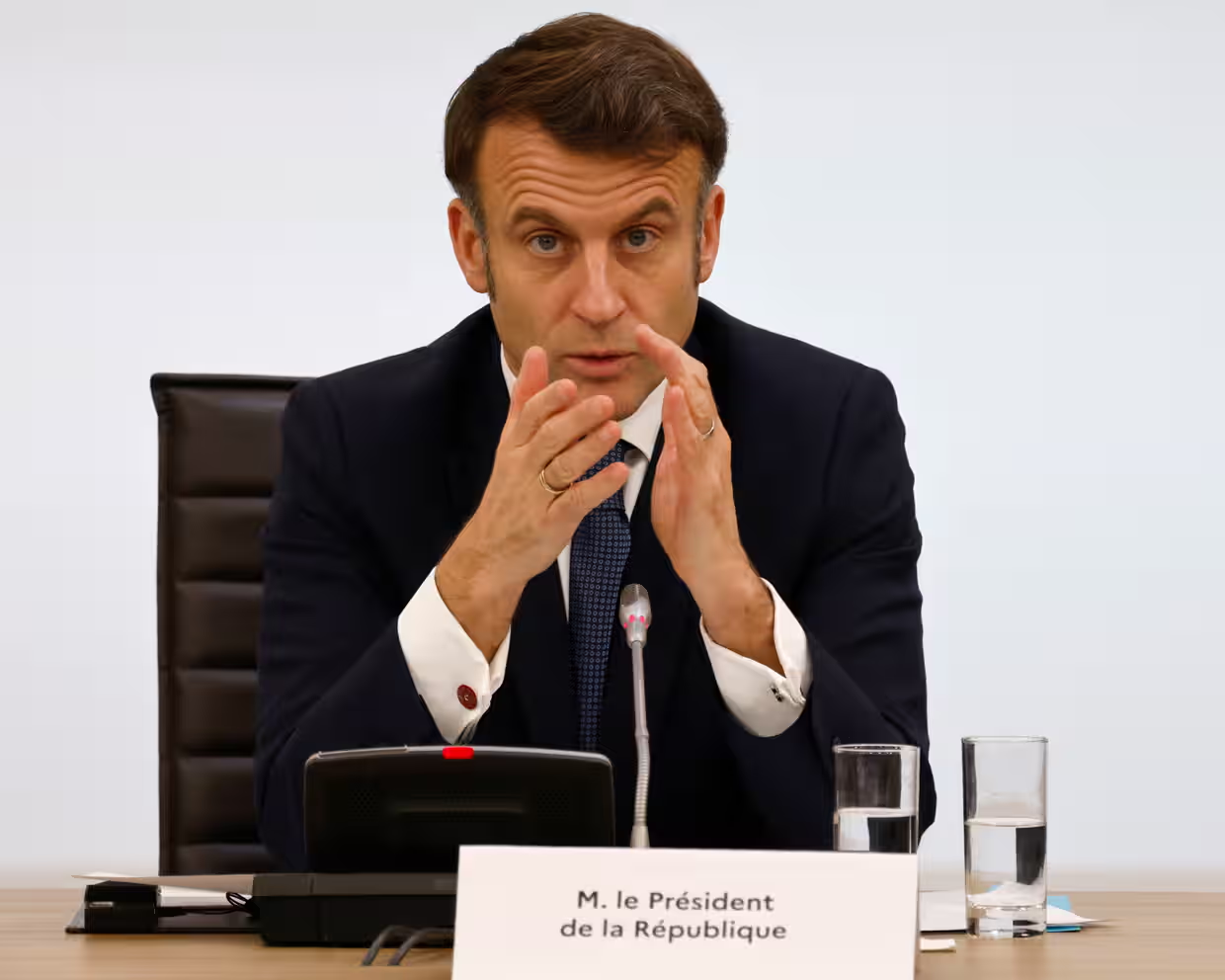
French President Emmanuel Macron, a key proponent of the event, has publicly described recognition of Palestine as both a “moral duty and political requirement.” Despite this rhetoric, France has reportedly reassured Israeli officials that the conference will not serve as the venue for official recognition. Macron’s government appears committed to a more incremental approach, using the event to foster civil society engagement and practical planning for a two-state solution.
II. Structure and Purpose of the Conference
1. The Role of Working Groups
France and Saudi Arabia have created eight specialized working groups to explore concrete pathways toward a viable Palestinian state. These groups will tackle essential issues, including humanitarian aid, economic development, respect for international law, and peace-building narratives. The UK is leading the humanitarian group, while other groups focus on preparing for eventual reconstruction efforts and promoting legal frameworks that support peaceful coexistence.
2. Pre-Conference Initiatives: Paris Peace Forum
Before the main conference, Macron will host a civil society-focused gathering as part of the Paris Peace Forum. This parallel initiative aims to amplify non-governmental voices in shaping future peace efforts and to present a broader vision of peaceful settlement benefits for both Israelis and Palestinians.

3. Silent Spectators: Israel and the U.S.
Despite attending preliminary sessions, both Israel and the United States have chosen to remain silent, sparking speculation about their potential boycott of the full conference. Their disengagement highlights the deep divisions over how—and whether—to advance the cause of Palestinian self-determination.
III. Israeli Resistance and Geopolitical Realities
1. Internal Israeli Opposition to a Two-State Model
A majority of Jewish Israelis continue to oppose the establishment of a Palestinian state. Recent polls indicate that only around 20% support a two-state solution, while more than half advocate transferring Arab citizens of Israel to other countries. This growing opposition is reinforced by Israel’s latest settlement expansion in the West Bank—the largest in decades—which Defense Minister Israel Katz characterized as a strategic move to block Palestinian statehood.
2. European Frustration with Israeli Policies
Many European governments now perceive Israel’s reluctance to engage in meaningful peace negotiations as a major obstacle. Consequently, some have started viewing the recognition of Palestinian statehood as a potential lever to influence Israeli policy. Last year, Ireland, Spain, and Norway took steps to officially recognize Palestine, reflecting this shift in thinking.
3. Macron’s Critics and the Question of Hamas
Israel’s ambassador to France has described Macron’s approach as “disastrous,” highlighting the tensions surrounding the issue. Both France and the UK maintain that they will not recognize a Palestinian state governed by Hamas. This stance reflects broader Western concerns about the militant group’s role in any future Palestinian government, although Hamas itself has suggested willingness to step back under certain Arab-led frameworks.
IV. UK Position: Evolving But Conditional
1. Political Pressures and Parliamentary Debates
In the UK, Foreign Secretary David Lammy is expected to attend the conference under increasing pressure from lawmakers urging tougher action against Israel. Hamish Falconer, the Middle East minister, acknowledged in a recent parliamentary session that the UK’s traditional position—recognition at the conclusion of a peace process—is under review. He attributed this shift to the Israeli government’s rhetoric and clear abandonment of a two-state framework.
2. Recognition Tied to Governance Reform
The UK is seeking detailed commitments from the conference regarding the governance structure of a future Palestinian state, specifically excluding Hamas from leadership in Gaza. British officials argue that these conditions are essential for moving toward recognition and lasting peace, aligning with broader Western demands for political reform in the Palestinian territories.
3. Conservative Backbench Support for Recognition
A growing number of Conservative MPs are breaking ranks with the government, calling for immediate recognition of Palestinian statehood. Notably, former Attorney General Sir Jeremy Wright has joined this faction, signaling a significant political shift within UK circles toward proactive support for Palestine.
V. Regional Dynamics and the Limits of Normalization
1. Hopes for a Balanced Diplomatic Strategy
France envisions a dual-track diplomatic approach: securing Western recognition of Palestine while encouraging Muslim-majority countries to normalize relations with Israel. This strategy, however, faces steep challenges given the current regional climate and widespread condemnation of Israeli actions.
2. Saudi Arabia’s Firm Stance
Saudi Crown Prince Mohammed bin Salman—co-host of the conference—has repeatedly accused Israel of committing genocide, a sentiment widely echoed in Saudi society. As a result, any move toward normalization with Israel appears politically untenable for Riyadh, complicating Macron’s broader diplomatic vision.
Conclusion
The upcoming New York conference represents a cautious recalibration rather than a bold leap toward Palestinian statehood. While the event is unlikely to result in a formal declaration, it offers a platform for constructive dialogue and practical planning that could pave the way for future recognition. With shifting attitudes in Europe, evolving political dynamics in the UK, and deep-rooted regional complexities, the road to a two-state solution remains fraught—but far from abandoned. The conference may yet serve as a vital step in redefining what peace in the Middle East might look like.