









In times of political upheaval, one of the most vulnerable institutions in any democratic society is the judiciary. The principle of judicial independence—where judges are free from external pressures and political influence—is essential for upholding the rule of law and protecting fundamental rights. However, recent global trends have revealed an alarming erosion of court independence in various countries, particularly during periods of intense political polarization, populist surges, or constitutional crises. This essay explores how court independence is being challenged amid political upheaval, analyzing key examples, underlying mechanisms, and broader implications for democratic governance.


The Pillar of Judicial Independence
Judicial independence is a cornerstone of democratic governance and the separation of powers. It ensures that courts can interpret laws and deliver justice without being swayed by the interests of the executive, legislative branches, or powerful private actors. It encompasses two essential dimensions: individual independence (judges’ freedom from undue pressure in their decision-making) and institutional independence (the judiciary’s autonomy as a whole, including budgetary and administrative control).

When courts are independent, citizens can trust that legal decisions are fair, not politically motivated. This builds public confidence in the rule of law, enables checks and balances, and prevents the concentration of power. However, when courts become politicized, they may cease to function as neutral arbiters and instead become tools for legitimizing authoritarian behavior.
Global Trends of Judicial Erosion
In recent years, multiple countries—across democratic and hybrid regimes—have experienced attempts to undermine judicial autonomy. These efforts often coincide with political crises, contested elections, or efforts by ruling parties to consolidate power. Here are several notable examples:

1. Poland: Systematic Judicial Capture
Poland offers a clear case of systematic judicial erosion. Since 2015, the ruling Law and Justice Party (PiS) has implemented sweeping judicial reforms that critics argue are aimed at subordinating the judiciary to political control. The creation of a Disciplinary Chamber within the Supreme Court, empowered to punish judges for the content of their rulings, marked a direct challenge to judicial freedom. Judges who opposed the government were investigated, reassigned, or demoted.
The National Council of the Judiciary, previously an independent body for appointing judges, was restructured to give parliament greater control over judicial appointments. This prompted strong rebukes from the European Union, which initiated Article 7 proceedings and withheld recovery funds due to rule-of-law concerns.
Despite EU pressure, the Polish government defended its actions as judicial reform necessary to combat inefficiency and corruption. However, many observers saw these moves as politically motivated attacks on dissent and institutional independence.
2. Turkey: Purges and Politicization
Following the 2016 failed coup attempt in Turkey, President Recep Tayyip Erdoğan’s government launched a massive purge of state institutions, including the judiciary. Over 4,000 judges and prosecutors were dismissed, many arrested, and replaced with government loyalists. The state of emergency laws allowed for the reshaping of courts and judicial councils without parliamentary oversight.
The Council of Judges and Prosecutors, responsible for judicial appointments, became heavily politicized, with most of its members appointed by the executive or ruling party-controlled legislature. This led to widespread fear among judges, eroding impartiality and discouraging rulings against the government.
The aftermath of these purges has left Turkey with a judiciary largely aligned with executive preferences, raising serious concerns about access to justice and the protection of minority rights.
3. United States: Norm-Based Challenges
Although institutional structures in the United States have traditionally protected judicial independence, recent political events have placed intense pressure on the court system. The highly politicized process of Supreme Court appointments, particularly during the Trump administration, raised concerns about the judiciary’s perceived impartiality.
The rushed confirmation of Justice Amy Coney Barrett in 2020, just weeks before the presidential election, deepened perceptions that the court was becoming an extension of partisan politics. While U.S. courts have continued to issue rulings that sometimes defy political expectations, public confidence in judicial neutrality has declined.
Former President Trump’s repeated attacks on judges, references to the judiciary as “Obama judges” or “Trump judges,” and ongoing efforts to contest judicial legitimacy in election-related cases, have all contributed to the perception that the judiciary is under political siege.
Mechanisms of Judicial Undermining
The erosion of judicial independence typically does not happen overnight. Instead, it occurs through gradual, sometimes legal, institutional changes. Key mechanisms include:
-
Changes to Judicial Appointment Processes
Governments may alter how judges are appointed, placing more control in the hands of political actors. By packing courts with loyalists, ruling parties can shift the ideological balance of the judiciary in their favor. -
Disciplinary Measures and Intimidation
Establishing disciplinary councils or ethics boards with broad powers allows governments to punish judges who dissent. This chilling effect leads to self-censorship and a reluctance to challenge the government. -
Budgetary and Administrative Control
Controlling the judiciary’s budget, staffing, or internal administration can be used as leverage to exert influence or limit judicial autonomy. -
Media and Rhetorical Attacks
Leaders often undermine trust in courts by accusing judges of partisanship or corruption. This delegitimizes unfavorable rulings and galvanizes public support for reforms that weaken judicial power. -
Constitutional Amendments
Under the guise of judicial “reform,” constitutional changes may be used to restructure courts, change retirement ages, or alter the hierarchy of the judicial system.
Why Politicians Target Courts
During political upheaval, the courts can be seen as both a threat and a safeguard. For governments seeking to push controversial agendas, control dissent, or extend their tenure, independent courts pose a major obstacle. Rulings can delay or overturn legislation, protect activists, and uphold electoral integrity.
Thus, weakening judicial independence becomes a strategy to ensure political survival. Moreover, in hyper-polarized societies, even legitimate legal processes are interpreted through partisan lenses. Courts are no longer seen as neutral referees but as actors in a broader political battle.
Populist leaders, in particular, frame the judiciary as an elite institution disconnected from “the will of the people.” By attacking judges, they appeal to their base while removing institutional constraints.
The Role of Civil Society and International Institutions
Defending judicial independence often requires a combination of domestic resistance and international support. Civil society organizations, bar associations, and independent media play crucial roles in exposing abuses and mobilizing public opinion.
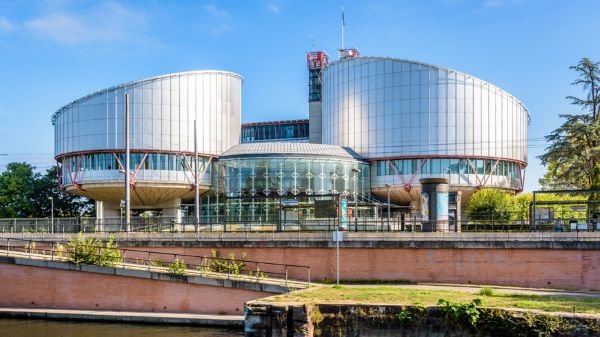
International bodies like the European Union, United Nations, and International Bar Association have also issued statements, imposed sanctions, or provided technical support to embattled judiciaries. In some cases, international courts such as the European Court of Human Rights (ECHR) have provided legal recourse when national courts fail to protect rights.
However, external influence has limits, especially when political leaders frame it as foreign interference. Sustainable protection of judicial independence requires domestic legal cultures that value checks and balances, along with an engaged and informed public.
Consequences of Judicial Politicization
When courts lose their independence, the consequences are profound and far-reaching:
-
Erosion of Rule of Law: Legal certainty and the impartial application of laws break down. Citizens lose faith in justice, and legal systems may become tools of political persecution.
-
Democratic Backsliding: Without independent courts, other democratic institutions are vulnerable. Elections, free speech, and civil liberties can be curtailed without judicial recourse.
-
Investor Confidence and Economic Stability: Businesses depend on predictable and impartial legal systems. Politicized courts deter investment and can lead to economic instability.
-
Human Rights Violations: Independent courts often serve as the last line of defense for vulnerable groups. Without them, abuses go unchecked, and accountability diminishes.
-
Long-Term Institutional Damage: Rebuilding judicial credibility takes decades. Once compromised, trust in the judiciary is difficult to restore.
Case for Strengthening Court Independence
To safeguard democracies during political upheaval, it is imperative to reinforce judicial independence. This can be achieved through:
-
Transparent Appointment Processes: Ensuring appointments are merit-based and involve multiple stakeholders limits politicization.
-
Security of Tenure: Judges should have protected terms and not be removed arbitrarily or for political reasons.
-
Adequate Funding: Independent budgeting mechanisms help shield courts from executive influence.
-
Judicial Education and Ethics: Training programs and ethical codes strengthen the professional culture and integrity of the judiciary.
-
Public Engagement and Trust-Building: Courts should communicate their role effectively to the public, promoting transparency and accountability.
Conclusion: A Fragile Safeguard in Unstable Times
In an age where political upheaval is becoming more common, judicial independence remains a fragile but essential safeguard for democratic governance. Across continents, from Europe to Latin America to Asia, the courts have often found themselves on the frontlines—either as defenders of constitutional order or victims of political power grabs.
The challenges are formidable, but so too are the efforts to resist them. Judges, lawyers, activists, and ordinary citizens continue to push back, often at great personal risk. Their resilience underscores the enduring importance of independent judiciaries in preserving democracy, justice, and human dignity.
The international community must continue to support these efforts and hold governments accountable for undermining judicial independence. Only through a collective and sustained commitment to legal integrity can societies weather political storms without sacrificing the rule of law.








