







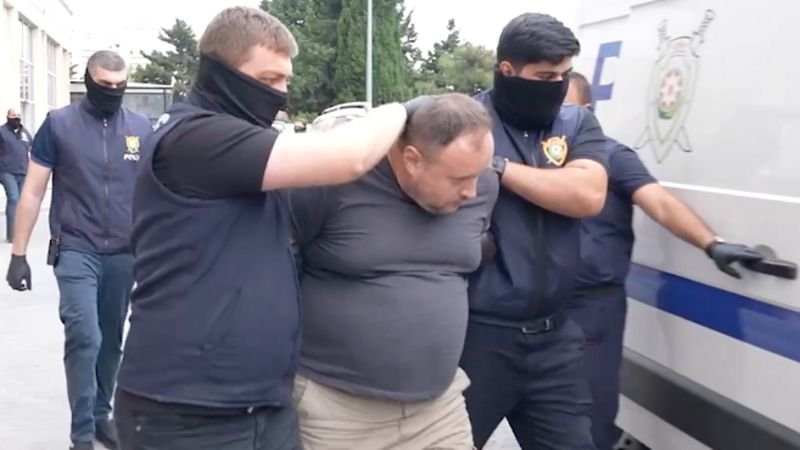


The sudden deaths of two Azerbaijani brothers while in Russian police custody have sparked a major diplomatic fallout, intensifying long-simmering tensions between Azerbaijan and Russia. The incident has not only provoked outrage in Baku but has also revealed Azerbaijan’s increasingly assertive posture in the South Caucasus, where it is challenging Moscow’s long-standing dominance. The deaths have triggered criminal proceedings, canceled diplomatic visits, media crackdowns, and sharp accusations from both sides.

I. Deaths in Detention Trigger Diplomatic Crisis
1. Azerbaijani Brothers Die Under Suspicious Circumstances
The crisis began last Friday when Russian authorities in Yekaterinburg conducted a police operation related to unresolved murder cases dating back to 2001. Among the suspects detained were Azerbaijani-born brothers Ziyaddin and Guseyn Safarov. Both men later died while in custody, while several others required hospitalization due to injuries.
A post-mortem examination carried out in Azerbaijan concluded that the brothers died of “post-traumatic shock,” citing severe beatings sustained during their detention. Azerbaijani officials have responded with outrage, accusing Russian police of torture and intentional homicide. Meanwhile, Russian authorities claimed one of the brothers died from a heart attack, with the other’s cause of death still under investigation.
2. Azerbaijan Responds with Swift Repercussions
In reaction to the deaths, Azerbaijan has launched a formal criminal case against Russian law enforcement and swiftly canceled an upcoming visit from Russian Deputy Prime Minister Alexei Overchuk. Furthermore, all performances involving Russian entertainers in Azerbaijan were suspended.
The tone in Azerbaijani media has grown increasingly hostile, with pro-government outlets drawing comparisons between President Vladimir Putin and Soviet dictator Joseph Stalin—accusing Russia’s current leadership of authoritarian brutality.
II. Rising Hostilities Between Two Former Allies
1. A History of Strained Relations
Although Azerbaijan and Russia have maintained diplomatic ties since the collapse of the Soviet Union in 1991, their relationship has often been complicated. Azerbaijan has aligned itself more closely with Western powers to develop its oil and gas industry, and historical grievances—particularly Moscow’s support for Armenia during the First Nagorno-Karabakh War—have lingered.
However, a thaw appeared when Ilham Aliyev succeeded his father as president in 2003. Educated in Moscow, Aliyev seemed capable of working with Putin, and in 2020, Russia stepped aside during a renewed conflict in Nagorno-Karabakh, which Azerbaijan won decisively. This shift allowed Baku to emerge as a dominant regional force.
2. The 2023 Plane Incident and Fallout
Tensions were already running high before the brothers’ deaths. In December 2023, a tragedy struck when an Azerbaijani Airlines plane was mistakenly shot down, allegedly by a Russian surface-to-air missile. Thirty-eight passengers died. While Putin issued an apology, President Aliyev demanded full responsibility and a thorough investigation—something that Moscow never fully provided.
This incident ignited a media war, with Azerbaijani authorities accusing Russian cultural and media organizations of espionage. One of the primary targets was the Baku bureau of Russian state media outlet Sputnik, which remained open until this week.
III. Crackdowns and Accusations of Espionage
1. Arrests of Russian Media Staff
In a dramatic move, Azerbaijani police raided Sputnik’s Baku office and detained two employees: Igor Kartavykh and Yevgeny Belousov. Authorities allege both individuals are operatives of Russia’s Federal Security Service (FSB), though Moscow has strongly denied these claims, labeling the arrests as baseless.
The incident has reinforced perceptions in Azerbaijan that Russian soft power tools—including media outlets—are being used as instruments of influence and surveillance.
2. Public Condemnation of Moscow
Azerbaijan’s official rhetoric has become increasingly confrontational. Public statements from government-affiliated media sharply criticize Moscow’s interference and depict Azerbaijan as unwilling to tolerate what it sees as abuses of its sovereignty and dignity. The deaths of the Safarov brothers are being presented as emblematic of broader Russian misconduct.
IV. Azerbaijan’s Shifting Regional Strategy
1. From Regional Player to Regional Power
Azerbaijan’s response reflects a broader transformation in its foreign policy posture. Following its 2020 military success and amid Russia’s diminished global standing due to the Ukraine war, Baku has begun to assert its influence more confidently.
Though Aliyev and Putin signed a document affirming the two countries as strategic allies, Azerbaijan has taken a more independent course. Baku has referred to Russian-occupied Ukrainian territories as “occupied,” and has delivered humanitarian support to Kyiv—moves that have visibly distanced it from the Kremlin.
2. Strategic Importance and Western Partnerships
Azerbaijan’s geographical position gives it strategic value, acting as a key link in major energy and transportation corridors, including the North–South trade route connecting Russia to South and Central Asia. While not directly seeking to replace Russia’s influence in the Caucasus, Baku is challenging it—particularly in Georgia and Armenia.
According to Zaur Shiriyev, a non-resident fellow at the Carnegie Russia Eurasia Center, Azerbaijan fears a possible resurgence of Russian-aligned forces in both neighboring states. The country is especially wary of Armenia reverting to pro-Russian politics, which could destabilize reconciliation efforts following the Nagorno-Karabakh conflict.
3. A Message of Defiance
By escalating the diplomatic dispute over the brothers’ deaths, Azerbaijan appears to be drawing a red line. According to Shiriyev, “Azerbaijan appears to be sending a message that it is no longer willing to accept Russia’s actions passively, especially when its own interests are at stake.” This new assertiveness suggests that Baku is repositioning itself as a power that demands respect and accountability from even its most historically dominant neighbors.
Conclusion
The deaths of Ziyaddin and Guseyn Safarov in Russian custody have become a flashpoint in an already fragile relationship between Azerbaijan and Russia. What began as a tragic law enforcement incident has snowballed into a wider geopolitical clash—fueling nationalist sentiment, provoking diplomatic reprisals, and intensifying scrutiny of Russia’s role in the South Caucasus.
Azerbaijan’s response reveals a significant shift in its foreign policy: no longer content with being a passive regional actor, it is openly asserting its independence, defending its sovereignty, and challenging Moscow’s longstanding influence. As the balance of power continues to evolve in the post-Soviet landscape, the South Caucasus may be entering a new era—defined less by Russian dominance and more by multipolar rivalry.








