







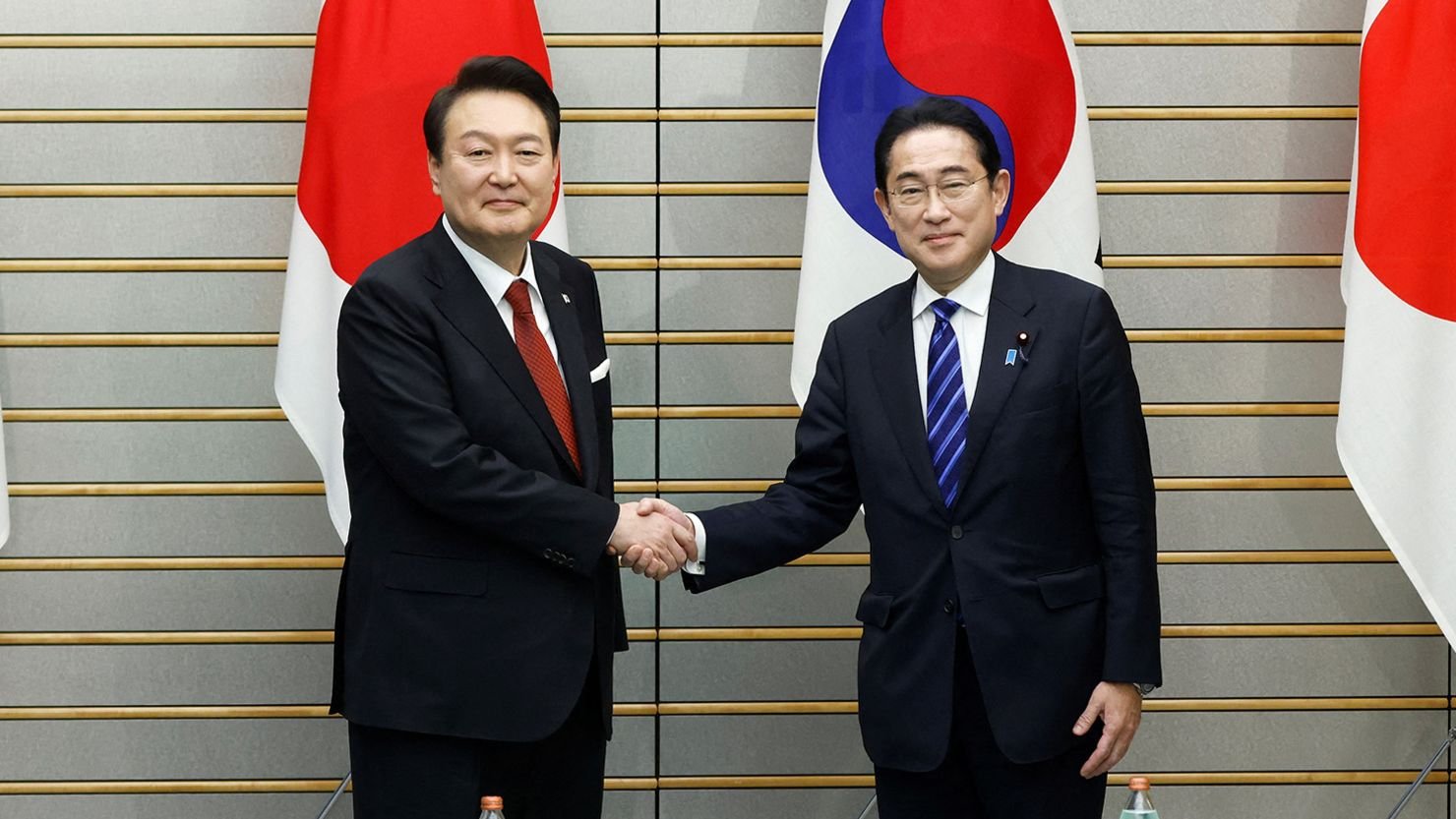


After years of mounting tensions and diplomatic stalemates, a renewed sense of cautious optimism permeates East Asia as North and South Korea meet in Tokyo, joined by key regional leaders in a high-stakes diplomatic summit. Against a backdrop of nuclear threats, economic sanctions, humanitarian concerns, and shifting global alliances, this latest round of dialogue marks a significant milestone in regional diplomacy. The Tokyo talks, held under tight security and global scrutiny, aim to thaw relations on the Korean Peninsula and lay the groundwork for a more stable and peaceful Northeast Asia.


This diplomatic revival is not merely symbolic; it signals a potential turning point in inter-Korean relations and broader regional cooperation. The participation of nations such as Japan, China, the United States, and Russia reflects the geostrategic importance of Korean peace to the entire Asia-Pacific region and beyond.

Background: A Region Defined by Tension and Opportunity
The Korean Peninsula has remained one of the most heavily militarized and diplomatically sensitive areas in the world since the end of the Korean War in 1953. Although the Korean Armistice Agreement ended active hostilities, no peace treaty was ever signed, meaning the two Koreas remain technically at war. Over the decades, the region has experienced cycles of conflict, negotiation, and provocation, often fueled by North Korea’s nuclear ambitions, missile tests, and harsh rhetoric.
Diplomatic efforts have waxed and waned. The Sunshine Policy of the early 2000s brought some hope, as did the inter-Korean summits of 2018, but progress has often stalled due to mutual distrust, changing political leadership, and external pressures, particularly from the United States and China. The Tokyo summit emerges at a time when global polarization and regional arms races have reignited fears of escalation.

The Tokyo Summit: Objectives and Symbolism
Held at Japan’s initiative and hosted in a neutral third-party venue, the Tokyo summit is designed to revitalize stalled diplomacy while engaging major regional actors. This format provides greater flexibility and multilateral support, distancing talks from the formality of previous U.S.-North Korea summits while offering stronger regional ownership of the peace process.
Key goals of the summit include:
-
Reducing military tensions on the Korean Peninsula.
-
Reestablishing communication channels between the North and South.
-
Paving the way for family reunifications and humanitarian aid.
-
Discussing denuclearization frameworks within a multilateral context.
-
Exploring economic cooperation projects and easing cross-border restrictions.
-
Integrating regional players into a long-term peace roadmap.
The presence of foreign ministers and special envoys from the U.S., China, Japan, and Russia reflects the delicate balance of interests involved in any Korean agreement.
South Korea’s Diplomatic Push for Peace
South Korea, under the leadership of President Yoon Suk-yeol, has adopted a pragmatic but forward-looking diplomatic strategy. Seeking to balance deterrence and engagement, Seoul has bolstered its defense capabilities while also opening doors for dialogue. Yoon’s administration views the Tokyo summit as an opportunity to demonstrate regional leadership, stabilize domestic politics, and reduce the threat posed by North Korea’s expanding missile arsenal.
South Korean diplomats arrived in Tokyo with several proposals:
-
Reinstating military hotlines to prevent accidental clashes.
-
Offering humanitarian assistance in exchange for goodwill gestures.
-
Proposing phased economic collaboration, particularly in agriculture and public health.
-
Opening cultural and educational exchanges to rebuild trust at the grassroots level.
Seoul is also keen on internationalizing the peace process, seeking more structured involvement from Beijing and Moscow to counterbalance U.S. influence.
North Korea’s Strategic Calculus
North Korea’s decision to participate in the summit, led by Vice Foreign Minister Choe Son Hui, is seen as a tactical shift in Pyongyang’s foreign policy. After years of isolation exacerbated by COVID-19 border closures, intensified sanctions, and economic hardship, the regime appears willing to explore limited engagement—without relinquishing its nuclear deterrent.
Kim Jong-un’s government has made it clear that denuclearization is not on the table unconditionally. Instead, Pyongyang seeks:
-
Sanctions relief, particularly in the energy and food sectors.
-
Security guarantees, including non-aggression pacts.
-
Recognition as a sovereign nuclear state.
-
Gradual normalization of diplomatic relations, especially with Tokyo and Washington.
Though distrust remains high, North Korea’s attendance marks its first multilateral engagement in over five years, signaling a desire to reshape its international posture amid global shifts.
Japan’s Role as Host and Regional Stakeholder
Japan’s hosting of the summit is significant. For years, Tokyo has maintained a firm stance on North Korea, demanding progress on the abduction issue, missile threat reduction, and human rights improvements. However, Japan has also sought to reassert itself as a diplomatic bridge-builder, particularly as tensions with China and concerns over Taiwan intensify.
Prime Minister Fumio Kishida has used the summit to:
-
Reaffirm Japan’s commitment to peace and non-proliferation.
-
Support inter-Korean dialogue through confidence-building measures.
-
Enhance Japan’s regional stature as a mediator and strategic partner.
-
Advance talks on unresolved issues, such as compensation for wartime forced labor and the fate of Japanese abductees.
By facilitating dialogue, Japan aims to reduce the regional security burden and foster an environment conducive to long-term peace.
China and the United States: Parallel Powers at the Table
The U.S. and China, though rivals on the global stage, share a common interest in preventing conflict on the Korean Peninsula.
The United States:
-
Supports denuclearization through a “complete, verifiable, and irreversible” disarmament framework.
-
Seeks to maintain military alliances with South Korea and Japan, while offering selective engagement with North Korea.
-
Advocates for human rights and cyber security reforms in North Korea.
-
Backs trilateral cooperation (U.S.-Japan-South Korea) to contain North Korea’s provocations.
China:
-
Prioritizes regional stability and opposes any collapse of the North Korean regime.
-
Calls for sanctions relief as a step toward dialogue.
-
Promotes a “dual suspension” approach—North Korea halts missile tests, the U.S. and South Korea suspend military drills.
-
Envisions economic integration and eventual alignment with its Belt and Road Initiative (BRI).
Both powers have dispatched high-level envoys to Tokyo and expressed measured optimism about the summit’s potential outcomes.
Key Outcomes from the Summit
While no final treaty or breakthrough was expected from this initial round of talks, several important outcomes have already been reported:
-
Resumption of Inter-Korean Hotlines: Both sides agreed to reestablish military and diplomatic communication lines, crucial for preventing escalations.
-
Humanitarian Cooperation Framework: A multilateral agreement was reached to facilitate food and medical aid deliveries to North Korea through neutral third parties.
-
Agreement to Continue Talks: A follow-up summit is planned in Seoul within six months, with working groups on denuclearization, economic cooperation, and cultural exchange.
-
Regional Stability Mechanism: Japan proposed the creation of a Northeast Asia Peace Forum, an ongoing diplomatic track involving all parties, modeled after the ASEAN Regional Forum.
-
Symbolic Family Reunification Program: A pilot project was agreed upon to reunite a limited number of divided Korean families under Red Cross supervision.
While modest, these steps build diplomatic momentum and lay the groundwork for more substantive negotiations.
Public Reaction and Media Coverage
Public response to the Tokyo summit has been largely positive across the region. In South Korea, media outlets praised the government for breaking the impasse and reviving diplomacy. North Korean state media, though restrained, acknowledged the summit as a “step toward dialogue with respect.”
Japanese public opinion remains cautious, particularly regarding the abduction issue. In China and the U.S., analysts noted the symbolic value of multilateral cooperation in an otherwise tense geopolitical environment.
International observers, including the United Nations and the European Union, welcomed the summit as a constructive step toward sustainable peace.
Challenges Ahead
Despite progress, many challenges remain:
-
Verification and compliance mechanisms for any future disarmament.
-
Mistrust between the Koreas, amplified by decades of propaganda and ideological division.
-
Domestic political shifts that could derail diplomacy, especially with upcoming elections.
-
External pressures, such as the U.S.-China rivalry and Russia’s uncertain role amid its Ukraine conflict.
-
Lack of enforceable guarantees, which has derailed previous agreements.
Peace on the Korean Peninsula will require long-term vision, mutual compromise, and sustained international engagement.
Conclusion: A Tentative Step Toward Peace
The Tokyo summit between North and South Korea, facilitated by regional powers, represents a tentative yet meaningful step toward lasting peace and reconciliation. While the road ahead remains fraught with complexities, the decision by all parties to come to the table signals that diplomacy is still possible, even in one of the world’s most intractable conflicts.
For now, hope returns to a region long haunted by war, division, and isolation. If momentum can be maintained, the Tokyo summit may be remembered as the beginning of a new era in Northeast Asian peace and cooperation.








