







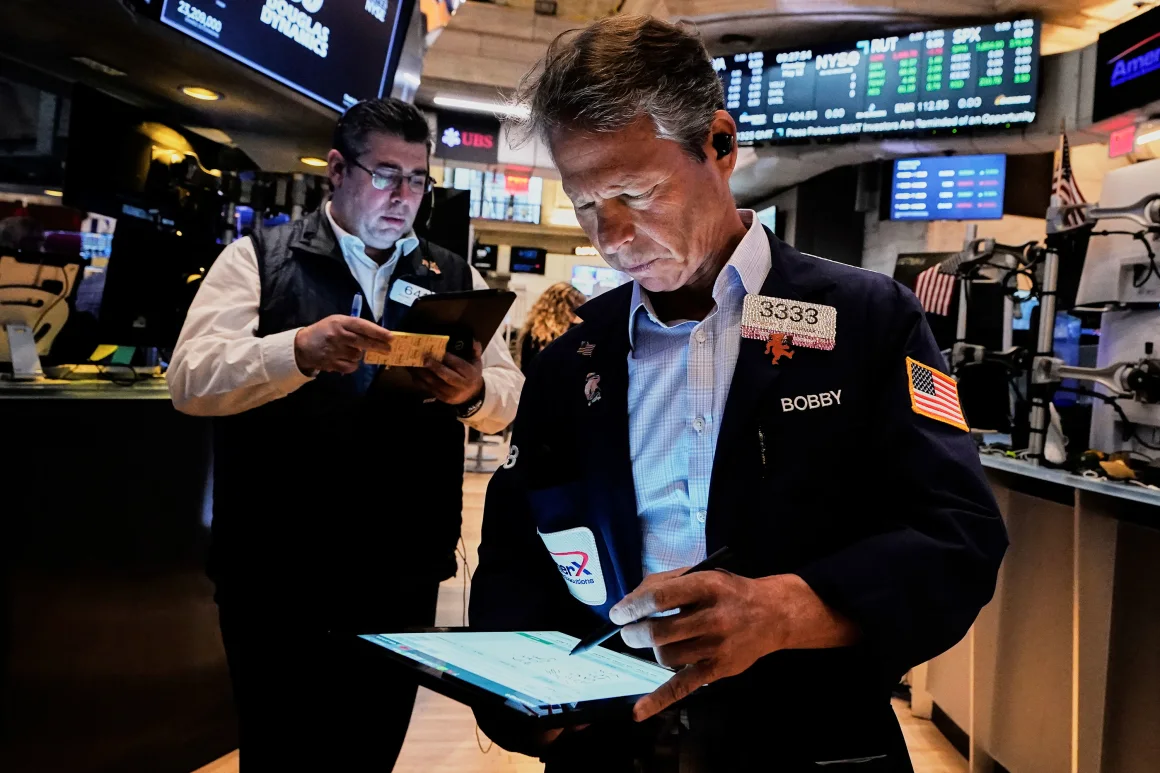


Wall Street experienced a powerful rally on Monday, triggered by a significant breakthrough in U.S.–China trade negotiations that drastically lowered tariffs and eased investor concerns about a potential economic downturn. The agreement, reached over the weekend by top trade officials, sent major stock indexes soaring and signaled a possible turning point in the prolonged trade conflict.


I. Market Reacts to De-Escalation
1. Major Indexes Post Strong Gains
The Dow Jones Industrial Average surged by 1,161 points, marking a 2.81% increase. Meanwhile, the S&P 500 jumped 3.26%, and the tech-heavy Nasdaq Composite soared by 4.35%. Each of these indexes logged their most significant single-day gains in over a month, fueled by unexpectedly positive tariff news.

According to Keith Lerner, Chief Market Strategist at Truist Advisory Services, the market’s sharp rise reflected investors’ surprise at the scope of the de-escalation. “Many were unprepared for this outcome, which drove such a notable surge,” he explained.
2. Nasdaq Enters Bull Market
Having entered a bear market on April 4, the Nasdaq has now climbed more than 20% from its lowest point of the year—technically marking a transition into a bull market. While the index remains about 3.1% down year-to-date, its recent rebound highlights renewed confidence in tech stocks.
II. The Tariff Truce and Its Impact
1. Reversal of April’s Tariff Hike
Monday’s gains also erased losses triggered by President Trump’s April 2 “Liberation Day” announcement, which imposed sweeping 10% tariffs on most imported goods and raised levies even higher on select countries. While those tariffs were temporarily paused, U.S. duties on Chinese imports were increased to a staggering 145%, sparking a fierce retaliatory response from Beijing.
China responded by implementing tariffs up to 125% on U.S. goods, bringing trade between the two nations nearly to a halt. The resulting price hikes and supply disruptions alarmed businesses, consumers, and economists alike.
2. A Surprising and Significant Breakthrough
Despite the tense backdrop, negotiations in Geneva between U.S. Treasury Secretary Scott Bessent, U.S. Trade Representative Jamieson Greer, and Chinese trade officials produced an unexpectedly large reduction in tariffs. Both sides agreed to cut their respective tariffs by 115 percentage points, substantially easing pressure on global trade flows.
“This wasn’t something anyone anticipated,” said Jeff Buchbinder of LPL Financial. “No one had such low China tariffs on their radar.”
Crucially, both nations also established a mechanism to avoid future retaliatory increases, potentially drawing the trade war to a close—or at least entering a prolonged truce.
III. Investor Sentiment and Economic Indicators
1. Markets Embrace Risk
The breakthrough bolstered investor appetite for risk. The U.S. dollar appreciated 1.4% against a basket of currencies, and oil prices rose sharply. West Texas Intermediate crude climbed 1.52% to $61.95 a barrel, while Brent crude increased 1.64% to $64.96.
Conversely, traditional safe-haven assets saw a pullback: gold fell by 2.7%, and U.S. Treasury prices declined, pushing the 10-year yield back above 4.45%. Japan’s yen also dropped 2% against the dollar.
2. Volatility Drops as Fear Fades
The CBOE Volatility Index (VIX), a widely watched measure of market uncertainty, fell over 15% to its lowest level since late March. According to CNN’s Fear and Greed Index, sentiment swung sharply toward “greed,” marking a notable shift from months spent in “fear” or “extreme fear” territory.
Carol Schleif, Chief Market Strategist at BMO Private Wealth, said the market was responding exactly as hoped. “The scale of the tariff rollback, even if temporary, and the commitment to further talks are what markets were waiting for.”
IV. Sector-Specific Gains
1. Tech Stocks Rally
Tech companies, deeply affected by the U.S.–China trade war due to their global supply chains, led the charge on Monday. Apple rose 6.3%, Tesla climbed 6.75%, Nvidia gained 5.4%, Amazon added 8.1%, and Intel rose 3.55%. The performance reflected investors’ optimism that cross-border technology operations may regain stability.
2. Luxury and Auto Industries Rebound
Luxury goods manufacturers also posted robust gains. Hermes advanced 3.5%, Burberry climbed 3.67%, and LVMH rose by 7%. Meanwhile, automakers rallied strongly: Stellantis increased 6.5%, General Motors was up 4.4%, and Ford gained 2.6%.
Ulrike Hoffmann-Burchardi of UBS Global Wealth Management commented that the “risk-on” response in equity markets indicated that investors were caught off guard by the speed and scale of the breakthrough. Attention now turns to whether this temporary solution can evolve into a lasting resolution.
V. The Bigger Picture
1. Negotiation from Strength
Speaking from Geneva, Treasury Secretary Bessent described the talks as firm yet respectful. He noted that the U.S. held a stronger negotiating position due to China’s economic vulnerabilities—including a struggling housing market, mounting debt issues, declining factory output, and weakening consumer spending.
“We came with a list of problems to solve, and we made significant progress,” Bessent said. He emphasized that the U.S. trade deficit historically provides leverage in negotiations, as China depends more on exports to the U.S. than vice versa.
2. A Pause, Not a Pivot
Despite the historic nature of the deal, Bessent was quick to temper expectations. “This is just a pause,” he said, clarifying that while tariffs on Chinese imports have been reduced from 34% to 10%, a full reversal is not yet on the table.
He added that future U.S. efforts will focus on strengthening domestic supply chains, especially for essential goods like medical supplies, semiconductor chips, and steel. “The COVID crisis taught us that efficiency doesn’t always mean resilience,” Bessent explained.
Additionally, Bessent stressed the need to eliminate non-tariff barriers that hinder U.S. companies operating overseas, calling such restrictions harmful and unfair.
VI. Policy Continuity and Strategic Goals
1. A Consistent Strategy
Some might view the trade truce as a contradiction of previous Trump administration rhetoric, which emphasized reducing dependence on China and boosting domestic manufacturing. However, officials maintain that the current deal is part of a long-term plan.
Kevin Hassett, Director of the National Economic Council, argued that Trump has merely strengthened the U.S. position. “We weren’t selling much to China anyway,” he noted. “We can either find new suppliers or manufacture what we need ourselves.”
2. Strengthening International Partnerships
Recent agreements with China and the United Kingdom are also expected to improve market access for U.S. businesses. For example, Britain has opened its market to American beef, and China has committed to revisiting policies that restricted U.S. corporate expansion.
Hassett called the moment a “historic fresh start” and said the risk of supply disruptions from China has diminished significantly. These new frameworks, he said, could redefine America’s global trade strategy.
Conclusion
The de-escalation of the U.S.–China trade war has ushered in renewed optimism on Wall Street. The dramatic market gains, improved investor sentiment, and sector-wide rebounds underscore the significance of this unexpected diplomatic achievement. While uncertainties remain and the resolution is not yet permanent, the agreement has opened a new chapter in international trade relations—one that could stabilize markets, support global growth, and set the stage for long-term economic resilience.








