







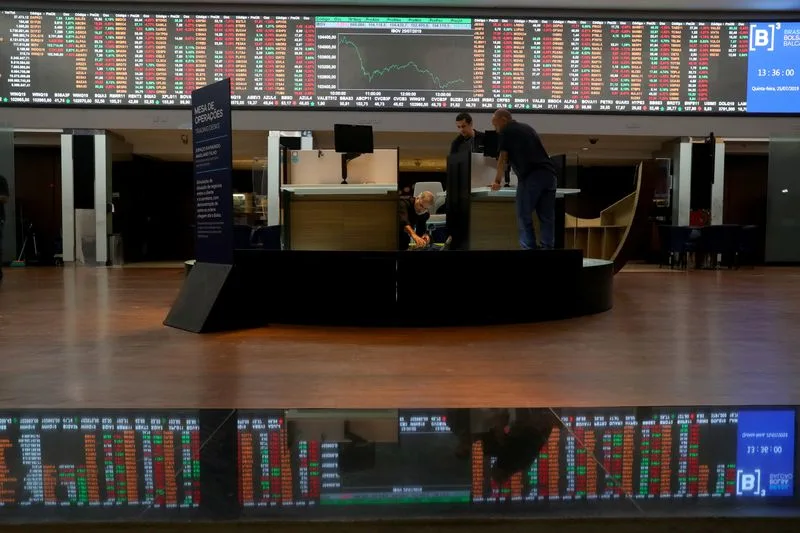


A surge in emerging market debt issuance is defying global instability, with bond sales reaching record highs despite escalating geopolitical tensions and volatile energy prices. Investors remain attracted to high-yield opportunities, and early signs suggest a gradual shift away from the U.S. dollar in financing strategies, reinforcing the broader trend of de-dollarisation.


I. Record-Breaking Bond Issuance in 2025
1. Robust Demand Amid Global Turmoil
Emerging market debt sales witnessed a powerful surge during the first half of 2025, outpacing previous records despite economic and geopolitical uncertainty. Factors such as U.S. tariff escalations, missile strikes in the Middle East, and erratic oil prices did little to deter investors eager for returns. In fact, according to global banking leaders, these conditions may have even enhanced the appeal of emerging debt.

2. Strong Appetite from Cash-Heavy Investors
Investment managers flush with liquidity remained aggressive in their hunt for yields and diversification. This sustained demand held firm throughout various disruptive global events, including former U.S. President Donald Trump’s tariff declarations and Israel’s military strikes against Iran. These circumstances, which traditionally spark investor retreat into safe-haven assets, instead coexisted with growing activity in the emerging bond market.
II. Key Players and Market Trends
1. Debt Sales Reach Historic Highs
BNP Paribas’s Alexis Taffin de Tilques expressed surprise at the unwavering pace of bond issuance amid widespread instability, highlighting that issuance volumes had been “incredible.” Similarly, JPMorgan’s Stefan Weiler reported that debt sales from Central and Eastern Europe, the Middle East, and Africa (CEEMEA) had already exceeded $190 billion by mid-year, putting the market on course to beat the 2024 record of $285 billion.

2. Gulf Region Leads the Charge
The Middle East, particularly Saudi Arabia, played a dominant role in this boom. Over 40% of CEEMEA’s debt originated from the Gulf, as countries and corporations took advantage of declining interest rates and the forecast of persistently high U.S. Treasury yields. HSBC’s Khaled Darwish noted that Middle Eastern issuers raised a combined $106 billion in bond and sukuk deals, fast approaching the $139 billion total for all of 2024.
3. Minimal Impact from Geopolitics
Surprisingly, geopolitical shocks had a limited effect on Gulf Cooperation Council (GCC) markets. The ongoing global tensions not only failed to suppress demand but, in some cases, enhanced investor interest. For example, increased NATO defense budgets following Russia’s invasion of Ukraine spurred enthusiasm for defense-sector bonds. Czech defense firm CSG more than doubled its 2031 bond offering to €1 billion and $1 billion, thanks to robust demand.
III. Diversification and Currency Shifts
1. Broader Appeal for Fixed-Income Investments
Fixed-income instruments appear more resilient to geopolitical pressures than equity markets. Investors crossing over from other asset classes are drawn to the higher margins provided by emerging-market bonds. According to Citi’s debt team, global issuance from emerging markets climbed 20% year-on-year, with corporate debt issuance accelerating most rapidly.
2. New Entrants and Wider Offerings
A growing roster of first-time issuers added diversity to the debt landscape. These included Saudi Arabian mining titan Maaden, issuing a $1.25 billion sukuk, and Angola’s Azul Energy, which entered the market with a $1.2 billion bond. Citi’s Victor Mourad emphasized how this influx of new names has broadened investor options, allowing for better risk distribution and portfolio variety.
3. Slow De-Dollarisation Gains Momentum
There are clear signs that some issuers are beginning to pivot away from reliance on U.S. dollar funding. Both Saudi Arabia and Sharjah issued euro-denominated bonds in 2025. Other nations are also venturing into alternative currencies, with Uruguay debuting its first sovereign bond in Swiss francs and Chinese yuan-denominated “Panda bonds” making an appearance. JPMorgan’s Weiler called this an “early sign of de-dollarisation,” suggesting the beginnings of a long-term transition.
IV. Short-Term Bonds Replace Long-Term Issues
1. Decline of the 30-Year Bond
Mourad also noted another shift: issuers are steering clear of 30-year bonds. Only two such transactions were recorded from the CEEMEA region in the first six months of the year. This trend is partly due to the steepening of global yield curves, which makes long-term borrowing more expensive for governments and companies alike.
2. Rise of Short-Term Issuances
Instead, there has been a sharp increase in three-year bond offerings. Many issuers prefer to lock in favorable short-term rates rather than commit to pricier long-term debt. This practical move reflects an evolving strategy among borrowers trying to navigate today’s uncertain economic terrain while keeping borrowing costs in check.
Conclusion
The first half of 2025 has showcased remarkable resilience and adaptability in the emerging market debt landscape. Despite global unrest, investor demand remains high, driven by abundant liquidity and the search for better returns. New issuers, diversified currencies, and shorter maturities are shaping a more dynamic bond market. If these trends persist, emerging debt markets may continue to break records and redefine traditional investment norms in the face of volatility.








