






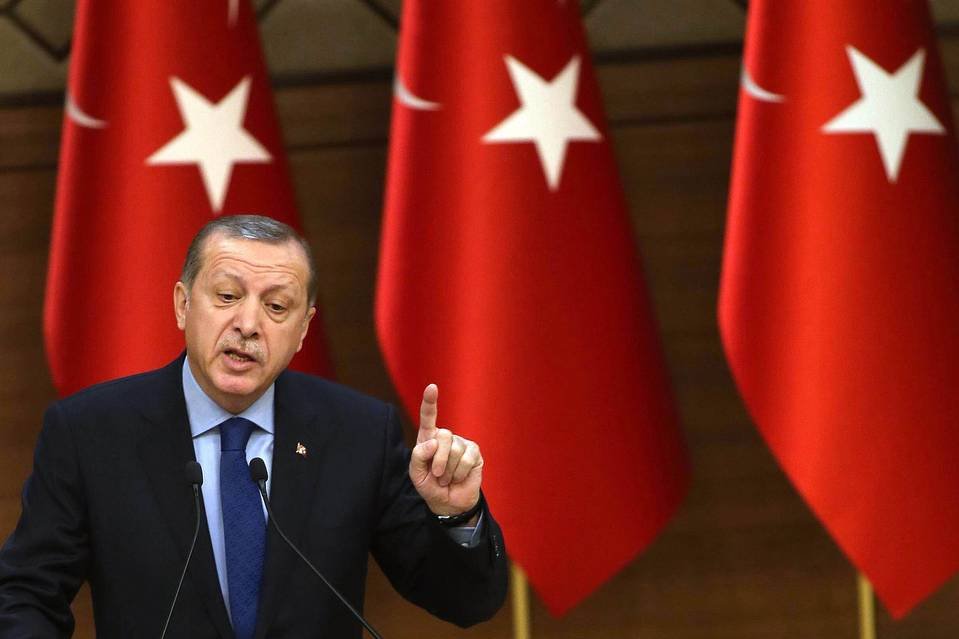


In modern Turkish history, few political figures have reshaped the nation’s governance structure as profoundly as Recep Tayyip Erdoğan. From his early days as mayor of Istanbul to his role as Prime Minister and later President, Erdoğan has methodically transformed Turkey’s political system. Central to this transformation has been a series of constitutional amendments that have allowed Erdoğan to consolidate power, reorient Turkey’s institutions, and redefine the balance between democratic representation and executive authority.

This essay explores how Erdoğan has used constitutional reforms to entrench his authority, the mechanisms he employed to push these amendments through, and the broader implications for Turkish democracy and regional stability.
I. From Parliamentary System to Presidential Rule
Turkey’s political system for much of the 20th century was based on a parliamentary democracy, similar to many European countries. The president, while symbolically important, was largely a ceremonial figurehead with limited executive power. Real authority rested with the prime minister and the cabinet, accountable to the parliament.
This structure began to shift under Erdoğan’s leadership. After serving three terms as prime minister (2003–2014), Erdoğan assumed the presidency in 2014. Although the office was nominally ceremonial, he began exercising it in a more active and assertive way, using informal influence and loyal bureaucratic networks to increase his control. Yet, to legally expand presidential power, Erdoğan needed more than informal authority—he needed constitutional change.

II. The 2017 Constitutional Referendum
The pivotal moment came in April 2017, when Turkish citizens voted in a constitutional referendum that narrowly approved a package of sweeping reforms. These amendments marked the official transformation of Turkey from a parliamentary to a presidential system of governance. The referendum passed with 51.4% of the vote, amid allegations of irregularities, media bias, and suppression of opposition voices.
Key features of the 2017 constitutional changes included:
-
Abolition of the prime minister’s office, consolidating all executive power in the presidency.
-
The president now appoints all ministers, vice presidents, and senior officials without parliamentary approval.
-
Parliament’s power to scrutinize the executive was significantly reduced.
-
The president gained the authority to issue executive decrees on a wide range of matters.
-
The president could dissolve parliament and call early elections, further strengthening control over the political process.
-
The judiciary, already under pressure, was brought under tighter executive influence through appointments to key oversight bodies.
These changes were implemented gradually but fundamentally redefined the Turkish political system.
III. Justifications for Reform: Stability and Efficiency
Erdoğan and his supporters defended the constitutional amendments as necessary to ensure stability, efficiency, and effective governance. They argued that the parliamentary system produced weak coalition governments and bureaucratic paralysis. A strong presidency, they claimed, would allow for quicker decision-making, better policy implementation, and a more coherent foreign policy.
They pointed to Turkey’s history of military coups, economic crises, and coalition instability in the 1990s as justification for centralized authority. For Erdoğan’s supporters—especially among conservative and religious voters—the reforms were also seen as a means of safeguarding national sovereignty against internal and external threats.
However, critics viewed these justifications as a smokescreen for a broader authoritarian project, aimed at entrenching Erdoğan’s rule and sidelining checks and balances.
IV. Mechanisms of Power Consolidation
Beyond the referendum, Erdoğan used a combination of legal, political, and institutional tools to consolidate his power:
1. Control of the Judiciary
The judiciary, which in theory should serve as a check on executive overreach, has been reshaped through presidential appointments and purges. After the 2016 failed coup attempt, thousands of judges and prosecutors were dismissed under the state of emergency. Erdoğan framed this as a purge of Gülenist elements (followers of Fethullah Gülen, accused of orchestrating the coup), but the scale and scope of dismissals included many secular, independent, or critical voices.
The Council of Judges and Prosecutors (HSK), the body responsible for judicial appointments, was brought under presidential influence through the constitutional reforms, allowing Erdoğan to indirectly control judicial appointments and promotions.
2. Media Domination
A crucial element in advancing constitutional changes and maintaining popular support has been Erdoğan’s grip on the media. Through state pressure, ownership shifts, and regulatory penalties, the Turkish media landscape has become heavily pro-government. The RTÜK (Radio and Television Supreme Council) often sanctions opposition broadcasters, while pro-government conglomerates dominate television and print news.
The media played a critical role during the 2017 referendum campaign, overwhelmingly promoting the “Yes” vote while restricting opposition platforms.
3. Suppression of Opposition
Political opponents, especially from the Republican People’s Party (CHP) and Peoples’ Democratic Party (HDP), have been targeted through legal prosecution, detentions, and censorship. Many HDP lawmakers and mayors have been arrested on charges of terrorism, a tactic widely viewed as politically motivated. Even former allies, such as Ahmet Davutoğlu and Ali Babacan, who later broke away to form rival parties, have faced media blackouts and administrative hurdles.
Erdoğan’s strategy of consolidating power has not only involved elevating himself but also weakening the organizational and institutional capacity of rivals.
V. Erdogan’s Personalization of the State
One of the most profound shifts resulting from the constitutional amendments is the personalization of political authority. Under the new system, Erdoğan is not merely the head of state but the central figure of an executive regime. Ministries, government agencies, and even foreign policy are heavily dependent on his directives.
Presidential decrees, a power granted under the 2017 reforms, are a key instrument of this personalization. Erdoğan has used decrees to reorganize ministries, appoint key figures, and even bypass parliamentary legislation. This creates a governance model where state policy becomes a reflection of presidential will, rather than the outcome of institutional deliberation.
VI. Erosion of Checks and Balances
The amendments weakened many traditional checks and balances:
-
Legislative Oversight: The Turkish Grand National Assembly lost its power to approve ministers or hold regular no-confidence votes. It can still investigate the president, but the threshold for launching an inquiry is high and practically unreachable due to Erdoğan’s party dominance.
-
Judicial Review: The Constitutional Court remains in place, but its composition has tilted heavily toward pro-government judges. Its independence has been widely questioned.
-
Accountability Mechanisms: Institutions like the Court of Accounts (for financial oversight) and independent regulatory bodies have lost effectiveness under executive pressure.
The result is a hollowing out of democratic institutions. While elections are still held and parties exist, their role in governance is marginal compared to the executive’s dominance.
VII. Electoral Strategy and Symbolic Power
Erdoğan has been highly adept at using elections to legitimize his authority, even as institutional constraints weaken real democratic choice. He has won numerous elections and referenda, often in highly polarized conditions.
The 2017 referendum, the 2018 general elections (which implemented the presidential system), and the 2023 elections all served to reinforce his constitutional authority. Electoral victories are celebrated as personal mandates, further fueling Erdoğan’s narrative of being the indispensable leader of a resurgent Turkey.
Symbolism also plays a key role. Massive infrastructure projects, grand mosques, military parades, and historical references to the Ottoman Empire feed into a nationalistic image of Erdoğan as both modernizer and restorer of Turkey’s Islamic identity.
VIII. Domestic and International Reactions
Domestically, Erdoğan’s consolidation of power has produced a deeply polarized society. While his base remains loyal, the opposition has grown increasingly frustrated by what they see as an erosion of democratic norms. Protests, such as the Gezi Park movement and post-election demonstrations, have been suppressed with force or legal action.
Internationally, reactions have been mixed. The European Union, which once held Turkey as a candidate for membership, has sharply criticized the constitutional reforms, especially regarding judicial independence and freedom of expression. Turkey’s human rights record has been a sticking point in EU-Turkey relations.
The United States has also expressed concern over democratic backsliding, but strategic considerations—such as Turkey’s role in NATO and regional security—often override these critiques. Erdoğan has skillfully played global powers against each other, including Russia and China, to maintain diplomatic leverage while entrenching his domestic power.
IX. Long-Term Implications
The constitutional amendments and Erdoğan’s consolidation of power raise critical questions about the future of democracy in Turkey:
-
Will Turkey return to a more pluralistic and accountable system after Erdoğan?
-
Have the institutions been weakened to the point where reversal is impossible?
-
What role will the military, judiciary, or civil society play in any potential transition?
The personalization of power creates vulnerabilities. While Erdoğan remains dominant, political systems centered around individuals rather than institutions are inherently unstable in the long run. Succession, economic shocks, or social upheaval could expose the fragility of the current model.
Conclusion: A New Republic or Authoritarian Turn?
Erdoğan’s use of constitutional amendments to consolidate power has fundamentally altered the nature of the Turkish Republic. What began as incremental adjustments under democratic procedures evolved into a systemic transformation toward executive dominance. For supporters, this represents a bold vision of national revival; for critics, it marks a retreat from democratic governance toward authoritarianism.
The story of Turkey under Erdoğan is not just about one leader’s ambitions—it is also about the institutions, narratives, and fears that enabled such a dramatic reconfiguration of power. As the country looks to the future, the challenge will be whether it can restore the principles of checks and balances or whether it will continue down a path of personalized, centralized rule.