







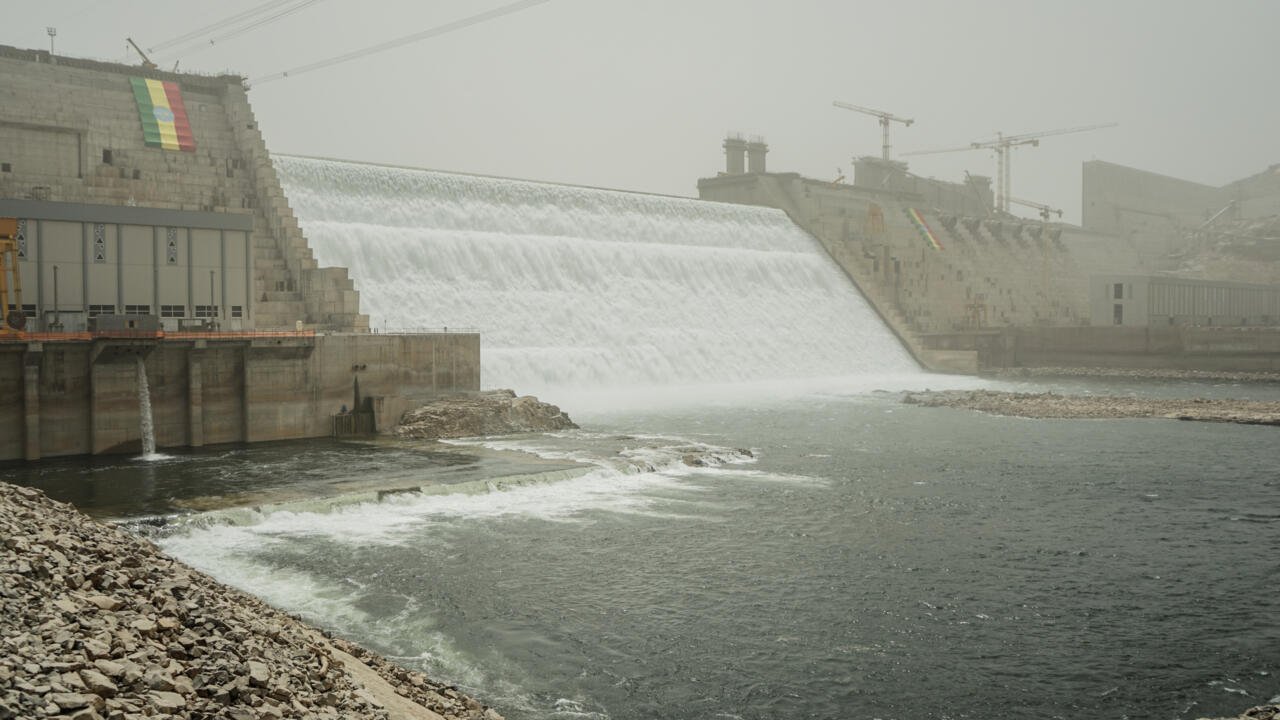
Ethiopian Prime Minister Abiy Ahmed announced Thursday that the construction of the Grand Ethiopian Renaissance Dam (GERD) is now complete, marking a significant achievement for Ethiopia in the midst of an ongoing dispute with Egypt over access to Nile River waters. The milestone is seen as a major step forward for Ethiopia, although tensions remain high with downstream nations, particularly Egypt, which has long viewed the dam as a serious threat to its water security.


I. Rising Tensions Over Nile Waters
1. Egypt’s Longstanding Concerns
Egypt has repeatedly voiced opposition to the dam, citing fears that it could drastically reduce the country’s share of the Nile’s flow. As Egypt depends heavily on the river to supply water for both agriculture and the daily needs of its more than 100 million citizens, it has described the project as an existential risk.


2. Unresolved Disputes Over Water Flow
Years of negotiations between Ethiopia and Egypt have failed to yield a lasting agreement. One major concern remains the volume of water Ethiopia would release to downstream countries in times of drought, a detail that remains unsettled.

II. Ethiopia’s Stance and Diplomatic Messaging
1. Dam to Be Officially Launched in September
In a speech to parliament, Prime Minister Abiy stated that the dam’s official inauguration is being planned for September. He acknowledged the resistance surrounding the project, saying, “There are those who wish to halt our progress, but we stand firm—this dam will be inaugurated.”
2. A Call for Shared Prosperity
Abiy emphasized Ethiopia’s desire to maintain harmony with neighboring countries. “We are committed to growing in a way that does not undermine the rights of our Egyptian and Sudanese brothers and sisters,” he said. He also highlighted the importance of mutual benefit, saying, “We believe in shared growth, energy, and access to water. Prosperity should be collective, not one-sided.”
III. History and Regional Dynamics
1. A Decade-Long Project With Global Attention
Ethiopia began constructing the $4 billion dam in 2011. Over the years, tensions surrounding the GERD have escalated, prompting concerns that the disagreement could lead to a broader regional conflict. However, Ethiopia has garnered support from upstream nations like Uganda, shifting the diplomatic balance.
2. Nile Basin Initiative Gains Ground
Ethiopia’s regional diplomacy has been bolstered by the Nile Basin Initiative, a cooperative agreement among 10 countries that share the Nile’s waters. Though not ratified by Egypt or Sudan, the agreement officially took effect in October, promoting the idea of equitable resource sharing.
IV. Strategic Significance of the Dam
1. Massive Power Generation Potential
Situated along the Blue Nile near the border with Sudan, the dam began generating electricity in 2022. Once fully operational, it is expected to produce over 6,000 megawatts of power—doubling Ethiopia’s current capacity and enabling the country to become a net exporter of electricity in the region.
2. Engineering and Scale
Located about 500 kilometers (311 miles) northwest of Addis Ababa, the GERD stretches 1,800 meters in length and rises to 175 meters in height. It is supported by a reservoir capable of holding 74 billion cubic meters of water, according to the lead contractor.
V. Ethiopia’s Development Vision
1. A Tool for Economic Transformation
Ethiopian officials view the dam as a cornerstone of national development, vital for lifting millions out of poverty and positioning the country as an energy hub in East Africa. The government maintains that the GERD is a necessary infrastructure project with transformative potential.
2. Colonial-Era Disputes Still Linger
Egypt, however, has continued to cite its historical rights to Nile waters under a colonial-era treaty established in 1929 between Egypt and the United Kingdom. That agreement allocated most of the river’s flow to Egypt and Sudan, while excluding other upstream nations, a point of contention in current negotiations.
Conclusion
The completion of the Grand Ethiopian Renaissance Dam signals a major leap for Ethiopia’s economic ambitions, yet it also highlights the unresolved tensions between upstream and downstream nations in the Nile Basin. As Ethiopia prepares to inaugurate the dam in September, the broader challenge of forging a fair and lasting agreement with Egypt and Sudan over shared water resources remains a critical diplomatic hurdle.








