









As critical aid programs worldwide face funding shortages due to the dismantling of USAID under the Trump administration, a group of former agency staffers is stepping up to bridge the gap. With lives hanging in the balance, they have created a grassroots network aimed at connecting private donors with life-saving projects that are now at risk of collapsing.


I. A Crisis of Funding and Impact
1. Aid Disruptions Threaten Vulnerable Communities
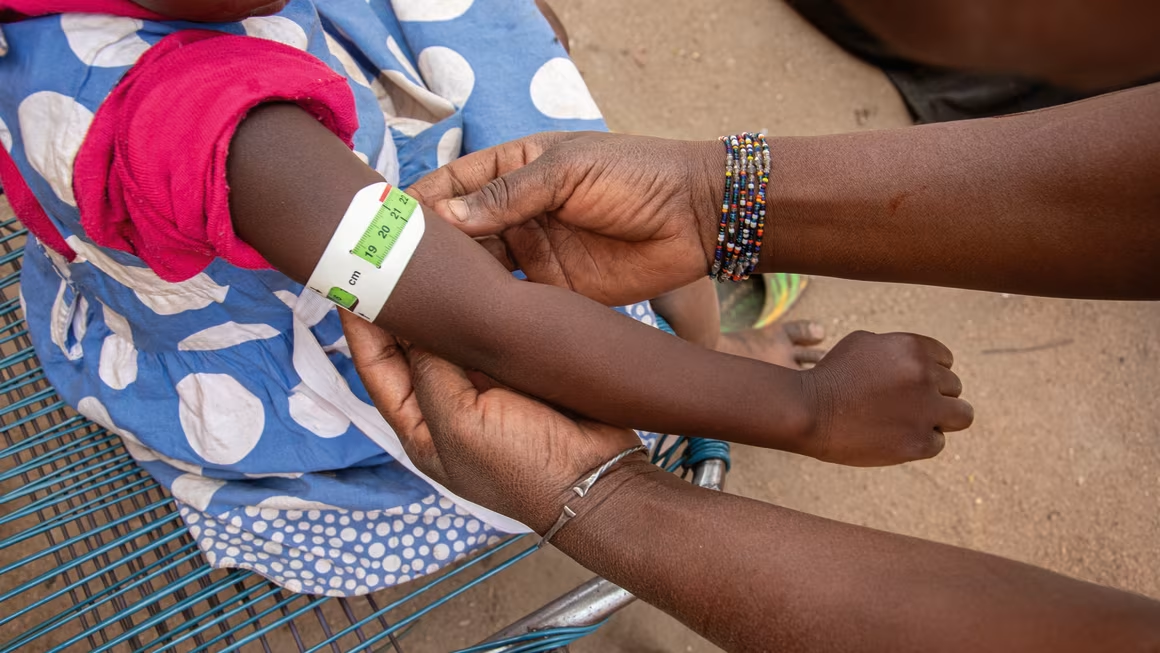
In northeast Nigeria, warehouses once stocked with nutrient-rich food for malnourished children and pregnant women now stand worryingly bare. Action Against Hunger (ACF), an NGO combatting malnutrition, had depended heavily on USAID for support. But when the project faced suspension earlier this year, ACF was unable to purchase enough therapeutic food during the region’s peak hunger season.

2. Former USAID Officials Take Initiative
Faced with the growing fallout, several former USAID employees—including portfolio manager Robert Rosenbaum—launched Project Resource Optimization (PRO), a grassroots initiative that connects urgent, cost-effective projects with philanthropic donors. Their mission is clear: to save as many lives as possible.
“People are dying because these programs were halted,” Rosenbaum said. “We couldn’t just sit back and watch.”

II. A New Model for Emergency Giving
1. From Spreadsheet to Lifeline
PRO began as a simple spreadsheet—“Urgent & Vetted Projects”—that outlined critical programs in need of immediate support. Initially created to guide small foundations, the document quickly evolved into a matchmaking tool linking donors with vetted international aid projects ready for funding.
2. Tapping Private Philanthropy
Rosenbaum and his team soon saw the potential to scale up. “We realized we could expand the private donor base,” he said. In one case, a foundation committed up to $1 million after consulting the PRO team.
3. Launching the Rapid Response Fund
PRO has also rolled out a crowdfunding platform, allowing individuals to contribute monthly or one-time donations to a “Rapid Response Fund.” This fund supports aid projects in crisis-hit countries like Nigeria, Sudan, and Haiti. These contributions help keep operations running at a time when traditional funding channels have stalled.
III. Keeping Hope Alive on the Ground
1. A Lifeline in Mali
In Mali, the Alliance for International Medical Action (ALIMA) was days away from shutting down a program offering care to children under five, pregnant women, and displaced people. Over half of the project’s funding had come from USAID.
Carlota Ruiz, ALIMA’s head of grant management, explained that disruptions threatened both operations and trust with local health ministries. “Credibility and relationships take years to build,” she said.
Thanks to the PRO network, a foundation stepped in with funding to keep the program going, enabling 70,000 medical consultations and treatment for over 5,000 malnourished children.
2. Critical Timing in Nigeria
In Nigeria, ACF is nearing an agreement to fund one of its nutrition programs, again with the help of PRO. The new support will fund Ready-to-Use Therapeutic Food (RUTF) during the peak malnutrition season—June through September.
“The timing is crucial,” said an ACF staff member on the ground. “This will keep our lifesaving work from stopping cold.”
However, the funds will only cover that specific project. Other initiatives—including food aid, clean water provision, and health clinic support—remain at risk.
IV. The Hidden Costs of Shutdowns
1. Operational Setbacks Are Costly
Rosenbaum emphasizes that restarting shut-down projects isn’t simple. “Staff are trained and in place. Supplies are often procured. But if funding doesn’t come through, it all unravels,” he said. The long-term costs—both financial and human—are substantial.
2. Trust Is Harder to Rebuild Than Budgets
Many organizations have spent years earning the trust of local governments and communities. Sudden project closures not only harm immediate beneficiaries but also jeopardize years of relationship-building that underpin effective humanitarian work.
V. Charting a New Course for Aid
1. Filling the Void Left by the State
The dismantling of USAID left a vacuum that PRO is striving to fill. “We can’t replace USAID,” Rosenbaum acknowledged, “but we can create new channels for donors who want to help but don’t know where to start.”
2. Rethinking How Aid Gets Delivered
The situation also offers a wake-up call to the aid community. By streamlining operations, identifying high-impact projects, and using private capital more effectively, groups like PRO are rewriting how international assistance might be organized in the future.
Conclusion
The crisis sparked by the rollback of USAID funding has placed countless lives in jeopardy. But through the work of former agency staffers and the creation of Project Resource Optimization, a new path has opened for private donors to step in where governments have stepped back. With hundreds of thousands of lives at stake, the urgency is real—but so is the opportunity to act decisively.








