










The rapid evolution of artificial intelligence (AI) technologies has sparked intense global discussions about how to regulate AI responsibly while ensuring innovation remains unhindered. From generative AI tools to autonomous weapons systems, the deployment of AI across various domains—economic, military, social, and cultural—raises profound ethical, legal, and existential questions.
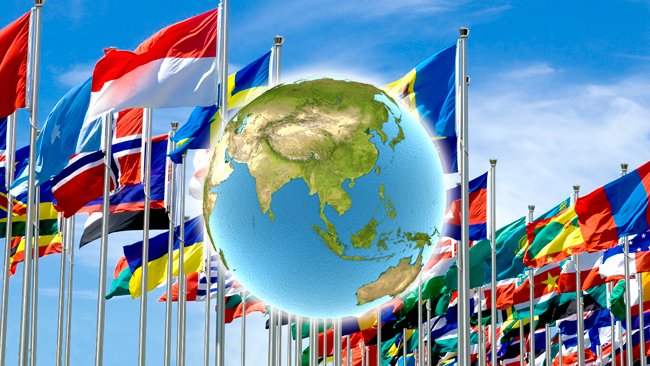

Yet, despite near-universal agreement that some form of oversight is necessary, creating global AI governance frameworks has proven extremely difficult. The reason? Political divides. Geopolitical tensions, ideological clashes, economic competition, and differing legal philosophies are making it increasingly hard to establish shared international rules for AI development, deployment, and accountability.
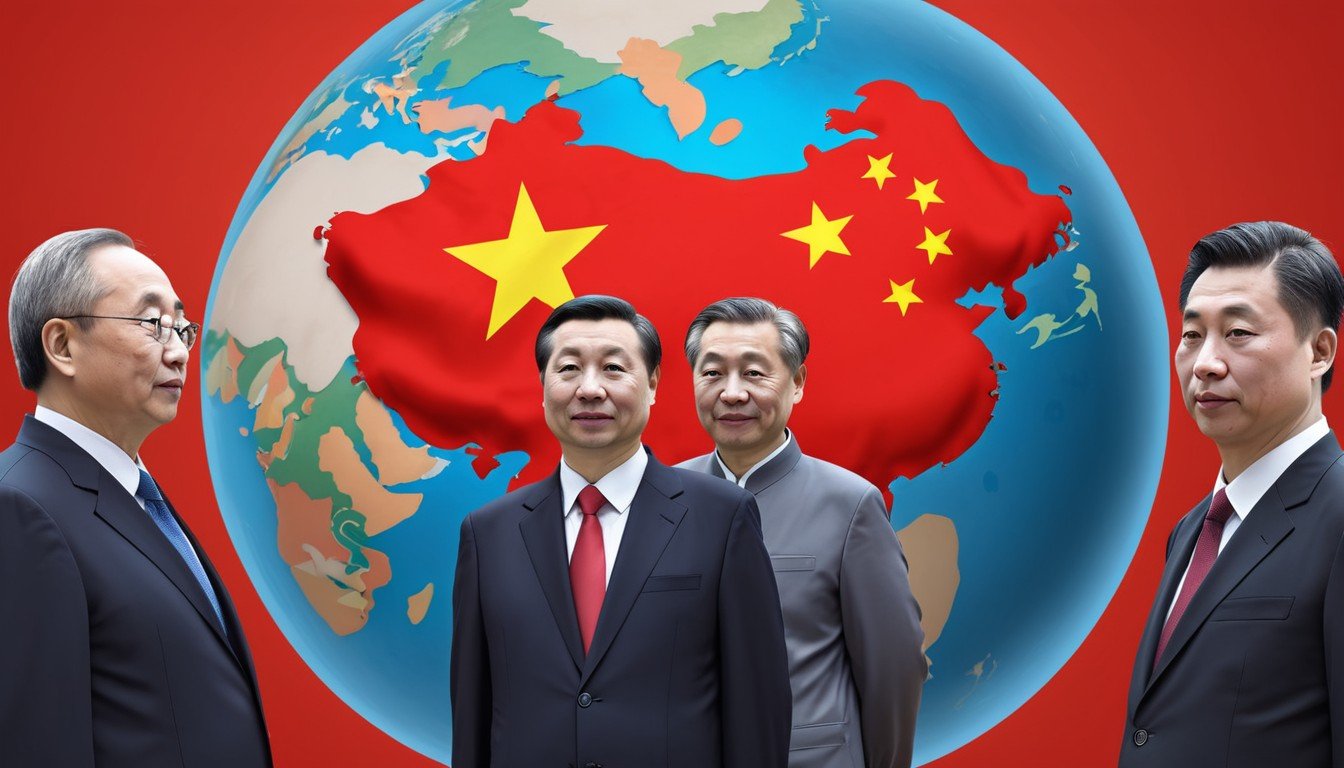
This article examines the challenges to forming unified global AI regulations, the geopolitical landscape shaping these efforts, and the prospects for consensus in a world where trust is fraying and power dynamics are in flux.
1. The Global Stakes Of Regulating AI
AI technologies are no longer confined to research labs—they are embedded in healthcare systems, financial services, law enforcement, warfare, education, and personal life. Their capacity to process massive data sets, make decisions, and learn from new information poses both unprecedented opportunities and serious risks.

a. The Opportunities
-
Enhanced diagnostics and treatment in medicine
-
Predictive analytics in climate modeling and disaster response
-
Efficient logistics, agriculture, and energy consumption
-
Real-time language translation and accessibility tools
b. The Risks
-
Bias and discrimination in algorithmic decision-making
-
Job displacement and labor instability
-
Deepfakes and misinformation eroding democratic discourse
-
Autonomous weapons and militarization of AI
-
Privacy breaches and surveillance concerns
Given these stakes, international coordination is crucial. But agreeing on a global framework has proven far more complex than anticipated.
2. A Fragmented Geopolitical Landscape
a. Competing Global Powers
Efforts to regulate AI globally are deeply affected by geopolitical rivalries, particularly between:
-
The United States, home to many of the world’s largest AI companies (OpenAI, Google DeepMind, Meta, etc.)
-
China, which has integrated AI into its industrial policy and state surveillance
-
The European Union, pushing for stringent AI rules grounded in human rights and privacy
These three blocs each promote very different visions of AI governance:
-
The U.S. tends to emphasize industry self-regulation and innovation freedom
-
China champions a state-controlled AI regime, with surveillance and security priorities
-
The EU prioritizes regulation-first, with the AI Act aiming to protect fundamental rights
b. Trust Deficits
The lack of trust among these powers exacerbates the challenge. There is growing concern that:
-
Regulatory efforts may become tools for geopolitical leverage
-
AI standards could be used to assert digital sovereignty
-
State-sponsored AI research may include offensive cyber or military purposes
This zero-sum view of AI as a strategic asset makes cooperation inherently fraught.
3. Conflicting Legal and Ethical Foundations
Creating global AI rules requires consensus not just on technical standards, but on values, principles, and rights. This is no small task in a world with widely divergent legal systems.
a. Differing Notions of Privacy and Rights
-
Western democracies emphasize individual rights, transparency, and data privacy
-
Authoritarian regimes may prioritize social stability, state security, or collective goals
-
Some developing countries may lack even basic digital governance frameworks
These differences lead to fundamentally divergent views on what AI should or should not do.
b. Definitions and Standards Vary
Even defining what constitutes “high-risk AI” or “harmful algorithmic behavior” varies:
-
Should emotional manipulation by AI be regulated?
-
How should liability be assigned when AI causes damage?
-
Can autonomous weapons be made “ethically compliant”?
Without shared definitions and legal baselines, international treaties or enforcement mechanisms become unworkable.
4. The Role of International Organizations
Several global institutions have attempted to lay the groundwork for AI cooperation, but results remain limited.
a. The United Nations (UN)
The UN has hosted discussions through bodies like:
-
The UNESCO Recommendation on the Ethics of AI
-
The Office of the Secretary-General’s Envoy on Technology
While these frameworks are valuable as ethical signposts, they are non-binding and lack enforcement power.
b. The OECD and G7
These forums have launched initiatives such as:
-
The OECD AI Principles (adopted by 46 countries)
-
The G7 Hiroshima AI Process, focused on aligning democratic AI governance
However, these groups exclude key global players like China and Russia, reducing their universality.
c. The Global Partnership on AI (GPAI)
GPAI brings together government, academia, and private sector actors, but its impact has been mostly advisory. It remains a forum for dialogue, not lawmaking.
5. Tech Companies As De Facto Policymakers
In the absence of unified government action, tech companies have filled the regulatory void—setting standards, building safeguards, and releasing usage guidelines.
a. AI Company Agreements
In 2023–2024, major AI companies signed voluntary commitments to:
-
Implement watermarking for AI-generated content
-
Conduct red-teaming to identify model vulnerabilities
-
Share information about model safety thresholds
These steps are commendable, but critics argue they are insufficient, non-binding, and subject to commercial interest.
b. Risk of Regulatory Capture
Without strong public oversight, private companies risk becoming:
-
Arbiters of public ethics, without accountability
-
Gatekeepers of knowledge, controlling access to powerful AI models
-
Obstacles to meaningful regulation, through lobbying and influence
6. Emerging Flashpoints: AI In Warfare and Cybersecurity
Perhaps the most urgent need for regulation is in military AI and cyber operations.
a. Autonomous Weapons
The deployment of lethal autonomous weapon systems (LAWS) has prompted calls for a global treaty akin to the Geneva Conventions. Yet:
-
No consensus exists on a ban
-
Some nations argue these tools increase precision and minimize casualties
-
Others see them as destabilizing and morally unacceptable
b. AI in Cyber Conflicts
AI can:
-
Enhance cyber defenses,
-
Automate disinformation campaigns,
-
Escalate cyberattacks beyond human speed
Governance in this domain is lagging far behind innovation, increasing the risk of unintended escalation between rival states.
7. The Path Toward Convergence: Is It Possible?
Despite political divides, some avenues for cooperation remain promising.
a. Risk-Based Regulation
A tiered framework that classifies AI systems based on their potential for harm may offer flexibility and shared structure. The EU AI Act uses this model:
-
Prohibited AI: Social scoring, real-time biometric surveillance
-
High-risk AI: Critical infrastructure, recruitment, policing
-
Limited risk: Chatbots, recommendation engines
Such an approach could be adapted globally to balance innovation and safety.
b. Technical Standards
Agreement on technical safety protocols (e.g., adversarial testing, transparency metrics, data provenance) could emerge through:
-
ISO (International Organization for Standardization)
-
IEEE (Institute of Electrical and Electronics Engineers)
These groups can bypass political roadblocks by focusing on engineering rather than ideology.
c. Regional Interoperability
Even without a single global treaty, regional compacts can harmonize standards:
-
EU–US Trade and Technology Council discussions
-
ASEAN digital frameworks
-
Africa’s AI Blueprint, focused on inclusion and infrastructure
8. Civil Society and Public Voices in the Debate
One often-overlooked force in AI governance is civil society, including:
-
Human rights NGOs
-
Academic institutions
-
Citizen-led coalitions
These actors play a vital role in:
-
Exposing bias and harm,
-
Holding companies and governments accountable,
-
Educating the public about risks and ethics
Ensuring inclusive governance—with seats at the table for marginalized voices—is essential for legitimacy.
9. The Future: Regulation by Design, or Crisis-Driven Response?
History suggests that global rules often arise after catastrophe—whether it’s war, market collapse, or environmental disaster.
Will AI governance follow this pattern? Or can the world proactively build frameworks before irreparable harm is done?
a. Scenarios Ahead
-
Best case: Incremental progress through shared technical standards and limited treaties
-
Most likely: Fragmented systems with occasional alignment and persistent conflict
-
Worst case: An AI-driven incident (cyber war, autonomous attack, democratic collapse) forces emergency action
Conclusion: The Choice Ahead
The challenge of building global AI regulations amid political divides is immense—but not insurmountable. It demands:
-
Diplomatic creativity, to bridge geopolitical mistrust
-
Technical collaboration, to standardize safety
-
Ethical commitment, to protect human dignity
-
Public engagement, to ensure accountability
AI is not just a technology—it is a reflection of who we are and who we aspire to be. Crafting shared rules across a divided world may be the most ambitious governance project of our time. Whether we succeed or fail will shape not just the future of AI, but the future of civilization itself.








