







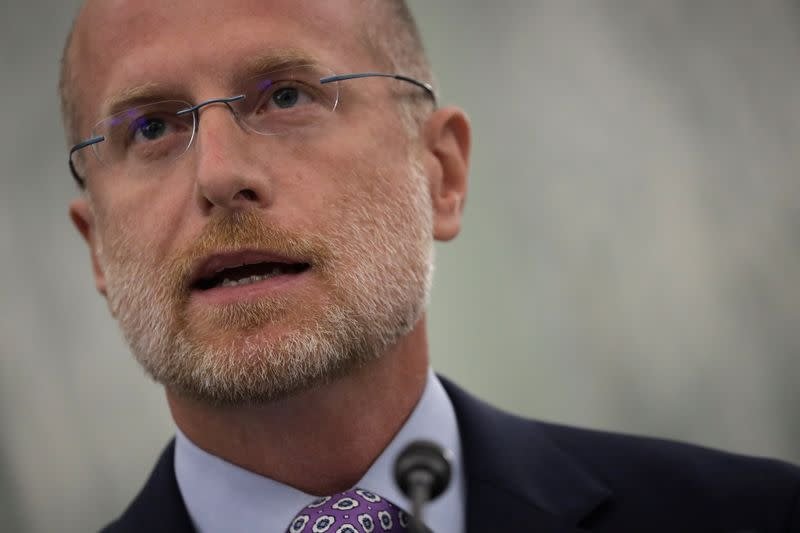


The Federal Communications Commission (FCC) is now reviewing the U.S. Cyber Trust Mark initiative due to what it describes as “potentially troubling links” to the Chinese government. This announcement, made by FCC Chair Brendan Carr, brings renewed scrutiny to the cybersecurity program launched to improve transparency and trust in smart devices. Meanwhile, former President Donald Trump stirred fresh debate over international cyber strategies during a recent Fox News interview, suggesting the U.S. may be engaging in the same surveillance and cyber activity it accuses China of conducting. Together, these developments underline growing tensions in U.S.-China relations, especially in the realms of technology, trade, and global influence.


I. FCC Launches Investigation into Cyber Trust Mark
1. Concerns About Chinese Government Influence
FCC Chairman Brendan Carr has initiated a review of the Cyber Trust Mark certification over concerns it may be compromised by connections to the Chinese government. While Carr withheld specific details, the decision has been handed over to the FCC’s Council on National Security, a body tasked with evaluating threats to the nation’s information infrastructure. The move was initially reported by Fox News and has sparked calls for greater scrutiny into the role of foreign entities in U.S. technology standards.

2. What Is the Cyber Trust Mark?
Introduced to improve consumer confidence in smart devices, the Cyber Trust Mark acts as a digital seal of approval for products that meet specific cybersecurity benchmarks. It is designed to reassure buyers that internet-connected gadgets, such as smart TVs and home assistants, are safe from common vulnerabilities. However, if foreign influence is confirmed in the program’s development or operations, it could compromise its legitimacy and raise serious national security concerns.
II. Trump Discusses U.S. Cyber Strategy in Fox Interview
1. “You Don’t Think We Do That?” – Trump on U.S. Hacking
During a candid interview on Fox News’ Sunday Morning Futures, Trump responded to accusations of Chinese cyber intrusions with a startling counterpoint: the U.S., he suggested, conducts similar operations. When host Maria Bartiromo described Chinese cyber activities, such as hacking American telecommunications and stealing intellectual property, Trump retorted, “You don’t think we do that to them? We do.” The exchange left Bartiromo briefly speechless, as Trump framed the behavior as part of the international norm in a “nasty world.”

2. “That’s the Way the World Works”
Trump doubled down on his statement, saying that both superpowers engage in aggressive tactics behind the scenes. While he acknowledged that he maintains a “great relationship” with Chinese President Xi Jinping, Trump also emphasized the significant trade deficit between the two nations and the imposition of tariffs during his administration. According to Trump, these tariffs were so impactful that they disrupted China’s economy, suggesting that his administration had the upper hand in economic negotiations.
III. U.S.–China Relations: Trade, Cybersecurity, and Strategy
1. Trust Issues in Diplomatic Negotiations
Bartiromo questioned how the U.S. could negotiate with a country accused of cyberattacks, intellectual property theft, and exporting harmful substances. Trump, in response, argued that the U.S. plays the same geopolitical game and must be pragmatic. His stance challenges the idea of moral high ground in global diplomacy and implies that both countries are equally aggressive when it comes to strategic advantage.
2. Arrests and Pathogen Concerns
Bartiromo highlighted the recent arrest of several Chinese nationals accused of attempting to bring harmful biological agents into the U.S. Trump responded by casting doubt on whether these actions were state-sponsored or carried out by rogue individuals, again illustrating the complexities of attributing blame in international incidents.
3. Rare Earth Minerals and Corporate Pressure
As the conversation shifted to rare earth minerals, Bartiromo pressed Trump on whether China would continue coercing companies to share proprietary information in exchange for access to resources. Trump argued that businesses shouldn’t allow themselves to be placed in such vulnerable positions. He also claimed that China now needs foreign companies more than before, especially as many are relocating operations back to the United States under more favorable conditions.
IV. Historical Context: Echoes from Trump’s First Term
1. Trump’s Consistent Realpolitik
Trump’s latest comments mirror past statements about other global leaders. In a 2017 Fox News interview with Bill O’Reilly, Trump dismissed moral criticism of Russian President Vladimir Putin. When O’Reilly labeled Putin “a killer,” Trump replied, “There are a lot of killers. What do you think? Our country’s so innocent?” This philosophy of recognizing the ruthless nature of international politics reflects Trump’s broader worldview, one where diplomacy is built on strength, leverage, and mutual self-interest.
2. Strategic Distance with Tactical Cooperation
Trump made it clear in both interviews that mutual respect and cooperation with global rivals like China and Russia are preferable, but not necessarily based on trust. Rather, he views such relationships as temporary alignments rooted in shared interests—whether it’s fighting terrorism with Russia or maintaining trade balance with China.
Conclusion: Cybersecurity, Trade, and the Future of Global Trust
As concerns rise about China’s influence in U.S. cybersecurity programs and the former president openly suggests American involvement in similar practices, the line between safeguarding national interests and breaching ethical boundaries becomes increasingly blurred. The FCC’s investigation into the Cyber Trust Mark highlights how even well-intentioned initiatives can be subject to manipulation. At the same time, Trump’s frank remarks about espionage and economic strategy offer a glimpse into the complex realities of global power dynamics. In an interconnected world, trust must be balanced with vigilance—and alliances, no matter how strategic, must be constantly reevaluated in light of shifting geopolitical landscapes.








