





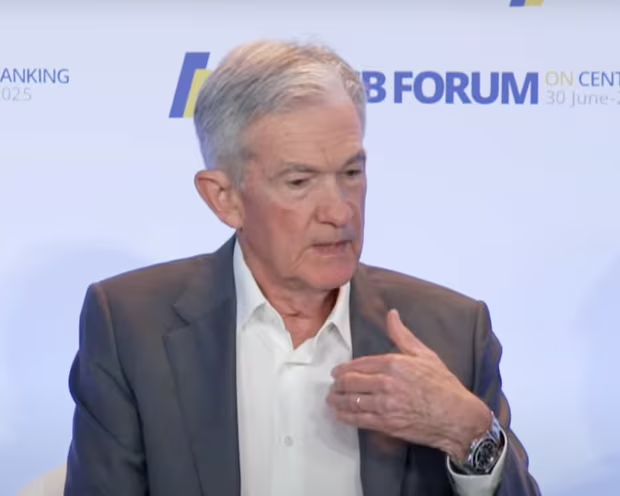


The ongoing friction between former President Donald Trump and Federal Reserve Chair Jerome Powell has taken a fresh turn, with Powell pointing to Trump’s aggressive tariff policies as a major obstacle to the interest rate cuts Trump has long demanded. Speaking at a high-profile European Central Bank (ECB) event in Sintra, Portugal, Powell outlined how trade-related inflation concerns have forced the Federal Reserve to exercise caution in adjusting its monetary policy.

I. Trump’s Pressure and Powell’s Response
1. Trump Criticizes Powell Over High Rates
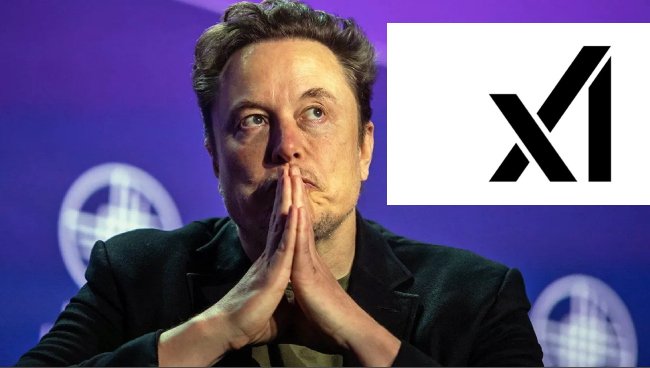
Donald Trump has consistently targeted Powell with scathing remarks, blaming him for high borrowing costs that he claims are damaging the U.S. economy. During a recent interview, Trump stated, “Anybody would be better than J Powell. He’s costing us a fortune because he keeps the rate way up.” His remarks reflect growing frustration over the Fed’s refusal to lower interest rates, despite mounting political pressure.

2. Powell Points to Tariffs as a Key Factor
Responding indirectly to these accusations, Powell clarified that the Federal Reserve’s cautious stance is largely due to uncertainty surrounding inflation, much of which stems from Trump’s trade policies. “In effect, we went on hold when we saw the size of the tariffs,” Powell explained. “All inflation forecasts for the United States went up materially as a consequence of the tariffs.”
The Fed chair emphasized that the central bank did not overreact but rather opted for patience. “We’re simply taking some time,” he said, suggesting that an assessment of long-term inflation trends is necessary before altering interest rates.

II. Tariffs and Their Uncertain Inflationary Effects
1. Tariffs Typically Lead to Higher Prices
Economists widely agree that tariffs are inherently inflationary, as import duties raise costs for businesses, which are often passed on to consumers. However, the actual impact can vary depending on how companies respond—some might absorb the added costs, while others may shift to alternative suppliers.
Powell acknowledged this variability, stating, “We haven’t seen effects much from tariffs, and we didn’t expect to by now. The timing, amount, and persistence of the inflation were always uncertain—and that has certainly turned out to be true.”
2. Waiting for Clearer Economic Signals
As summer unfolds, Powell said the Fed anticipates seeing increased inflationary readings, but he cautioned against making firm predictions. “We’re prepared to learn that it can be higher, or lower, or later or sooner than we’d expected,” he noted.
This position reflects the Fed’s broader approach: rather than reacting to incomplete data, the central bank is prioritizing a measured response grounded in long-term trends and economic evidence.
III. Political Tensions and Fed Independence
1. Trump’s Longstanding Feud with Powell
Trump’s criticism of Powell is not new. Since returning to office, he has repeatedly hurled personal insults at the Fed chair, referring to him as a “major loser” and “very dumb.” Reports also suggest Trump has contemplated removing Powell before his term ends in May of the following year.
Despite these attacks, Powell has maintained his composure and professional integrity. At the ECB event, when the issue of Trump’s comments was raised, Powell received a supportive round of applause from both the audience and fellow central bankers present on the panel.
2. Speculation Over Powell’s Successor
The possibility of Trump appointing a new Fed chair has become more plausible as a seat on the Fed’s board is set to open in January. U.S. Treasury Secretary Scott Bessent confirmed that the administration has considered nominating someone for that role with a view to replacing Powell once his term concludes. “There’s a seat opening up… in January. So we’ve given thought to the idea that perhaps that person would go on to become the chair when Jay Powell leaves in May,” Bessent said during a Bloomberg TV interview.
This speculation has contributed to a significant weakening of the U.S. dollar, which has posted its worst first-half performance in over five decades, reflecting market anxiety over future monetary policy uncertainty.
IV. Broader Global Economic Outlook
1. ECB and Bank of England Weigh In
Powell was joined at the Sintra panel by other central bank leaders, including ECB President Christine Lagarde and Bank of England Governor Andrew Bailey. Lagarde noted that it was premature to declare victory over inflation in the eurozone, signaling continued vigilance from the ECB.
Bailey echoed similar caution, highlighting signs of a cooling labor market in the UK—a potential indicator of weakening economic activity. Together, their remarks painted a picture of global central banks treading carefully amid ongoing uncertainty.
2. Global Impact of US Monetary Policy
Given the dollar’s central role in international finance, the Fed’s policy decisions have significant implications beyond U.S. borders. A delay in interest rate cuts could dampen global investment, tighten financial conditions in emerging markets, and contribute to volatility in commodity prices.
Therefore, Trump’s tariff decisions and the Fed’s monetary stance are not only shaping domestic economic outcomes but also influencing broader global economic dynamics.
Conclusion
Jerome Powell’s recent remarks underline the complex relationship between political actions—particularly tariff policies—and central bank decision-making. While Trump continues to push for immediate interest rate cuts, Powell insists that the Fed’s hands are tied by inflationary pressures fueled largely by Trump’s own trade strategies. As speculation grows about Powell’s possible replacement, the independence of the Federal Reserve remains under scrutiny. Meanwhile, central banks worldwide are watching carefully, knowing that the ripple effects of these U.S. economic policies are felt far beyond Washington.








