





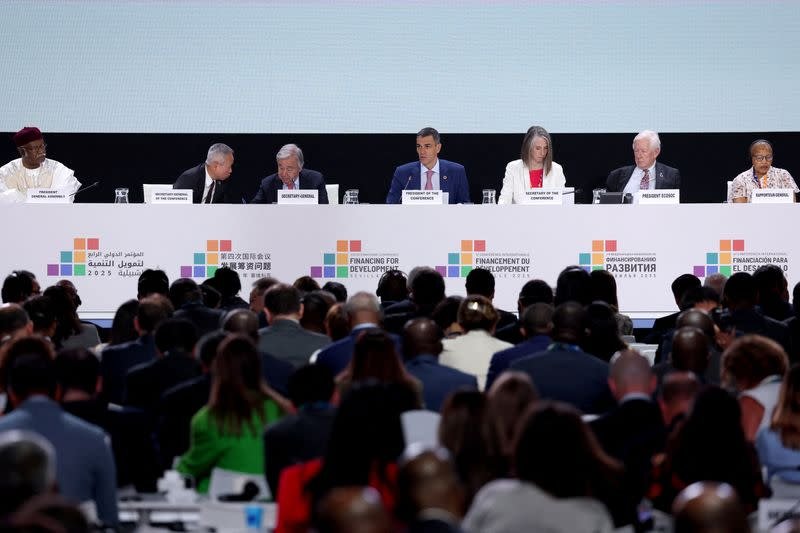

In the blistering heat of Seville, a rare high-level international summit convened to confront some of the world’s most pressing issues—poverty, climate change, and the faltering progress toward global development goals. United Nations Secretary-General António Guterres opened the meeting by stressing the urgent need to restore trust and breathe new life into a global system currently under strain. However, the absence of U.S. President Donald Trump underscored a deepening divide, particularly as the U.S.—historically the leading donor—refused to endorse the summit’s meticulously negotiated action plan.

I. Summit Begins Amid Global Strains
1. U.S. Absence Casts a Shadow
The notable nonattendance of President Trump drew sharp criticism from international leaders. Guterres alluded to a deteriorating spirit of multilateralism, while French President Emmanuel Macron condemned the U.S. decision to escalate trade tensions during such a pivotal time, labeling it as “an aberration.” Trump’s absence signaled a lack of support for the summit’s initiatives, including progressive taxation and financial restructuring aimed at benefiting poorer nations.

2. Leaders Call for Action on Wealth and Emissions
Several participating nations, including Barbados, Kenya, France, and Spain, introduced a groundbreaking tax proposal targeting luxury air travel such as private jets and first-class flights. The measure highlights an emerging focus on climate justice and the environmental cost of wealth. This bold move symbolizes a shift toward ensuring that those with higher carbon footprints contribute more to global sustainability efforts.
II. The Seville Commitment and Its Financial Ambitions
1. A New Global Pledge for Development Aid
At the heart of the summit lies the Seville Commitment—a renewed promise to recalibrate the way international aid is delivered to the world’s most vulnerable populations. Guterres emphasized the need to not only repair broken systems but to energize new pathways of support. The summit’s pre-meeting agreements call for a substantial increase in multilateral lending capacity and concrete plans for debt relief, particularly for nations facing economic stagnation.
2. Strengthening Domestic Revenue and Tax Reform
A significant part of the reform agenda involves increasing domestic tax collection. The proposed benchmark is to raise the tax-to-GDP ratio in developing countries to at least 15%. By doing so, these countries would have greater fiscal autonomy and resources to invest in critical infrastructure, healthcare, and education, reducing their long-term dependency on external aid.

3. Redistribution of IMF Special Drawing Rights
Another crucial measure involves redirecting International Monetary Fund (IMF) special drawing rights to countries that need them most. This move aims to bridge liquidity gaps in emerging economies and ensure a more equitable distribution of global financial resources. It also reflects an evolving consensus that the global financial system must be more responsive to real-time needs, especially in crisis-prone regions.
III. Calls to Rethink Global Financial Institutions
1. Macron’s Critique of Development Banks
President Macron called on global financial institutions such as the World Bank to reevaluate their priorities. He challenged their focus on maintaining AAA credit ratings at the expense of innovation and development. Macron insisted that development banks must leverage their financial capacity more effectively, even if it means accepting greater financial risk, to meet ambitious development targets.
2. Utilizing Balance Sheets More Aggressively
Macron’s remarks highlight a broader concern: many development banks are underutilizing their balance sheets. By emphasizing risk-averse policies, these institutions may be hindering the very progress they were designed to promote. The call to use guarantees and other financial instruments more freely could unlock much-needed funding for high-impact development projects.
IV. Overhauling the Global Financial Architecture
1. The Need for Over $4 Trillion Annually
Guterres outlined a stark reality: over $4 trillion per year is needed to keep the United Nations’ Sustainable Development Goals (SDGs) on track. With two-thirds of these goals now significantly behind schedule, the urgency for a systemic financial overhaul is growing. This means not only increasing public and private funding but also restructuring how that capital is allocated.
2. Reforming Credit Rating Systems
One key obstacle for developing nations is the current global credit rating framework, which often disadvantages them with higher borrowing costs. Guterres called for a fairer and more inclusive system that considers development potential rather than just financial risk. A reformed credit rating approach could enable countries to access affordable financing for sustainable growth initiatives.
3. Establishing a Global Debt Registry
Transparency is another priority. Guterres proposed the creation of a unified global debt registry to facilitate responsible lending and borrowing practices. Such a system would help manage debt more effectively, ensure timely restructuring, and potentially prevent future debt crises. It would also promote accountability and restore trust between lenders and borrowers.
4. Leveraging Debt Swaps for Sustainable Investments
Debt swaps are being increasingly explored as a tool for economic reform and climate resilience. These instruments allow debt repayments to be redirected toward development or environmental projects, turning financial obligations into strategic investments. When used effectively, debt swaps could become a cornerstone of international development finance.
Conclusion
The Seville summit served as a critical turning point for global cooperation in an era marked by economic inequality and climate emergencies. Though the absence of key players like the United States revealed underlying geopolitical fractures, the commitments made in Seville signal a renewed urgency to reform financial systems and advance sustainable development. The path forward demands greater risk-taking by development banks, fairer credit evaluations, and innovative financial tools to channel resources where they are most needed. As global leaders left the summit, the message was clear: incremental change is no longer sufficient—systemic transformation is essential.