







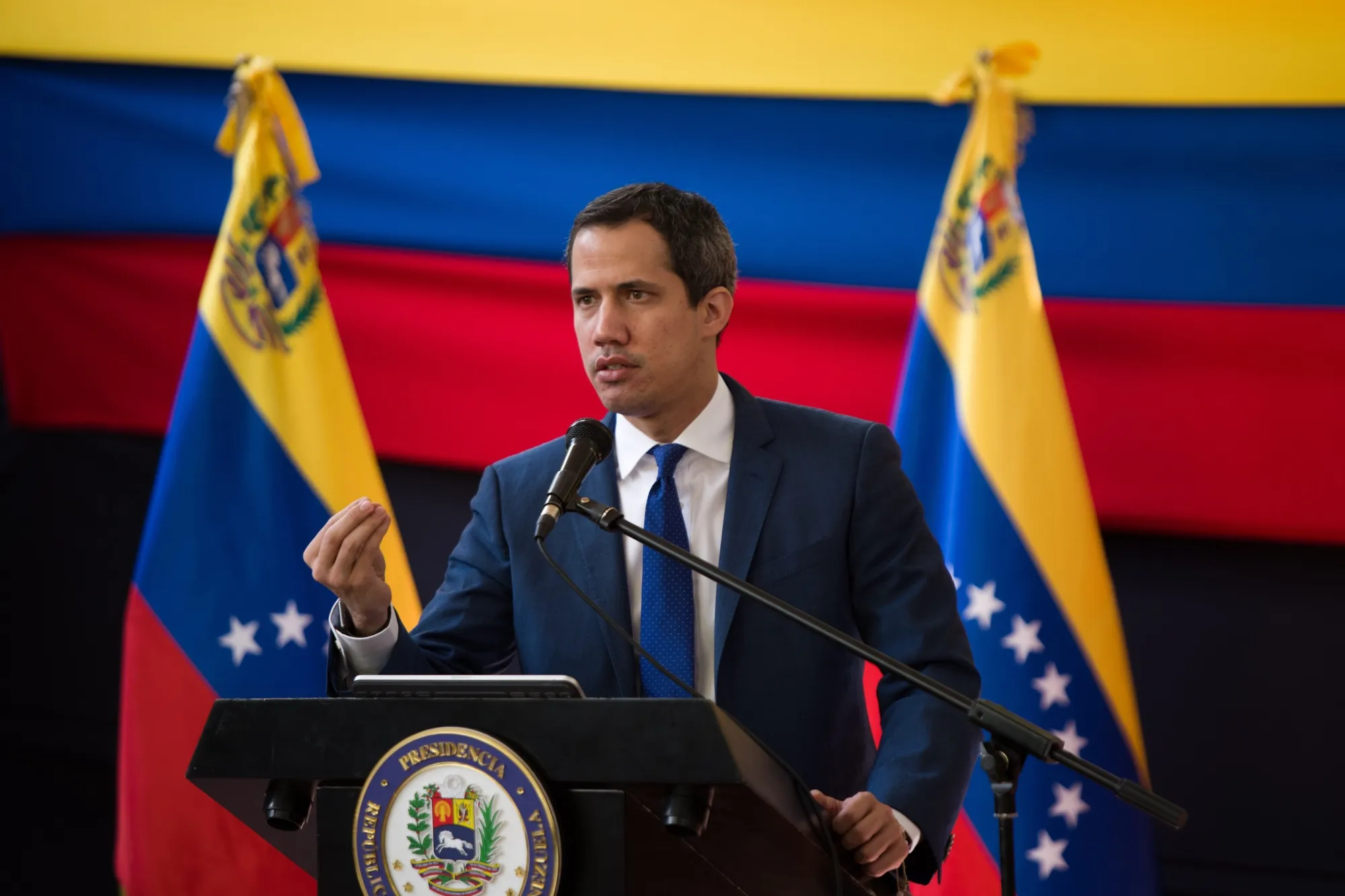


For years, Venezuela has stood as one of the most deeply polarized and crisis-ridden nations in Latin America. Central to its ongoing political turmoil was the rise and eventual decline of Juan Guaidó, the opposition leader who declared himself interim president in 2019 with the backing of the United States and dozens of other countries. His leadership, however, functioned in parallel to that of Nicolás Maduro, who retained control of the state’s institutions, security forces, and territory.

Now, Guaidó’s symbolic presidency has officially come to an end. His departure marks a significant moment in Venezuela’s opposition movement, a sign of both exhaustion and recalibration. While hailed as a beacon of democratic resistance just a few years ago, Guaidó’s political project gradually lost momentum, plagued by internal divisions, failed strategies, and the unyielding power of Maduro’s regime. This essay explores how Guaidó’s parallel leadership unraveled, the global and domestic responses to it, and what the future holds for Venezuelan democracy.
I. The Rise of a Parallel Presidency
In January 2019, Juan Guaidó, then the relatively unknown head of Venezuela’s National Assembly, invoked constitutional provisions to declare Nicolás Maduro’s presidency illegitimate following widely disputed elections in 2018. Citing articles of the Venezuelan Constitution, Guaidó asserted that, in the absence of a legitimate president, the head of the National Assembly was required to assume the role of interim president.
Within days, the United States, Canada, most of the European Union, and over 50 other countries formally recognized Guaidó as the legitimate leader of Venezuela. It was a stunning geopolitical moment: a democratically elected parliamentarian standing in open defiance of a sitting president, with the international community seemingly behind him.
Guaidó promised free and fair elections, a transitional government, and the restoration of democratic order. Mass protests erupted across Venezuela in support of his movement, and optimism surged among opposition supporters.
II. The Initial Surge and Momentum
During the first half of 2019, the Guaidó-led opposition appeared to gain serious momentum:
-
The international recognition gave him access to Venezuelan state assets frozen abroad.
-
He mobilized massive street demonstrations.
-
Diplomatic pressure and sanctions were levied against Maduro’s government.
There was a strong sense that regime change was within reach. However, Guaidó’s plan rested on a three-pronged strategy: end the usurpation, establish a transitional government, and hold free elections. This approach, known in Spanish as “cese de la usurpación,” depended heavily on defections from the military and international pressure.
That military defection never materialized.
Despite the deep economic crisis and widespread suffering, the military hierarchy remained loyal to Maduro, bolstered by patronage networks, ideological alignment, and fear of retribution under a new regime.
III. Strategic Missteps and Waning Influence
By mid-2020, it became increasingly clear that Guaidó’s strategy had stalled. Several missteps contributed to his decline:
1. Failed Uprising
In April 2019, Guaidó and opposition figure Leopoldo López launched a call for military rebellion dubbed “Operation Freedom.” A few soldiers joined, but the uprising was quickly contained. The failed insurrection eroded his credibility and emboldened Maduro.
2. Scandals and Governance Questions
With access to frozen Venezuelan assets abroad, questions arose over how Guaidó’s interim government managed funds. Allegations of mismanagement and internal corruption—although not directly implicating Guaidó himself—damaged the image of the opposition as a clean alternative to chavismo.
3. Fragmentation of the Opposition
The opposition coalition became increasingly fractured. Some leaders criticized Guaidó’s alignment with the U.S., while others advocated negotiation over confrontation. Fissures emerged over electoral strategies, participation in parliamentary elections, and engagement with international stakeholders.
4. Diminishing Protests
Popular mobilization, once Guaidó’s greatest asset, dwindled as Venezuelans grew weary of political theater and focused on day-to-day survival amid hyperinflation, fuel shortages, and crumbling infrastructure. With no tangible results, many lost faith in both Maduro and Guaidó.
IV. International Recognition Falters
As Guaidó’s domestic leverage waned, so too did his international standing.
By 2021 and 2022, several European countries stopped referring to him as interim president, choosing instead to call him an “opposition leader.” The Biden administration in the U.S. adopted a more cautious tone, focusing more on humanitarian relief and negotiations rather than regime change.
Latin American politics also shifted. Left-leaning governments came to power in countries like Mexico, Colombia, Brazil, and Argentina—many of which were less inclined to back a parallel presidency. These regional changes diluted Guaidó’s diplomatic influence and support network.
V. The Opposition Votes to End His Mandate
In a dramatic but quietly anticipated move, the Venezuelan opposition itself voted in December 2022 to dissolve the “interim government.” In a virtual session of the National Assembly (elected in 2015, no longer officially recognized by the regime), opposition lawmakers concluded that the parallel structure no longer served a strategic purpose.
They cited the following reasons:
-
Guaidó no longer had the capacity to challenge Maduro meaningfully.
-
The interim government had failed to achieve its goals.
-
It was necessary to reorganize the opposition ahead of potential future elections.
The vote was not without resistance. Guaidó and his allies argued that ending the interim government ceded symbolic and legal ground to Maduro. But the majority prevailed. Thus, in January 2023, Guaidó’s tenure as interim president came to a formal close.
VI. Exile and Uncertain Future
In April 2023, Guaidó traveled to Colombia to attend an international summit on Venezuela. Upon arrival, he was escorted by Colombian authorities and then traveled onward to the United States, where he has remained in exile. In interviews, Guaidó has insisted that he remains committed to democratic change and that his political career is not over.
However, his political capital is greatly diminished, and he now faces the challenge of remaining relevant from abroad, while a new generation of opposition leaders attempts to chart a different course inside Venezuela.
VII. Maduro’s Enduring Control
While Guaidó’s leadership faltered, Nicolás Maduro solidified his grip on power:
-
The government weathered international sanctions, with support from allies like Russia, China, Iran, and Turkey.
-
State repression of dissent, imprisonment of opposition leaders, and the dismantling of civil society continued.
-
A loyal Supreme Court, control of the electoral council, and manipulation of parliamentary elections allowed the regime to maintain a democratic façade.
Maduro’s survival has been attributed not only to repression but also to strategic adaptation. The regime has tolerated limited economic liberalization, eased some price controls, and attracted foreign investment—all while maintaining political control.
VIII. Political Fatigue in Venezuela
At the heart of Guaidó’s fall is a broader phenomenon: political fatigue. Years of instability, dashed hopes, and economic collapse have left Venezuelans disillusioned with all sides of the political spectrum.
Polls consistently show high levels of abstention and skepticism toward both government and opposition. The prospect of foreign military intervention has lost appeal, and many citizens view the political class as out of touch with daily struggles.
For millions, the answer has been emigration. Over 7 million Venezuelans have left the country, one of the largest displacement crises in the world. This exodus has profoundly altered the social and economic fabric of the nation.
IX. Toward a New Strategy: Elections in 2024
Despite the gloom, 2024 may offer a turning point. Presidential elections are scheduled, and international negotiations—brokered in part by Norway and supported by Mexico—aim to create minimal guarantees for free participation.
The opposition, now led by a new platform known as the “Unitary Platform,” has signaled a renewed willingness to contest elections and mobilize voters. María Corina Machado, a prominent opposition figure, has emerged as a strong candidate in preliminary primaries, though she too faces government attempts to disqualify her.
Whether these elections can be credible remains uncertain. But the shift in strategy—from parallel governance to electoral engagement—marks a new phase in the opposition’s battle.
X. The Legacy of Guaidó’s Experiment
Juan Guaidó’s story will likely be remembered as both a symbol of hope and a cautionary tale. He emerged as a unifying figure at a moment of desperation and rallied domestic and international support with unprecedented speed.
However, the limitations of symbolic power, overreliance on foreign intervention, and underestimation of regime resilience proved fatal to his experiment. His fall does not mean the end of opposition in Venezuela, but it underscores the need for more grounded, cohesive, and strategic efforts.
As Venezuela moves forward, the lesson is clear: meaningful political change must be rooted in internal strength, electoral engagement, and sustained civic organization—not just external pressure or parallel institutions.
Conclusion
The end of Guaidó’s parallel leadership is not just the story of a single politician’s decline—it is a reflection of Venezuela’s broader struggle for democracy, dignity, and self-determination. As the opposition regroups and the international community recalibrates its approach, the coming years will determine whether Venezuela can move beyond fatigue and toward genuine democratic renewal.
The world watches, again, but this time with tempered expectations—and cautious hope.








