






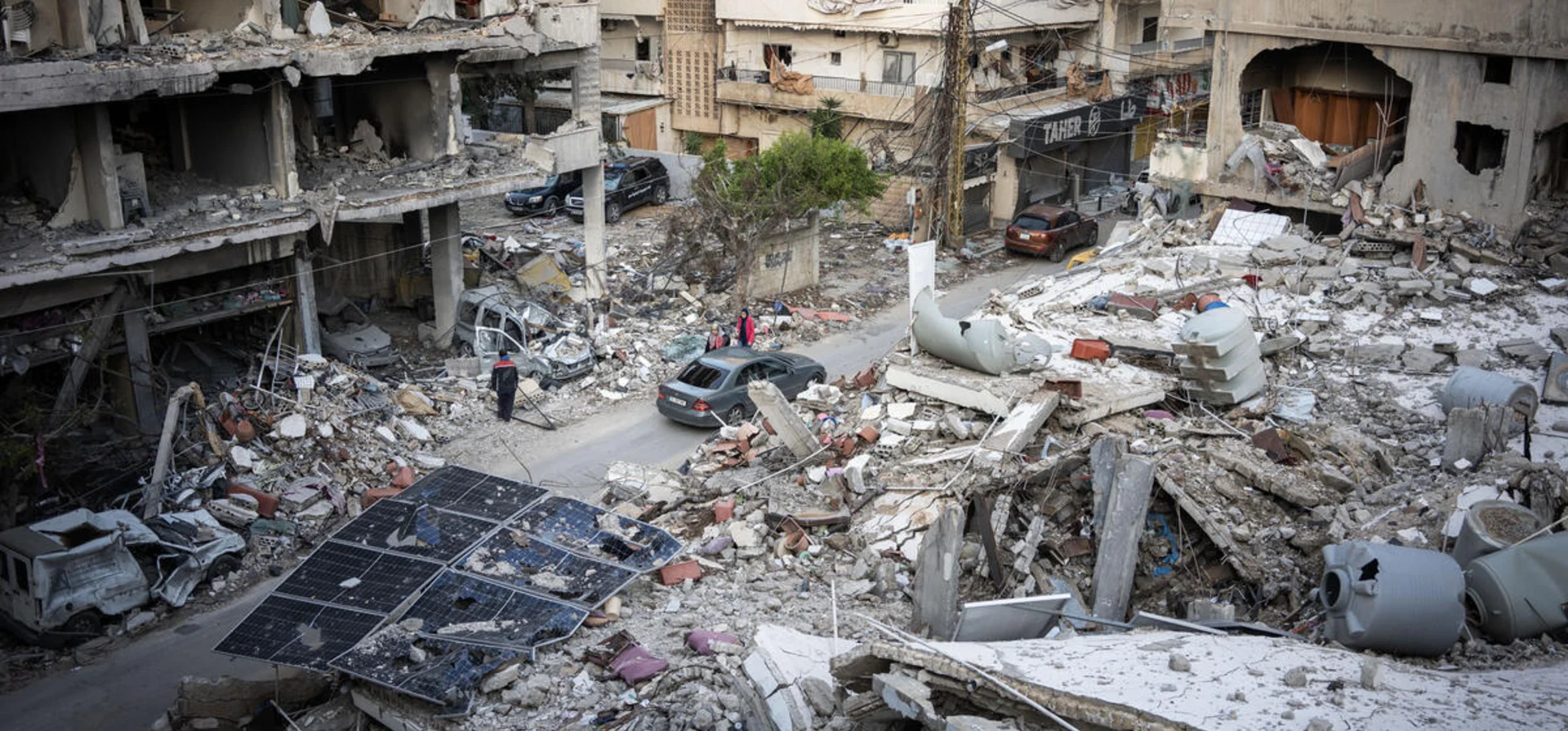


In a world often defined by endless cycles of violence, political instability, and humanitarian crises, moments of hope can feel rare and fragile. Yet in a conflict-torn country long plagued by war, displacement, and social fragmentation, a glimmer of optimism has emerged. Recent developments—ranging from peace talks and ceasefire agreements to grassroots reconciliation and international support—have begun to reignite hope for lasting peace.


This article explores the unfolding story of this nation’s path from conflict toward reconciliation, the structural challenges ahead, and the fragile but transformative possibility of a peaceful future.
1. The Long Shadow of Conflict
For decades, the country—whose name has become synonymous with suffering—has been gripped by civil war, insurgency, or ethnic violence. Generations have grown up knowing only war, with deep scars left on the social fabric, infrastructure, and institutions.
a. Origins of the Conflict
The conflict began due to a combination of:

-
Ethnic and religious divisions, exacerbated by colonial-era borders or post-independence marginalization.
-
Political exclusion, where one group dominated power and denied others fair representation.
-
Economic disparities, which bred resentment in regions left behind by development or deprived of resources.
This combustible mixture was often intensified by:
-
Outside interference by foreign powers.
-
The flow of weapons and mercenaries.
-
Competition over natural resources such as oil, minerals, or farmland.
b. Human Toll
Over the years, the conflict has caused:
-
Tens of thousands of deaths.
-
Mass displacement, with millions of refugees and internally displaced persons (IDPs).
-
Collapsed healthcare and education systems, making development nearly impossible.
The psychological trauma is just as severe—generations have lost hope in their leaders, their systems, and sometimes even in each other.
2. A Fragile Window Opens
In the last 12 months, a series of developments have shifted the trajectory from confrontation to dialogue.
a. Ceasefire Agreements
After years of on-and-off fighting, key parties signed a nationwide ceasefire agreement, brokered by regional actors and supported by the United Nations. This ceasefire:
-
Includes compliance monitoring by neutral observers.
-
Contains provisions for humanitarian access.
-
Was signed not only by the central government but also by regional militias and opposition groups.
Sporadic violations still occur, but overall violence has significantly decreased, creating space for diplomacy.
b. Peace Talks
Peace negotiations are being held in a neutral city, involving:
-
Government officials.
-
Opposition leaders, including those in exile.
-
Ethnic minority representatives.
-
Civil society, including women’s groups and religious leaders.
The talks have focused on:
-
Power-sharing arrangements.
-
Disarmament, Demobilization, and Reintegration (DDR) of combatants.
-
Constitutional reform.
-
Plans for transitional justice and national reconciliation.
While slow and sometimes contentious, the process represents the most inclusive and promising dialogue in decades.
3. Regional and International Support
The international community has played a critical role in supporting peace efforts.
a. United Nations and NGOs
The UN has deployed mediators and peacekeeping missions, while UN agencies such as UNHCR and WFP have supported returning refugees and food security. NGOs have helped by:
-
Facilitating dialogue at the community level.
-
Supporting trauma healing and mental health initiatives.
-
Rebuilding schools and clinics in post-conflict zones.
b. Regional Powers
Neighboring countries, once part of the problem, are now part of the solution. Through regional organizations (like the African Union or ASEAN, depending on geography), countries have:
-
Hosted negotiations.
-
Offered neutral grounds for talks.
-
Pressured warring factions through sanctions or incentives.
c. Global Diplomacy
Major powers—such as the EU, US, and China—have coordinated their involvement to avoid proxy competition and instead support a unified peace framework, recognizing that sustainable peace benefits the entire region’s stability and economic potential.
4. Healing a Fractured Society
Peace is not only a matter of guns falling silent—it’s about rebuilding trust, identity, and belonging.
a. Community Reconciliation
In war-torn villages and towns, community peace councils are emerging, where:
-
Former enemies now sit together to acknowledge harms.
-
Victims share their experiences in truth-telling circles.
-
Local leaders negotiate the return of displaced families and the restoration of property.
Programs inspired by traditional justice systems have had surprising success in breaking down cycles of revenge and resentment.
b. Youth and Education
Youth—often both the victims and perpetrators of war—are being empowered to become agents of change. Peace education is being reintroduced into schools, teaching:
-
Conflict resolution.
-
Tolerance and coexistence.
-
Civic engagement and leadership.
Vocational training and job creation programs are also helping to prevent the re-recruitment of youth into armed groups.
c. Role of Women
Women, often marginalized in politics, are playing central roles in peacebuilding as:
-
Mediators and negotiators.
-
Heads of NGOs and local councils.
-
Community organizers promoting interethnic harmony.
Studies show that peace processes are more likely to succeed when women are meaningfully involved, and this country is proving that to be true.
5. Obstacles Ahead
Despite the momentum, many challenges threaten to derail peace.
a. Spoilers and Warlords
Some powerful actors, such as:
-
Militias who profit from chaos,
-
Political elites who fear losing power,
-
Or even foreign mercenaries or terrorist groups,
continue to oppose peace and may use violence or misinformation to sabotage progress.
b. Fragile Institutions
The government remains weak, corrupt, and underfunded. For peace to last, it must:
-
Build functioning judicial and law enforcement systems.
-
Hold free and fair elections.
-
Provide basic services to all regions equally.
This institutional weakness makes many fear that the state cannot hold the center.
c. Economic Collapse
The war has devastated the economy. To move forward, the country needs:
-
Debt relief and foreign investment.
-
A focus on agriculture, manufacturing, and sustainable development.
-
Job creation that offers alternatives to armed groups and black-market economies.
If economic grievances remain unaddressed, violence may resurface.
6. The Human Spirit: Stories of Survival and Hope
What gives this moment its emotional power are the stories of ordinary people choosing peace.
-
A former child soldier, now a teacher, training his students to resolve conflict with words.
-
A refugee woman who returned home to rebuild her village school from rubble.
-
A war widow who leads peace circles among rival tribes.
-
A governor who once led a rebel army, now preaching reconciliation and nonviolence.
Their voices, more than any politician’s, embody the spirit of a nation ready to heal.
7. A New Narrative Emerges
Beyond politics and policy, this moment is about a change in mindset—a shift from cynicism to cautious optimism.
Media outlets once focused solely on bombings and massacres are now covering:
-
Peacebuilding success stories.
-
Youth initiatives and innovation.
-
Cultural festivals celebrating a united national identity.
This changing narrative is important—it shows the world, and the nation itself, that peace is not only possible, it’s already happening in small but profound ways.
8. What’s Next? The Road Ahead
Peace is a process, not an event. For this country to succeed, it will need:
-
Sustained international support, without hidden agendas.
-
Inclusive governance, where no group is left behind.
-
Justice mechanisms to address war crimes and trauma.
-
Long-term education and economic strategies to address the root causes of conflict.
Most importantly, it will require trust—in leaders, in institutions, and in each other.
Conclusion: A Nation at the Crossroads
The hope rising in this conflict-torn country is not naïve. It is hard-earned, cautious, and grounded in painful lessons. But it is real.
After decades of war, people are daring to believe in peace. Leaders are learning to talk instead of shoot. Children are going back to school instead of refugee camps. And villages are hearing songs and prayers instead of gunfire.
This may not be the end of the struggle, but it may be the beginning of something profoundly transformative—a future where peace is no longer a dream but a shared reality.