







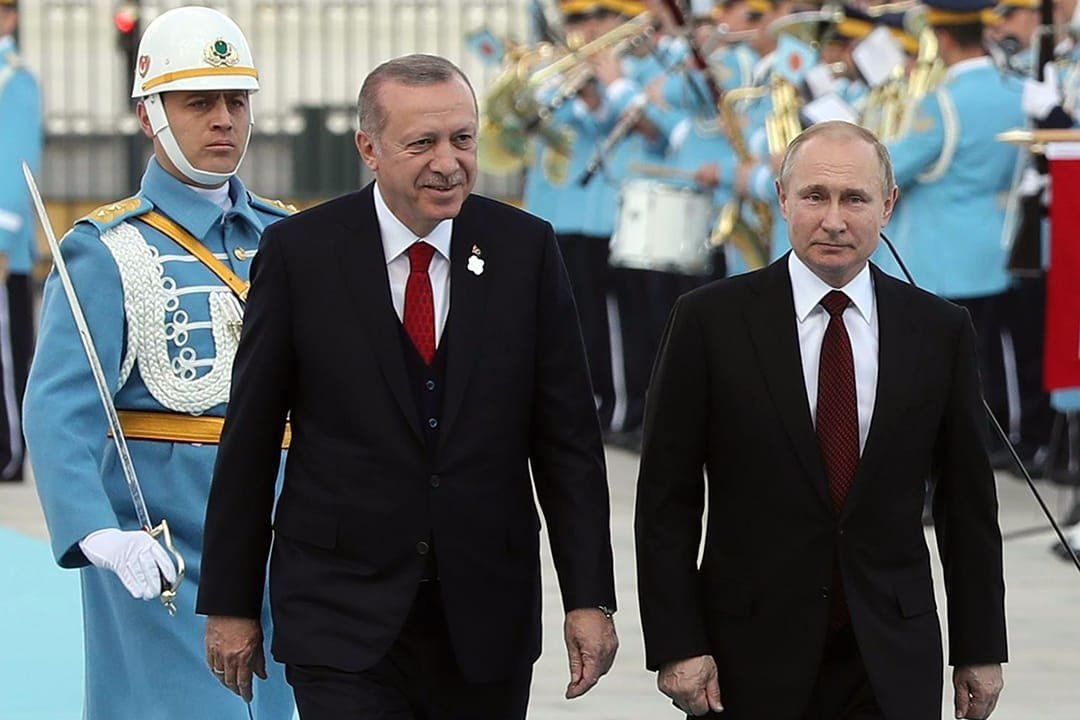


In an increasingly multipolar and unstable global order, Turkey has emerged as a pivotal player balancing between multiple, often conflicting, geopolitical poles. As a long-time member of NATO, a regional power with deep cultural and historical ties to the Middle East, and a complex strategic partner of Russia, Turkey—under the leadership of President Recep Tayyip Erdoğan—has adopted an ambitious and assertive foreign policy posture. The country’s geostrategic location at the crossroads of Europe, Asia, and the Middle East enables Ankara to engage flexibly with global powers while pursuing its own national interests.

But how does Turkey manage to sustain relations with NATO, maintain a strategic relationship with Russia, and assert its influence across the Middle East—all at once? This essay explores Ankara’s geopolitical balancing act, the strategic calculus behind its decisions, and the long-term implications of its foreign policy realignment.
1. Turkey And NATO: Allies With Friction
Turkey joined NATO in 1952, during the early Cold War, becoming a cornerstone of the alliance’s southeastern flank. Its strategic location—bordering the Soviet Union (now Russia), Iran, Iraq, and Syria—made it a crucial buffer and military asset. With the second-largest military in NATO, Turkey has played an active role in alliance missions from Afghanistan to the Balkans.
However, Ankara’s relationship with NATO has grown increasingly complicated over the last decade. Disagreements with the United States and other allies over issues like:
-
Kurdish militias in Syria (particularly the U.S. support for the YPG, which Turkey sees as a terrorist group),
-
The 2016 coup attempt, during which Ankara accused Fethullah Gülen (a U.S.-based cleric) of orchestrating the plot,
-
Turkey’s purchase of the Russian S-400 air defense system, which led to its removal from the F-35 fighter jet program,
-
Human rights concerns and democratic backsliding under Erdoğan,
have all contributed to growing friction.
Despite these tensions, NATO remains central to Turkey’s defense doctrine. Ankara hosts key NATO facilities, such as İncirlik Air Base, used in operations across the Middle East, and Kürecik Radar Station, part of NATO’s missile defense shield. Turkish officials frequently reaffirm their commitment to NATO while demanding greater respect for Turkish security concerns.
This duality—commitment mixed with confrontation—is part of Ankara’s broader strategy to assert its independence within the alliance while reaping its benefits.
2. Strategic Pragmatism With Russia
Turkey’s relationship with Russia is defined by strategic pragmatism rather than ideological alignment. The two powers have historically been rivals, having fought numerous wars during the Ottoman-Russian era. However, under Erdoğan and Russian President Vladimir Putin, relations have become more cooperative—though still cautious.
Several major developments illustrate this complex partnership:
a. Energy and Trade
Russia is one of Turkey’s largest energy suppliers. The TurkStream pipeline, inaugurated in 2020, delivers Russian natural gas directly to Turkey and southern Europe. Economic ties, especially in energy and tourism, are strong—millions of Russian tourists visit Turkish resorts annually.
b. The S-400 Controversy
In 2019, Turkey’s decision to purchase the Russian S-400 missile defense system marked a dramatic shift in its defense procurement strategy. The move angered the U.S. and NATO, who saw it as incompatible with Western systems and potentially compromising NATO’s interoperability. The deal symbolized Turkey’s desire to diversify its defense partnerships and signal autonomy from the West.
c. Military Coordination and Rivalry
Turkey and Russia often find themselves on opposite sides of conflicts, yet they manage to coordinate tactically:
-
In Syria, Russia backs the Assad regime, while Turkey supports various opposition groups. However, the two countries have engaged in deconfliction efforts, joint patrols, and diplomatic negotiations (such as the Astana process).
-
In Libya, they supported opposing factions but eventually reached a fragile understanding.
-
In Nagorno-Karabakh, Turkey backed Azerbaijan militarily while Russia brokered the ceasefire—an example of shared influence in the Caucasus.
While cooperation exists, competition is never far behind. Ankara and Moscow remain wary of each other’s regional ambitions and maintain a careful balance of power diplomacy.
3. Influence And Intervention In The Middle East
As the heir to the Ottoman Empire, Turkey sees itself as a cultural and political power in the Middle East. Erdoğan has blended nationalism with a revival of Islamic and Ottoman-era imagery, appealing to conservative Muslim populations at home and across the region. Turkish foreign policy has taken a more assertive tone, particularly after the Arab Spring, with interventions and influence campaigns extending from Syria to Libya to the Gulf.
a. Syria
Turkey’s most sustained regional involvement has been in Syria. Ankara launched multiple military operations—Euphrates Shield, Olive Branch, and Peace Spring—to push back both ISIS and Kurdish forces from its southern border. Turkey now controls a significant buffer zone in northern Syria and hosts over 3.6 million Syrian refugees, giving it significant leverage in regional and European migration politics.
b. Qatar and the Gulf Crisis
In 2017, when Saudi Arabia, the UAE, Bahrain, and Egypt imposed a blockade on Qatar, Turkey sided with Doha. It deployed troops to a Turkish military base in Qatar and increased trade and political support. This move positioned Turkey as an alternative pole of Sunni Muslim leadership, countering Saudi dominance.
c. Libya
In Libya’s civil war, Turkey intervened militarily in support of the UN-recognized Government of National Accord (GNA) in Tripoli. Turkish drones, advisors, and arms helped repel a siege by the rival Libyan National Army (LNA) backed by Russia, Egypt, and the UAE. Ankara has since secured maritime and energy deals with Libya, expanding its influence in the Eastern Mediterranean.
d. Palestinian Issue
Erdoğan has been an outspoken supporter of the Palestinian cause, often criticizing Israel’s actions in Gaza and Jerusalem. While maintaining diplomatic ties with Israel, Turkey has aligned rhetorically with Hamas and uses its support for Palestine to bolster its image across the Muslim world.
4. The Eastern Mediterranean And Regional Tensions
Ankara’s assertive posture in the Eastern Mediterranean has increased tensions with Greece, Cyprus, and the EU. Turkey has conducted gas exploration missions in disputed waters, often accompanied by military escorts. These moves are part of Ankara’s push to secure energy independence, defend its maritime rights, and assert its regional influence.
Turkey’s maritime deal with Libya’s GNA, which expanded its Exclusive Economic Zone, further antagonized Greece and Egypt. The dispute has led to a precarious standoff, only eased through EU mediation and NATO-led deconfliction mechanisms.
5. Balancing The Triangle: Strategic Autonomy Or Overreach?
Turkey’s ability to maintain relations with NATO, Russia, and the Middle East simultaneously stems from a foreign policy doctrine increasingly characterized by “strategic autonomy.” Under Erdoğan, Ankara seeks to avoid full alignment with any single bloc, preferring a flexible, multipolar engagement model. This approach brings certain benefits:
-
Leverage through ambiguity: By keeping options open, Ankara extracts concessions and avoids dependence on any one actor.
-
Regional influence: A multipolar approach gives Turkey greater space to project power, sign deals, and mediate conflicts.
-
National prestige: Domestically, Erdoğan’s foreign policy is framed as a return to Turkish greatness, playing well among nationalist and conservative voters.
However, there are clear risks and constraints:
-
Erosion of trust: NATO allies view Ankara as unreliable, while Russia remains a strategic competitor. Trust deficit limits long-term cooperation.
-
Economic vulnerability: Turkey’s economy is deeply dependent on Western investment and technology. Sanctions or investor flight can destabilize it.
-
Overextension: Simultaneously intervening in multiple theaters (Syria, Libya, Caucasus, Africa) strains military and financial resources.
-
Domestic backlash: Economic downturns, inflation, and authoritarianism at home may limit Erdoğan’s ability to sustain ambitious foreign adventures.
6. Future Trajectories: Flexibility Or Fragmentation?
Looking ahead, Turkey’s balancing act will be tested by shifting global dynamics:
-
NATO-Russia Conflict: The war in Ukraine and NATO expansion have increased polarization. Turkey’s role as a mediator (as seen in the grain deal negotiations) has boosted its diplomatic standing but also highlighted the risks of trying to sit between competing giants.
-
Middle East Normalization: Turkey has recently mended ties with former rivals like Saudi Arabia, Egypt, and the UAE, signaling a shift toward regional de-escalation and economic diplomacy.
-
EU Relations: While EU membership seems off the table, economic ties and migration cooperation remain vital. Ankara is pushing for visa liberalization and customs union reform.
Turkey’s foreign policy will likely continue to reflect realpolitik: balancing interests, exploiting contradictions, and using diplomacy, trade, and military power to pursue strategic autonomy.
Conclusion
Turkey’s position as a bridge state—between West and East, Europe and Asia, secularism and Islam—gives it a unique ability to navigate a fractured international order. Its ability to simultaneously engage with NATO, Russia, and Middle Eastern powers is not accidental but the product of a deliberate, adaptive strategy rooted in history, geography, and domestic politics.
However, the sustainability of this balancing act depends on both external developments and internal resilience. Economic fragility, political centralization, and regional instability could challenge Ankara’s ambitions. Nonetheless, Turkey’s flexible and assertive foreign policy makes it one of the most consequential middle powers of the 21st century.
In a world increasingly shaped by gray zones rather than clear alliances, Turkey’s multipolar diplomacy may offer a glimpse into the future of international relations—complex, competitive, and ever in flux.








