







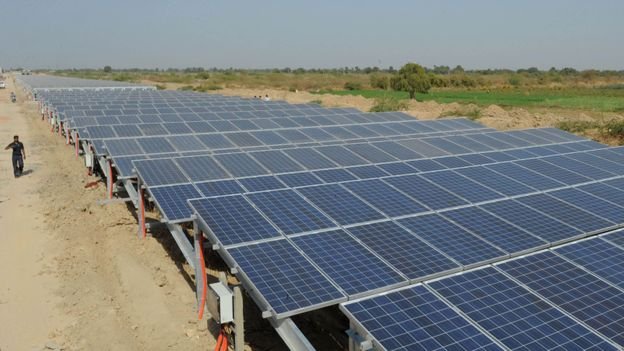


India, the world’s most populous democracy and one of the fastest-growing major economies, has emerged as a global leader in renewable energy—particularly in the solar power sector. With ambitious national targets, innovative public-private partnerships, and a deep commitment to sustainability, India’s renewable energy strategy has positioned the country at the forefront of solar power innovation. As the planet faces the mounting challenges of climate change, fossil fuel depletion, and energy inequality, India’s transformation offers both inspiration and a blueprint for other developing nations.


This comprehensive strategy is not merely about installing solar panels—it is a multidimensional effort that includes technological innovation, financial models, regulatory reform, infrastructure expansion, rural electrification, and international diplomacy. India’s leadership in this space is rapidly reshaping the global energy landscape.

A Nation Driven by Necessity and Opportunity
India’s journey toward solar energy leadership stems from both urgent necessity and visionary opportunity. On one hand, the country faces growing energy demands due to its large population and urbanization. On the other, it is vulnerable to the consequences of climate change: rising temperatures, water scarcity, and erratic monsoons. Fossil fuels—especially coal—still dominate energy production, but their social, economic, and environmental costs are becoming unsustainable.
At the same time, India enjoys abundant solar potential, with an average of 300 sunny days per year and vast expanses of arid land suitable for solar farms. Leveraging this natural advantage has become a national imperative. Recognizing this, policymakers launched bold initiatives aimed at transitioning to clean energy while achieving energy independence.

National Solar Mission: The Foundation of India’s Strategy
Launched in 2010 under the National Action Plan on Climate Change, the Jawaharlal Nehru National Solar Mission was a pivotal turning point. The mission set a goal of deploying 20 GW of solar power by 2022—a target that seemed ambitious at the time. However, thanks to dramatic cost reductions, policy support, and private investment, India revised this target upwards in 2015 to 100 GW of solar capacity by 2022, part of a broader renewable goal of 175 GW including wind, biomass, and small hydro.
The National Solar Mission catalyzed:
-
Utility-scale solar farms that now supply gigawatts to the national grid.
-
Decentralized rooftop solar programs for urban and rural homes.
-
Solar parks and ultra-mega power projects with world-class efficiency.
-
Supportive mechanisms, including feed-in tariffs, viability gap funding, and renewable energy certificates.
By 2025, India is on track to exceed many of these original targets, driven by cost competitiveness and strong market momentum.
Technological Innovation and Indigenous Capability
India’s solar leadership is not only measured in installed capacity but also in its technological innovation and domestic manufacturing push. The government has championed research and development across solar photovoltaic (PV) cells, concentrated solar power (CSP), and solar storage technologies.
Key innovations include:
-
Bifacial solar panels that capture sunlight from both sides.
-
Floating solar plants, like the one in Kerala, which preserve land and reduce evaporation.
-
Hybrid systems combining solar with wind or battery storage.
-
Agrivoltaics, which integrate solar panels with agricultural activities to benefit both farmers and energy producers.
To reduce dependence on imports, particularly from China, India has launched the Production Linked Incentive (PLI) scheme to boost domestic manufacturing of solar cells, wafers, modules, and raw materials. The goal is to establish India as a global solar hardware hub.
International Solar Alliance: A Diplomacy Masterstroke
In 2015, on the sidelines of the Paris Climate Agreement, India launched the International Solar Alliance (ISA) in partnership with France. This multilateral initiative now includes over 100 countries, particularly from the tropical belt, aiming to accelerate the adoption of solar energy globally through joint research, capacity building, and financial innovation.
The ISA embodies India’s soft power and leadership in climate diplomacy, reinforcing its image as a champion of clean energy among developing nations. It also opens up new markets for Indian solar companies and strengthens strategic ties in Africa, Southeast Asia, and Latin America.
Mega Projects and Solar Parks
India has built some of the largest solar installations in the world, showcasing its engineering prowess and policy ambition.
Notable examples include:
-
Bhadla Solar Park in Rajasthan – over 2.2 GW, spread across 14,000 acres.
-
Rewa Ultra Mega Solar Project in Madhya Pradesh – a model for public-private collaboration and inter-state power sales.
-
Pavagada Solar Park in Karnataka – one of the world’s largest single-location solar projects.
These mega projects have driven economies of scale, reduced per-unit costs, and demonstrated how large-scale renewables can meet industrial and urban energy needs.
Empowering Rural India Through Decentralized Solar
One of the most impactful aspects of India’s strategy is its focus on solarizing rural and remote areas, where grid connectivity is limited or unreliable. Solar microgrids, solar water pumps, solar street lighting, and rooftop installations are transforming rural lives.
Programs like Saubhagya (for last-mile electrification) and KUSUM (for solar-powered irrigation) are bridging the energy gap in agriculture and village infrastructure. Women’s cooperatives and social enterprises are also being trained as solar technicians and entrepreneurs, fostering local employment and inclusive development.
Solar has become more than an energy solution—it is a tool for economic empowerment, gender equity, and social transformation.
Investment Climate and Private Sector Role
India’s renewable energy transition has attracted billions of dollars in domestic and foreign investment, making it one of the most attractive clean energy markets globally. The government’s transparent bidding process, clear targets, and regulatory frameworks have fostered competition and innovation.
Key players in the sector include:
-
Adani Green Energy, which operates massive solar farms.
-
Tata Power Solar, a leader in both residential and industrial solar.
-
ReNew Power, backed by global investors and focused on hybrid solutions.
-
International firms like TotalEnergies, SoftBank, and Masdar, investing in joint ventures and new technologies.
The availability of green bonds, climate finance, and blended capital mechanisms further strengthens the investment ecosystem.
Challenges and Roadblocks
Despite its remarkable progress, India’s solar strategy faces significant challenges:
-
Land acquisition conflicts, especially in densely populated or ecologically sensitive areas.
-
Grid integration and storage limitations, leading to curtailment of solar power during surplus generation.
-
Financial stress in distribution companies (DISCOMs), affecting payment cycles and project viability.
-
Dependence on imported technology, although domestic manufacturing is improving.
-
Extreme weather events and climate risks affecting infrastructure.
To maintain momentum, India must modernize its grid, scale up battery storage, de-risk private investment, and ensure equitable access.
Future Roadmap: 500 GW by 2030
India’s Prime Minister has pledged to reach 500 GW of non-fossil fuel capacity by 2030, including 280 GW from solar alone. This forms the core of India’s commitment under the Paris Agreement and updated Nationally Determined Contributions (NDCs).
The roadmap includes:
-
Expanding rooftop solar to 40 GW, particularly in urban homes, schools, and hospitals.
-
Integrating solar with electric vehicles (EVs) and green hydrogen production.
-
Building cross-border renewable energy corridors with neighboring countries like Nepal, Bhutan, and Bangladesh.
-
Leveraging Artificial Intelligence and IoT for smart solar grids and predictive maintenance.
-
Creating “green cities” powered predominantly by solar and wind energy.
This strategy aligns with India’s goal of achieving net-zero carbon emissions by 2070, a target that, while ambitious, is now more achievable thanks to solar power’s central role.
Global Lessons and Leadership
India’s success in solar energy offers critical lessons for other developing countries:
-
Visionary political commitment and long-term policy clarity are essential.
-
Public-private partnerships can drive innovation and reduce costs.
-
Inclusive programs targeting rural and marginalized communities ensure equitable development.
-
International cooperation, such as the ISA, can accelerate global clean energy goals.
As the world grapples with the dual crises of energy security and climate change, India’s solar story underscores the potential of clean energy to deliver economic growth, social justice, and environmental resilience.
Conclusion: A Solar Powerhouse Rising
India’s renewable energy strategy, particularly in solar power, reflects more than just infrastructure—it is a bold vision for a cleaner, more equitable future. With innovation, inclusivity, and international cooperation as its pillars, India has positioned itself not just as a beneficiary of the green transition, but as a global leader shaping its course.
From the deserts of Rajasthan to the rooftops of Mumbai, from small villages in Odisha to global boardrooms in New York, India’s solar revolution is illuminating a path toward sustainable prosperity. As this transformation continues to unfold, the world watches with admiration—and, increasingly, with inspiration.








