







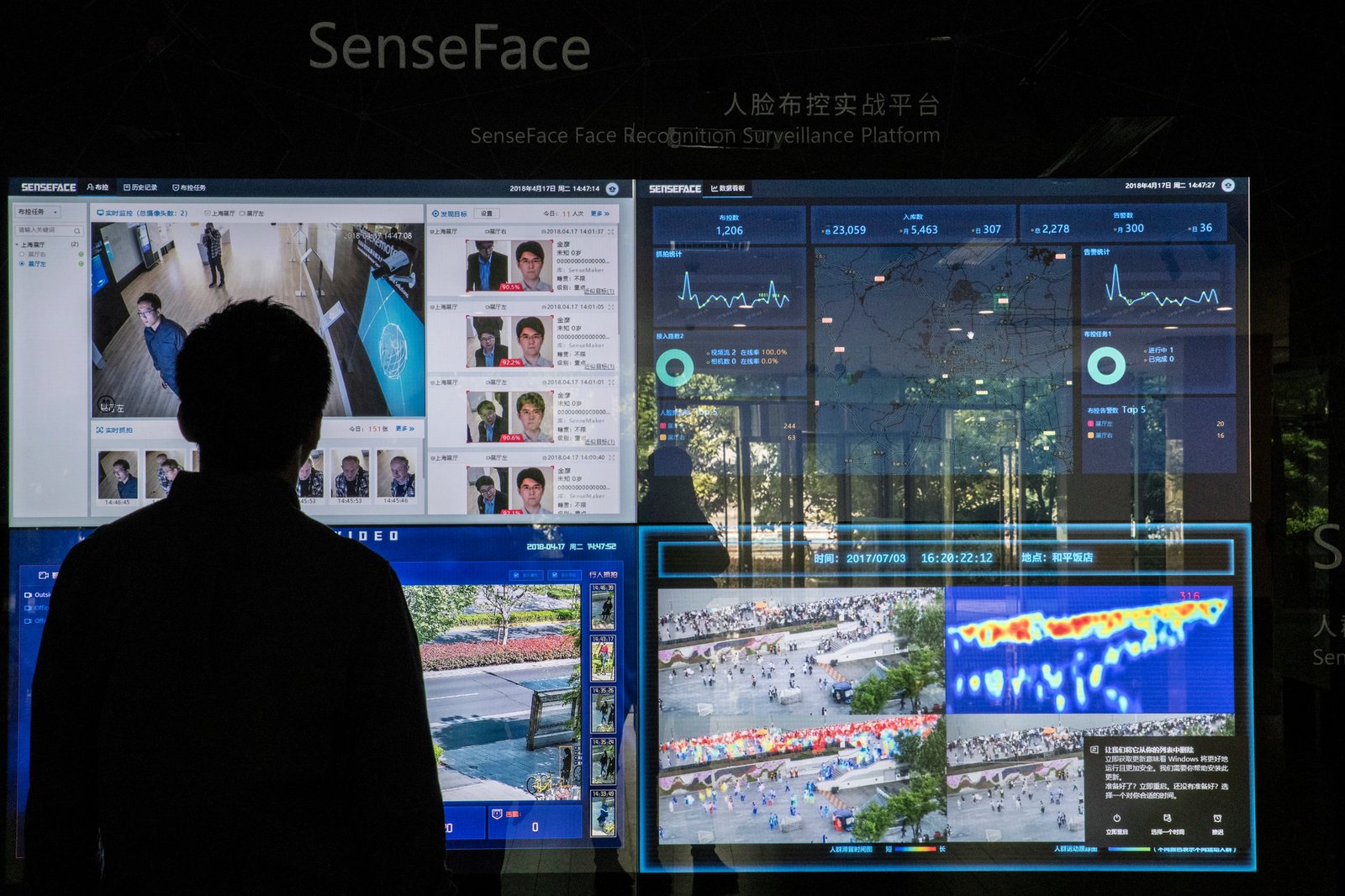


In recent years, China has rapidly emerged as a global leader in artificial intelligence (AI), pioneering developments across sectors such as transportation, healthcare, manufacturing, and surveillance. Nowhere is this progress more evident—or controversial—than in Beijing, the nation’s capital and a nerve center of political and technological power. As the government intensifies its campaign for “social stability” and national security, the growing use of AI to monitor its citizens has sparked international debates around privacy, civil liberties, and the role of technology in society.


This comprehensive exploration delves into the mechanisms, rationale, ethical questions, and global implications of Beijing’s expansive AI-driven surveillance infrastructure.

A Technological Fortress: Beijing’s Surveillance Ecosystem
Beijing’s surveillance system is one of the most advanced and comprehensive in the world. With an estimated 1 camera for every 2 residents, and many of them powered by facial recognition technology, the city has become a prototype for AI-enhanced monitoring. These systems are not limited to streets and public spaces; they also extend to schools, businesses, train stations, airports, residential compounds, and even inside taxis.
The government’s Smart City initiative aims to integrate big data, cloud computing, and AI to create a highly interconnected ecosystem where authorities can track movement, analyze behavior, and even predict criminal activity. The Ministry of Public Security, in collaboration with major tech companies like Huawei, Hikvision, and SenseTime, has deployed real-time monitoring systems capable of:
-
Identifying individuals via facial recognition within seconds.
-
Tracking vehicles using license plate recognition.
-
Monitoring crowd density and detecting unusual activity.
-
Combining data from financial transactions, social media, and phone use.
The Core Technologies: How AI Powers the System
The backbone of Beijing’s AI surveillance involves several interlinked technologies:
-
Facial Recognition: Cameras equipped with AI can match faces to national ID databases. These systems are capable of recognizing individuals even when they wear masks or glasses, and can track them across different districts of the city.
-
Gait Recognition: In response to attempts to disguise one’s identity, gait analysis has been implemented, which identifies people based on how they walk.
-
Predictive Policing Algorithms: Using historical data, AI systems identify individuals deemed “high-risk” and alert law enforcement for proactive intervention.
-
Behavioral Analytics: AI evaluates body language and group behavior in real time to detect potential threats or social unrest.
-
Data Fusion Platforms: Tools like the Integrated Joint Operations Platform (IJOP) collect data from various sources—including surveillance, internet use, and financial activity—into centralized systems accessible to law enforcement.
The Justification: Stability Over Privacy
The Chinese government maintains that the use of AI surveillance is essential for ensuring public order, reducing crime, and safeguarding national unity. In a country of 1.4 billion people, with a complex tapestry of ethnic, economic, and political dynamics, the ability to predict and neutralize unrest is seen as a cornerstone of governance.
Following high-profile incidents like the 2014 Kunming railway station attack and sporadic protests in Hong Kong and Xinjiang, Beijing has invested heavily in “security maintenance” technologies. The surveillance apparatus is promoted as a way to:
-
Monitor public spaces for potential terrorist threats.
-
Prevent petty and organized crime.
-
Maintain social harmony in rapidly urbanizing environments.
-
Track the spread of diseases like COVID-19 using health code apps linked to surveillance.
Social Credit System: A Tangled Web of Compliance
The infamous Social Credit System, while still fragmented and evolving, intertwines closely with AI surveillance. In Beijing, facial recognition systems can deny access to public transport or buildings to individuals with low scores. These scores are affected by a person’s financial behavior, social media posts, criminal records, and even whom they associate with.
Citizens with high credit scores may enjoy faster bureaucratic services and access to better financial loans, while those who fall below thresholds may be blacklisted from jobs, travel, or education. AI helps automate this vast network of data analysis, flagging “problematic” individuals for further scrutiny.
The Private Sector’s Role
Beijing’s AI surveillance boom is not solely a government project. The private sector plays a crucial role in developing, refining, and exporting this technology. Companies such as:
-
SenseTime and Megvii provide cutting-edge facial recognition algorithms.
-
Hikvision and Dahua produce high-resolution smart cameras with AI capabilities.
-
Alibaba and Tencent feed massive datasets from their platforms into public security systems.
In return, these firms receive government funding, contracts, and political protection. This symbiosis accelerates innovation but also blurs the lines between corporate enterprise and state control.
Public Sentiment: Between Convenience and Control
Public opinion in Beijing about surveillance is complex. While Western critics often emphasize privacy erosion, many Chinese citizens appreciate the added sense of security and efficiency. For instance, surveillance has played a key role in deterring theft, identifying fugitives, and facilitating quick responses to emergencies.
However, concerns do exist. Instances of false identification, lack of transparency, and unclear data retention policies have drawn criticism from academics, lawyers, and tech workers. The public has minimal recourse to challenge decisions made by opaque AI systems, and the concept of informed consent is largely absent.
Moreover, there have been growing calls for AI ethics guidelines and data protection legislation, though progress has been cautious and tightly state-managed.
International Reactions: A Model or a Warning?
The world watches Beijing’s surveillance model with a mixture of awe and alarm. Some governments, especially those with authoritarian tendencies, look to replicate the system, citing its effectiveness in crime prevention and civil order. Chinese tech companies have exported surveillance technology to over 60 countries, including Venezuela, Zimbabwe, and Serbia.
Conversely, democratic nations have expressed concern over the implications for human rights. The U.S., EU, and various watchdog organizations have criticized the surveillance of ethnic minorities like the Uyghurs in Xinjiang, where AI tools have been used to monitor and detain individuals based on religious or cultural markers.
Sanctions have been imposed on several Chinese tech firms, and discussions about the ethics of AI surveillance are increasingly central to global tech policy debates.
The Future of Surveillance in Beijing
The trajectory suggests even deeper integration of AI into civic life. Future developments may include:
-
Emotion Recognition: AI that can assess mood and intent based on micro-expressions.
-
Augmented Reality Monitoring: Using AR glasses by police for instant ID checks.
-
Drone Surveillance: Unmanned aerial vehicles with facial and crowd recognition capabilities.
-
Voice Recognition and Sentiment Analysis: Applied in public spaces and online communications.
Beijing’s vision aligns with Xi Jinping’s broader goal of achieving “digital sovereignty”—where data and technology are fully controlled domestically and used to consolidate national strength.
Ethical and Philosophical Considerations
The ethical debate surrounding Beijing’s AI surveillance challenges foundational values. Is it acceptable to sacrifice privacy for security? Who decides what constitutes “socially undesirable” behavior? Can algorithms be trusted to make moral judgments?
Critics argue that such systems can entrench authoritarianism, stifle dissent, and create a culture of self-censorship. Without transparency and accountability, AI becomes a tool not for enlightenment, but for control.
Proponents, however, suggest that in a country as vast and diverse as China, technological governance may be the only scalable method to ensure social stability.
Conclusion: A New Digital Order?
Beijing’s growing use of AI to monitor its citizens represents a pivotal moment in the evolution of governance and technology. While offering undeniable benefits in terms of security and administrative efficiency, it also poses deep questions about the limits of state power, the erosion of personal freedoms, and the future of civil society.
The rest of the world must grapple with the implications—both practical and philosophical—of what Beijing’s model means for the global balance between liberty and control. Whether this system becomes a blueprint for the future or a cautionary tale depends largely on how we collectively choose to wield the tools of artificial intelligence.








