







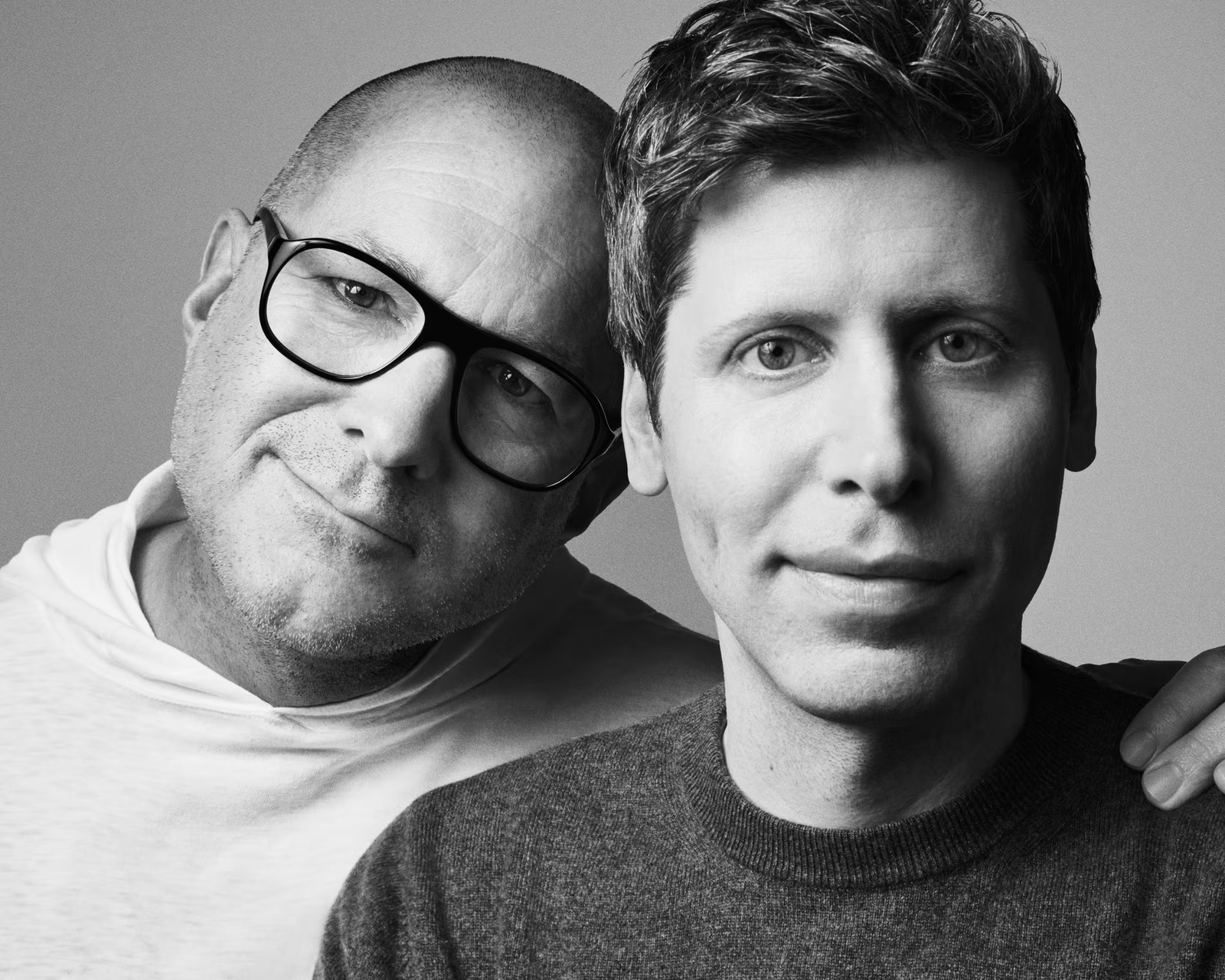


In what could be the most anticipated collaboration in recent tech history, Sir Jony Ive—the visionary behind Apple’s most iconic products—has joined forces with OpenAI’s CEO, Sam Altman. This groundbreaking $6.4 billion partnership merges Ive’s hardware startup, LoveFrom io, with OpenAI’s mission to bring artificial intelligence into our everyday lives in unprecedented ways. According to Ive, every step of his 30-year design journey has led to this pivotal moment. With soaring expectations and bold ambitions, the tech world watches closely as these two giants attempt to redefine the future of personal technology.


I. The Partnership That Could Redefine Technology
1. From Apple’s Legacy to OpenAI’s Future
Sir Jony Ive, the mind behind revolutionary devices such as the iPhone, iPod, and Apple Watch, has taken a new path by selling his hardware startup io to OpenAI. More than a mere acquisition, this deal places Ive in a central role in shaping the creative and design direction of the newly merged entities. His vision now extends beyond sleek devices to the interface between AI and humans—a field ripe with possibilities and yet full of challenges.

Ive’s transition away from Apple’s legacy signifies a desire to build something entirely new. As he noted in the promotional video, “Everything I’ve learned over the last three decades brought me to this point.” The move isn’t just a career change; it’s a redefinition of what personal technology can become.
2. A Creative Vision Backed by Proven Leadership
While lofty ambitions in the tech space are nothing new, what sets this venture apart is the caliber of the individuals behind it. Sam Altman, the executive who helped propel OpenAI to the forefront of artificial intelligence innovation, teams up with a designer renowned for making technology not just functional, but beautiful.

In their joint video announcement, Altman described the prototype device developed by Ive as potentially “the coolest piece of technology the world will have ever seen.” While the remark might seem exaggerated, given the duo’s track record, it commands serious attention.
II. The Mystery Device: A Glimpse into the Future
1. Beyond Phones and Wearables
The new device under development is intentionally different from traditional tech categories. It’s not a smartphone, nor is it designed to be worn like smart glasses. Instead, it represents an entirely new class of AI-integrated hardware—an “unobtrusive” companion that seamlessly fits into a user’s life. As reported by The Wall Street Journal, the concept aims to serve as a third essential desk device, alongside a laptop and a phone.
Altman and Ive have reportedly rejected current trends in wearable tech, hinting instead at a system that remains fully aware of its user’s environment without demanding physical attachment. The ambition? To build 100 million AI “companions” capable of integrating with daily human behavior on an intuitive level.
2. Learning from Past Failures
The road to successful AI-integrated hardware is fraught with setbacks. Products like the Humane AI Pin and Rabbit R1 tried and failed to capture the market with wearable AI assistants. Jony Ive himself criticized these attempts as “very poor products,” highlighting the lack of thoughtful design and integration.
Martha Bennett, a principal analyst at Forrester Research, noted the uphill battle that awaits the project. “To pull people away from their screen-based devices, this new product must be truly revolutionary,” she explained. The implication is clear: only a major leap in functionality and design will suffice.
III. Strategic Implications and Industry Reactions
1. Positioning OpenAI as a Platform Giant
Beyond launching a new piece of hardware, this move signals OpenAI’s deeper ambition—to evolve from a pure AI research organization into a major platform player like Apple or Google. Benedict Evans, a respected technology analyst, suggests that bringing Ive into the fold is OpenAI’s way of answering a fundamental question: How does an AI company become a dominant platform?
With AI models increasingly seen as interchangeable or commoditized, differentiation lies not just in the software but in how it’s applied. The partnership seeks to create a seamless interaction between powerful AI tools and elegant, intuitive hardware.
2. Building the Future While Flying the Plane
OpenAI is known for its fast-paced innovation, often described as building complex systems mid-flight. Evans notes that this new hardware venture, though ambitious, is part of a broader strategy to stabilize OpenAI’s growing empire. “Sam is trying to build the plane while flying it,” he says, implying that the stakes are high and the path is anything but simple.
The setting of their promotional video—Cafe Zoetrope in San Francisco, owned by filmmaker Francis Ford Coppola—adds a symbolic layer. It’s a nod to creativity, vision, and perhaps a reminder that the greatest innovations come from blending artistry with engineering.
Conclusion: A Bold Bet on AI’s Physical Future
The collaboration between Sir Jony Ive and OpenAI isn’t just another tech story—it’s the merging of art, innovation, and intelligence. With the goal of producing a device that redefines human interaction with machines, the stakes are enormous. Success would not only change how we use AI but also establish a new class of hardware entirely.
Skeptics warn that the journey ahead is steep, pointing to past failures and the challenge of overcoming ingrained habits centered around screens. However, with two visionaries at the helm—one known for design excellence, the other for pushing the boundaries of artificial intelligence—there’s reason to believe that the future of tech could soon look very different.
As we await the unveiling of this mysterious device, one thing is clear: the age of intelligent hardware is no longer a matter of if, but when.








