







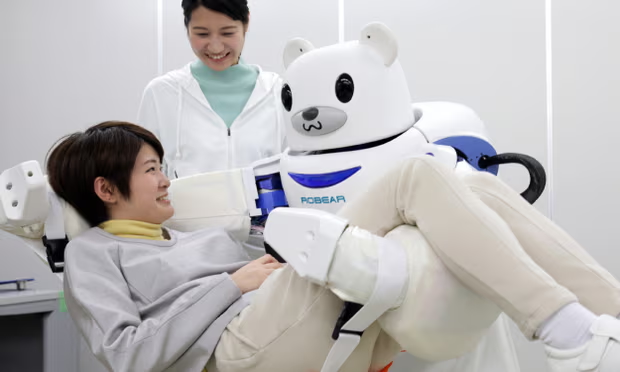


As Japan’s population continues to age rapidly, the country faces an alarming shortfall in its caregiving workforce—an estimated 370,000 caregivers will be needed by 2025. In response, the Japanese government is encouraging the integration of robotics into eldercare. While these machines won’t fully replace human caregivers, they are increasingly being seen as a practical solution to support the elderly and ease the pressure on nursing staff. By pushing for broader public acceptance of caregiving robots, Japan is charting a unique path toward balancing compassion and technology in its healthcare system.


I. The Growing Demand for Elderly Care
1. A Widening Caregiver Gap
Japan is currently dealing with one of the world’s most dramatic demographic shifts, with a rapidly growing elderly population and a shrinking workforce. This mismatch is creating a critical shortage in caregiving professionals. By 2025, the country is expected to lack nearly 370,000 caregivers, putting both private families and nursing institutions under immense pressure. In light of this, the government is proactively looking for technological alternatives to meet the growing demand.

2. Government Push for Technological Adoption
Recognizing the severity of the situation, Japanese officials are promoting community-wide acceptance of robotic caregivers. Their aim is to normalize the presence of machines in homes and care facilities by integrating them into daily routines. Although acceptance remains a challenge, the strategy is to start small—with simple, task-specific robots—and gradually introduce more advanced tools that complement, rather than replace, human care.
II. Innovations in Robotic Elderly Assistance
1. Basic Support Devices
Initial efforts have concentrated on developing basic robotic systems that assist with physical tasks. These include mechanical aids that help elderly individuals move from beds to wheelchairs or assist them while entering and exiting bathtubs. Such devices are designed to reduce strain on both the caregiver and the recipient, fostering a more efficient and dignified care process.

2. Predictive Toileting Technology
A recent shift in research priorities has led to the development of robots capable of predicting when a patient may need to use the restroom. This innovation not only enhances comfort and hygiene for the elderly but also reduces the workload for caregivers by helping prevent accidents before they occur. It’s another step toward supporting the autonomy of elderly individuals who still live independently at home.
3. Smart Mobility Assistance
Among the most promising devices is an electric-boosted mobility aid that adapts to the user’s movement. The system detects when the user is climbing a slope and activates a booster for easier movement. Conversely, when descending, it engages automatic brakes to prevent falls. Inspired by Japan’s motor-supported bicycles, this walker-style aid allows seniors to navigate city streets safely and confidently.
III. Challenges to Widespread Integration
1. Cultural and Psychological Resistance
Despite the practicality of robotic solutions, their adoption has been limited—partly due to societal expectations. According to Dr. Hirohisa Hirukawa, director of robot innovation research at Japan’s National Institute of Advanced Industrial Science and Technology, many caregivers feel strongly that emotional and physical support should be provided by humans. There is also an emotional barrier among care recipients, who may initially resist accepting help from machines.
2. Limited Deployment in Nursing Homes
Currently, lifting and mobility robotics are present in only about 8% of nursing homes across Japan. The two primary obstacles are the high cost of advanced robotic systems and resistance from frontline caregivers. These challenges make it difficult to scale the use of these technologies, even though they could dramatically reduce caregiver fatigue and improve patient care.
3. Striking a Balance Between Innovation and Simplicity
To keep costs down and make the technology more accessible, many robotic devices in Japan have been designed with minimal complexity. Most do not resemble humans or use voice interfaces. Instead, they rely on sensors and smart features to perform highly specific tasks. The aim is to deliver tangible help without overwhelming users or care providers with overly complicated systems.
IV. The Path Ahead for Robotic Care
1. Government-Backed Development
In the past five years, Hirukawa’s research center has supported nearly 100 robotics manufacturers in testing eldercare-focused devices. As of now, 15 of those projects have resulted in commercially available products. The government continues to fund research and development in the hope of accelerating the spread of these innovations throughout the eldercare sector.
2. Future Priorities in Research
Looking ahead, Japan is prioritizing wearable devices that support mobility and systems that can proactively guide elderly individuals to the restroom at appropriate times. These technologies represent a natural progression from passive assistance to active, real-time support. If successful, they could revolutionize how aging populations maintain independence while staying safe.
3. Changing Public Perception
According to Japan’s national robot strategy, the government aimed for 80% of care recipients to be comfortable receiving assistance from robots by 2020. While reaching that goal remains an ongoing effort, public sentiment is gradually shifting. Demonstrations, educational campaigns, and real-life applications are helping to normalize robot-assisted care, particularly among younger generations and more tech-savvy communities.
Conclusion
Japan’s use of robotics in elderly care stands as a global example of how technology can be leveraged to solve pressing demographic challenges. While robots will never fully replace the human touch, they can offer invaluable support—lightening the load for caregivers and empowering seniors to live with dignity. The road to full integration is still long, but Japan is taking bold and necessary steps to prepare for a future where aging does not mean helplessness, thanks in part to thoughtful and strategic use of AI-powered machines.








