






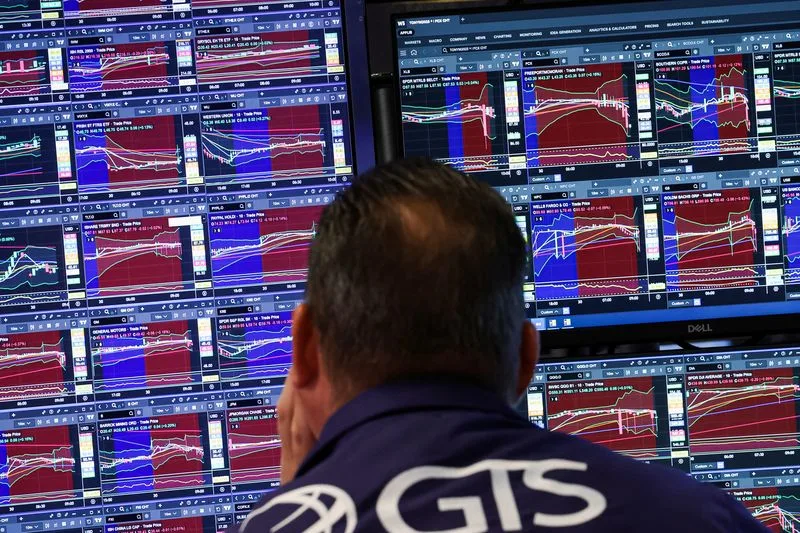


Global stock markets surged to all-time highs on Wednesday, driven by unexpected weakness in U.S. private sector employment and rising anticipation of a Federal Reserve interest rate cut. Meanwhile, British government bond yields spiked amid political uncertainty surrounding the country’s finance leadership. Investors responded to shifting economic indicators and geopolitical developments, leading to mixed performances across various financial sectors.


I. U.S. Labor Data Sparks Market Optimism
1. ADP Report Surprises with Payroll Decline
The ADP National Employment Report revealed a surprising drop in private payrolls for June, showing a decrease of 33,000 jobs. This figure contrasts sharply with May’s downwardly revised 29,000 job gain and falls far short of economists’ expectations of a 95,000 increase, according to a Reuters poll. While the ADP report often diverges from the official government payroll figures due later in the week, the weak data sparked fresh speculation about the Federal Reserve’s monetary policy direction.

2. Expectations Rise for July Rate Cut
Following the release of the employment figures, market expectations for a July rate cut by the Federal Reserve increased to just over 27%, up from 20.7% in the previous session, according to the CME FedWatch Tool. Jim Awad, senior managing director at Clearstead Advisors LLC in New York, noted that while a gradual employment slowdown could justify a rate cut and benefit markets, excessive weakness might harm growth and corporate earnings.
II. Wall Street Reacts with Record Closes
1. S&P 500 and Nasdaq Lead the Rally
U.S. equity markets responded positively, with the S&P 500 and Nasdaq both ending the session at new record highs. The S&P 500 climbed 29.41 points (0.47%) to 6,227.42, while the Nasdaq Composite jumped 190.24 points (0.94%) to close at 20,393.13. The Dow Jones Industrial Average, however, slipped slightly by 10.52 points (0.02%) to 44,484.42.

2. Tesla’s Rebound Fuels Gains
Tesla stock helped fuel the Nasdaq’s advance, bouncing back 4.97% after suffering a 5.3% loss on Tuesday. The recovery came after the electric vehicle manufacturer released its latest quarterly delivery report, which reassured investors despite recent volatility in the stock’s performance.
III. International Markets Follow Suit
1. Global Equities Reach New Peaks
MSCI’s global stock index rose 3.84 points (0.42%) to reach 921.24, briefly touching an intraday high of 922.27—its highest level ever recorded. In Europe, the pan-European STOXX 600 index gained 0.18%, buoyed by strong performances in the renewable energy and luxury goods sectors.
2. Treasury Yields Edge Higher
In the U.S., longer-term Treasury yields rose alongside equities. The yield on the benchmark 10-year U.S. Treasury note increased by 3.4 basis points to reach 4.283%, as investors balanced rate cut expectations with inflation and growth concerns.
IV. U.K. Markets Rattle Amid Political Uncertainty
1. Bond Yields Soar After Budget Cutbacks
British government bond yields experienced a significant surge, jumping nearly 23 basis points at one point—the largest single-day movement since October 2022. The rise followed a tense moment in Parliament, where Finance Minister Rachel Reeves appeared visibly shaken amid backlash over the government’s recent decision to scale back planned benefit cuts.
2. Gilt Market Reaction
The 10-year gilt yield was last reported at 4.621%, up 16.8 basis points on the day. The sharp move reflected growing market uncertainty over the government’s fiscal trajectory and leadership stability, prompting investors to reassess U.K. risk premiums.
V. Currency Markets Reflect Diverging Global Sentiment
1. Sterling Weakens Sharply
The British pound saw a sharp decline, falling 0.83% to $1.3631. At its lowest point during the session, it dropped as much as 1.35%, putting it on track for its worst daily percentage loss since mid-June. The market reaction was closely tied to domestic political developments and investor concern over the UK’s economic outlook.
2. Dollar Index Rebounds
The U.S. dollar index, which measures the greenback against a basket of major currencies, rose 0.13% to 96.76, poised to end a streak of nine consecutive daily losses. The euro remained relatively steady, slipping 0.03% to $1.1801 as traders weighed interest rate expectations across regions.
VI. Trade Tensions Resurface with Vietnam Tariff Announcement
1. Trump Introduces New Tariffs
In a move that rekindled concerns over international trade disputes, former U.S. President Donald Trump announced a new 20% tariff on goods from Vietnam. The figure was lower than previously anticipated but came amid stalled trade negotiations with other key partners, including Japan and India.
2. Investors Monitor Negotiation Progress
Although Trump stated that he was not inclined to extend the timeline for trade deal discussions, he expressed confidence in reaching an agreement with India. The market reaction was muted, with investors awaiting further details on future trade policy directions and their potential impact on global supply chains.
Conclusion
Global markets entered new territory on Wednesday as softer-than-expected U.S. labor data increased hopes for a Federal Reserve interest rate cut, while political tensions in the UK sent bond yields soaring and sterling tumbling. U.S. stock indices hit new highs, driven in part by a rebound in major tech shares, and international equities followed suit. Yet, looming trade tensions and domestic uncertainties in the UK signal that volatility may persist. As investors keep a close eye on economic indicators and policy shifts, the path forward remains both promising and unpredictable.