






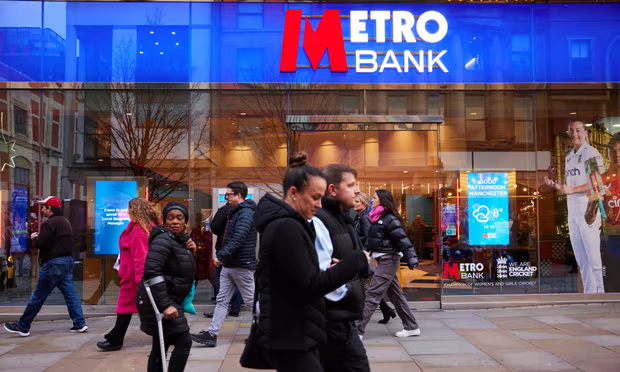


Metro Bank has recently found itself in the spotlight following news of a potential takeover by Pollen Street Capital, a London-based private equity firm. The speculation has driven Metro’s shares to their highest point in two years, suggesting renewed investor interest. However, the proposed deal, which may also involve a merger with Pollen’s other asset Shawbrook, raises new concerns over the future of Metro’s operations, its staff, and the stability of services for its 3 million customers.


I. Market Reaction and Takeover Rumors
1. Share Price Surge Reflects Market Optimism
Following weekend reports of Pollen Street Capital’s approach to Metro Bank regarding a possible acquisition, the market responded swiftly. Metro Bank shares surged over 15% on Monday, reaching 130p—a notable rebound after a period of instability. This sharp increase reflects market optimism but also underlines the volatility surrounding the bank’s future.

2. Speculation Around a Potential Merger with Shawbrook
Sources close to the matter have suggested that if Pollen’s takeover succeeds, it could lead to a merger with Shawbrook, a specialist business lender also under Pollen’s portfolio. Such a move would align with Pollen’s strategy of consolidating its financial services holdings, but it has introduced additional speculation about the future structure of Metro Bank.
II. Implications for Staff and Customers
1. Employee Uncertainty After Major Job Cuts
For Metro’s workforce, the takeover discussions are a cause for concern. The bank recently executed a cost-cutting initiative that saw around 1,000 roles eliminated. Approximately 3,000 employees remain, many of whom are now bracing for further organizational changes. A potential merger or restructuring could result in more layoffs, reigniting anxiety among staff who have already endured a turbulent period.

2. Service Changes and Branch Network Reductions
Metro Bank’s customer service model, built on in-branch experiences, has also come under scrutiny. The bank, which once prided itself on seven-day branch availability, has already reduced opening hours across its 75 physical locations. Any further restructuring under new ownership could impact branch operations, potentially diminishing service levels for its 3 million customers and eroding a key differentiator that originally set Metro apart from other UK banks.
III. From Innovation to Instability: Metro Bank’s Journey
1. A Revolutionary Entry into British Banking
Founded in 2010 by American entrepreneur Vernon Hill, Metro Bank broke new ground as the UK’s first new high street bank in over a century. It quickly gained attention with unique features such as dog-friendly policies and branches open seven days a week. This innovative approach attracted a loyal customer base and established Metro as a challenger bank with a fresh take on customer service.
2. Setbacks and Leadership Shake-ups
However, Metro’s fortunes shifted dramatically in the years that followed. In 2019, a major accounting blunder severely damaged the bank’s credibility, forcing top executives and the founder to step down. The error undermined investor confidence and triggered a sharp decline in the bank’s share value. These leadership changes marked the beginning of a series of internal and external challenges.
3. Capital Woes and Regulatory Setbacks
In 2023, the situation worsened when Metro failed to convince regulators of its risk assessment capabilities, necessitating another call for investor funding. This episode culminated in a £925 million rescue package, which prevented the bank’s collapse but further highlighted its financial fragility. The capital injection significantly altered the bank’s ownership structure and raised questions about its long-term independence.
IV. The Role of Jaime Gilinski Bacal and the 2023 Rescue Deal
1. Gilinski’s Majority Stake
As part of the 2023 rescue plan, Colombian billionaire Jaime Gilinski Bacal emerged as Metro Bank’s majority shareholder, acquiring a 53% stake. His involvement followed several years of quietly building his shareholding and ultimately provided the bank with the cash infusion it urgently needed to stay afloat. Gilinski’s takeover marked a pivotal moment in Metro’s ongoing battle to regain stability.
2. Uncertain Future Under New Ownership
While Gilinski’s investment helped stabilize Metro’s finances, it did not fully resolve the bank’s structural or reputational challenges. With the latest takeover rumors, questions are once again being raised about Metro Bank’s future governance, customer service model, and whether further changes will improve or undermine its mission to be a customer-focused alternative to traditional banks.
V. Industry Context and Stakeholder Silence
1. A Broader Trend in UK Banking Consolidation
The potential merger between Metro Bank and Shawbrook is indicative of a broader trend in the UK’s financial sector—consolidation. Private equity firms like Pollen Street Capital are increasingly looking to create synergies between their portfolio companies. For the banking industry, this often translates to cost reductions, shared infrastructure, and the potential for streamlined services—but also to job losses and reduced customer touchpoints.
2. No Comment from Involved Parties
Despite the growing media attention and market reaction, none of the parties involved—Metro Bank, Pollen Street Capital, or Shawbrook—have issued public statements regarding the reported takeover. The lack of official commentary only adds to the uncertainty, leaving employees, investors, and customers to speculate on what the future may hold.
Conclusion
Metro Bank’s current situation encapsulates the volatile nature of modern banking. What began as a promising new entrant to the UK’s high street banking scene has, over time, become a case study in how operational missteps, leadership failures, and regulatory challenges can erode even the most ambitious ventures. Now facing a potential acquisition by Pollen Street Capital and a possible merger with Shawbrook, the path ahead remains unclear. While investors may benefit from short-term gains, the long-term implications for staff, customers, and the bank’s original mission remain in doubt. As the financial community awaits clarity, all eyes are on how Metro Bank will navigate this next phase of transformation.