







Authorities in Sinaloa, a state in northern Mexico, have launched an investigation after 20 men were found dead from gunshot wounds on a bridge spanning a federal highway—five of them were decapitated. The gruesome discovery in Culiacán underscores the ongoing cartel-related violence plaguing the region.

I. Mass Killing Discovered in Culiacán
1. Bridge Becomes Crime Scene
Local outlets reported that a banner had also been placed above the bridge, although prosecutors declined to comment on its content. The bodies, all male, showed signs of execution-style killings, prompting widespread concern.

2. Official Response to the Violence
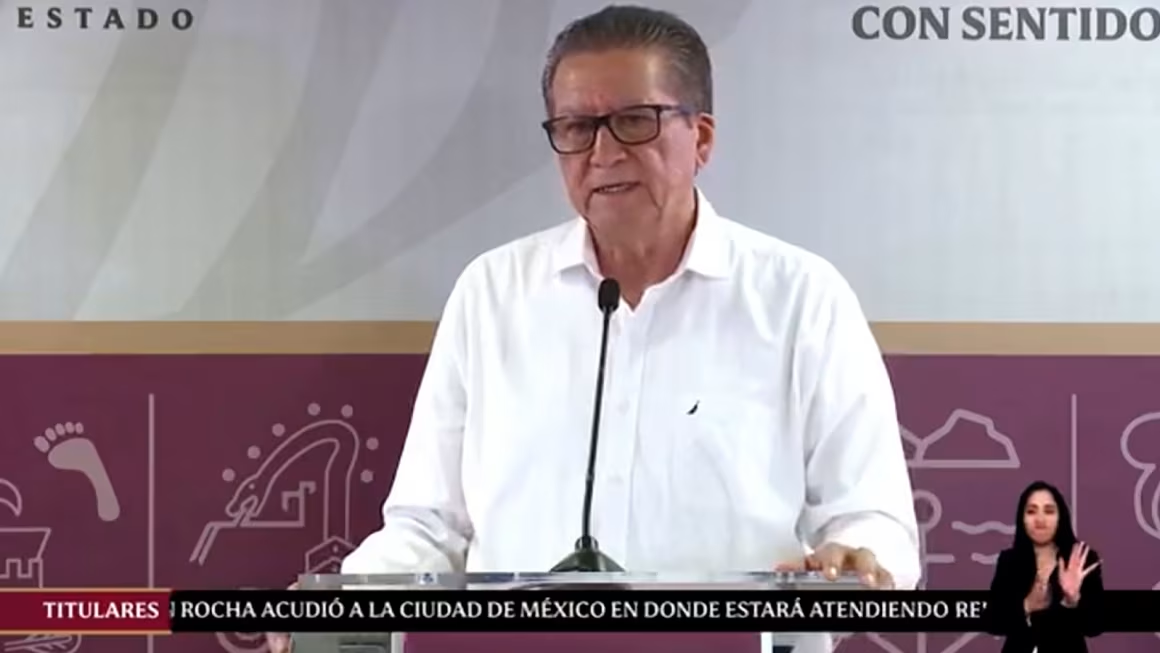
Sinaloa Secretary General Feliciano Castro Meléndez referred to the case as “a regrettable situation” and acknowledged it as part of the broader violence and instability facing the region. Culiacán, long a stronghold for drug trafficking operations, remains deeply affected by internal cartel conflicts.

II. Infighting Within the Sinaloa Cartel
1. Rival Factions Fuel the Bloodshed
The violence has intensified since 2024, particularly between two factions: La Mayiza, linked to alleged cartel co-founder Ismael “El Mayo” Zambada, and Los Chapitos, controlled by the sons of infamous drug lord Joaquín “El Chapo” Guzmán. Both groups are locked in a power struggle for control over the organization’s resources and territories.
2. Arrests Spark Retaliation
Tensions escalated further after both Zambada and Joaquín Guzmán López, one of El Chapo’s sons, were detained by U.S. agents in El Paso, Texas, in a coordinated operation. According to a U.S. official, Guzmán López tricked Zambada into boarding a flight under false pretenses, resulting in both their arrests upon arrival in the United States.

III. Contradictory Claims and Legal Developments
1. Disputed Accounts of Surrender
Mexico’s former Security Secretary Rosa Icela Rodriguez claimed that Guzmán López had coordinated with his brother, Ovidio Guzmán López, who is currently in U.S. custody, to facilitate their surrender. However, Ovidio’s attorney has rejected the claim, calling it completely false. Likewise, El Mayo’s legal team described his arrest as a forcible abduction, not a negotiated surrender.
2. Ovidio Guzmán’s Legal Proceedings
Ovidio was extradited to the United States in September 2023, where he initially pleaded not guilty to drug trafficking charges. However, by May, court records revealed that he had agreed to change his plea, indicating a potential deal with U.S. authorities.
3. Family Members Enter U.S. in Suspected Deal
Later in May, multiple members of Ovidio’s family reportedly crossed into the U.S. as part of what Mexican Security Secretary Omar García Harfuch described as a negotiation or plea arrangement with the U.S. Department of Justice.
IV. Remaining Fugitive Cartel Leaders
1. Ivan and Alfredo Still at Large
Two other sons of El Chapo—Iván Archivaldo and Jesús Alfredo Guzmán Salazar—remain fugitives. Both are accused by U.S. authorities of operating high-level narcotics operations and face $10 million bounties each for information leading to their capture.
Conclusion
The discovery of 20 murdered men in Culiacán reflects the brutal consequences of the ongoing turf wars within the Sinaloa cartel. As authorities investigate, the violence is intertwined with international legal battles, alleged betrayals, and high-stakes negotiations involving cartel leaders and U.S. officials. The situation remains volatile, with key figures still on the run and justice hanging in the balance.








