









Doctors across the U.S., UK, and Switzerland have unveiled an innovative artificial intelligence tool designed to identify which men with prostate cancer are most likely to benefit from abiraterone—a medication proven to significantly reduce the risk of death. As prostate cancer remains the most common type of cancer among men globally, this development could transform how the disease is treated, particularly in cases where the cancer has not yet spread. The breakthrough tool is being showcased at the American Society of Clinical Oncology’s annual conference, drawing global attention from oncologists and healthcare policymakers.


I. Revolutionizing Cancer Treatment With AI
1. Targeting Treatment More Precisely
The newly developed AI model enables doctors to predict which patients will respond positively to abiraterone, a drug often hailed as a “gamechanger” for advanced prostate cancer. While abiraterone is already widely used to extend the lives of men with metastatic disease, many healthcare systems have not extended its availability to patients whose cancer remains localized. The AI test could shift that paradigm by offering a reliable way to identify patients who would benefit most, reducing unnecessary treatments and their associated risks.

2. Improving Outcomes and Minimizing Risks
Although abiraterone has been linked to significant improvements in survival, it is not without side effects. Patients may experience elevated blood pressure, liver abnormalities, and a slight increase in the risk of heart attacks and diabetes. As such, being able to selectively prescribe the drug to those most likely to benefit reduces the risk for those who wouldn’t gain much from it. Professor Nick James, a leading oncologist at the Royal Marsden NHS Trust and co-creator of the AI model, emphasized the value of this targeted approach, noting that for many with non-metastatic cancer, abiraterone can deliver remarkable results.
II. The AI Model and Its Clinical Impact
1. How the AI Test Works
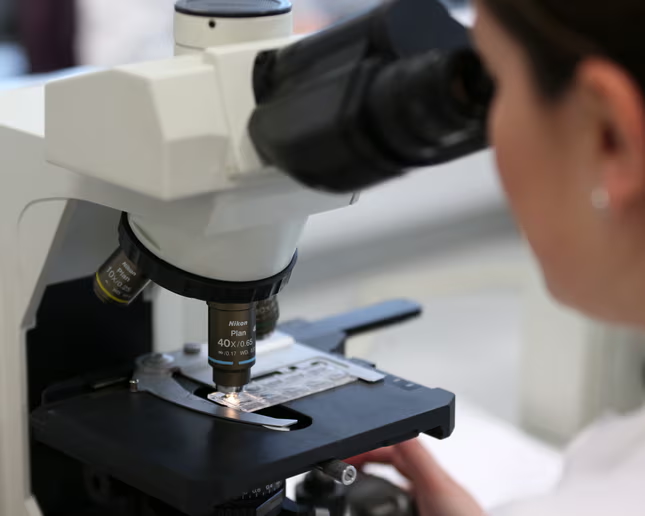
The AI tool analyzes digital images of biopsy tissue, identifying microscopic features that are invisible to the human eye. These hidden patterns can indicate how a patient might respond to abiraterone. In trials involving more than 1,000 men with high-risk, localized prostate cancer, the AI model successfully identified the 25% of patients most likely to benefit. This subgroup, known as biomarker-positive, saw their five-year mortality risk drop from 17% to 9% when treated with the drug.

2. Who Doesn’t Need the Drug
The remaining 75% of trial participants, categorized as biomarker-negative, showed little to no additional benefit from abiraterone. Their five-year mortality rate only dropped from 7% to 4%, a difference deemed statistically and clinically insignificant. For these men, standard treatments such as hormone therapy and radiotherapy would suffice—eliminating the need for abiraterone and its potential side effects.
3. Backing From Leading Institutions
This groundbreaking research is the result of collaboration between several prominent institutions, including the Institute of Cancer Research (UK), UCL Cancer Institute, and the Royal Marsden NHS Trust, with funding support from Prostate Cancer UK, the Medical Research Council, and Artera. Professor Gert Attard of UCL, a co-leader of the study, highlighted that using routinely available biopsy slides, enhanced by AI algorithms, provides a cost-effective and accessible way to personalize cancer treatment without invasive or complex diagnostics.
III. Policy Implications and Future Accessibility
1. Current Approval and Regional Differences
Despite its proven effectiveness, abiraterone is not currently approved for use in non-metastatic, high-risk prostate cancer cases in England. This contrasts with healthcare systems in Scotland and Wales, where the drug has been available for this group for two years. Professor James stressed that with the AI tool showing exactly which patients will benefit, the cost-effectiveness of wider usage should prompt NHS England to reconsider its position.
2. Affordability and Accessibility
Abiraterone costs approximately £77 per pack—an affordable price compared to many newer cancer drugs that cost thousands. As a result, experts argue that expanding its use among those identified by the AI tool could save more lives without imposing a heavy financial burden on healthcare systems.
3. NHS and Researcher Reactions
Dr. Matthew Hobbs, Research Director at Prostate Cancer UK, described the development as a significant milestone. He echoed the call for urgent action to make the drug available to those who stand to benefit the most. Meanwhile, the NHS acknowledged the potential of the research, stating that expanding access to abiraterone for non-metastatic cases is a high priority once consistent funding becomes available. The organization continues to fund the drug for advanced cases and is closely monitoring new data to guide future decisions.
Conclusion
The introduction of an AI-powered diagnostic tool capable of identifying which men with prostate cancer are likely to benefit from abiraterone could revolutionize the way this common disease is treated. By tailoring medication to individual patients, doctors can avoid unnecessary treatments, reduce side effects, and focus resources on those who will gain the most. With strong evidence and support from leading cancer research bodies, this innovation represents a new chapter in precision oncology. The pressure is now mounting on health authorities, especially in England, to expand access to a life-saving drug based on cutting-edge, evidence-backed technology.








