





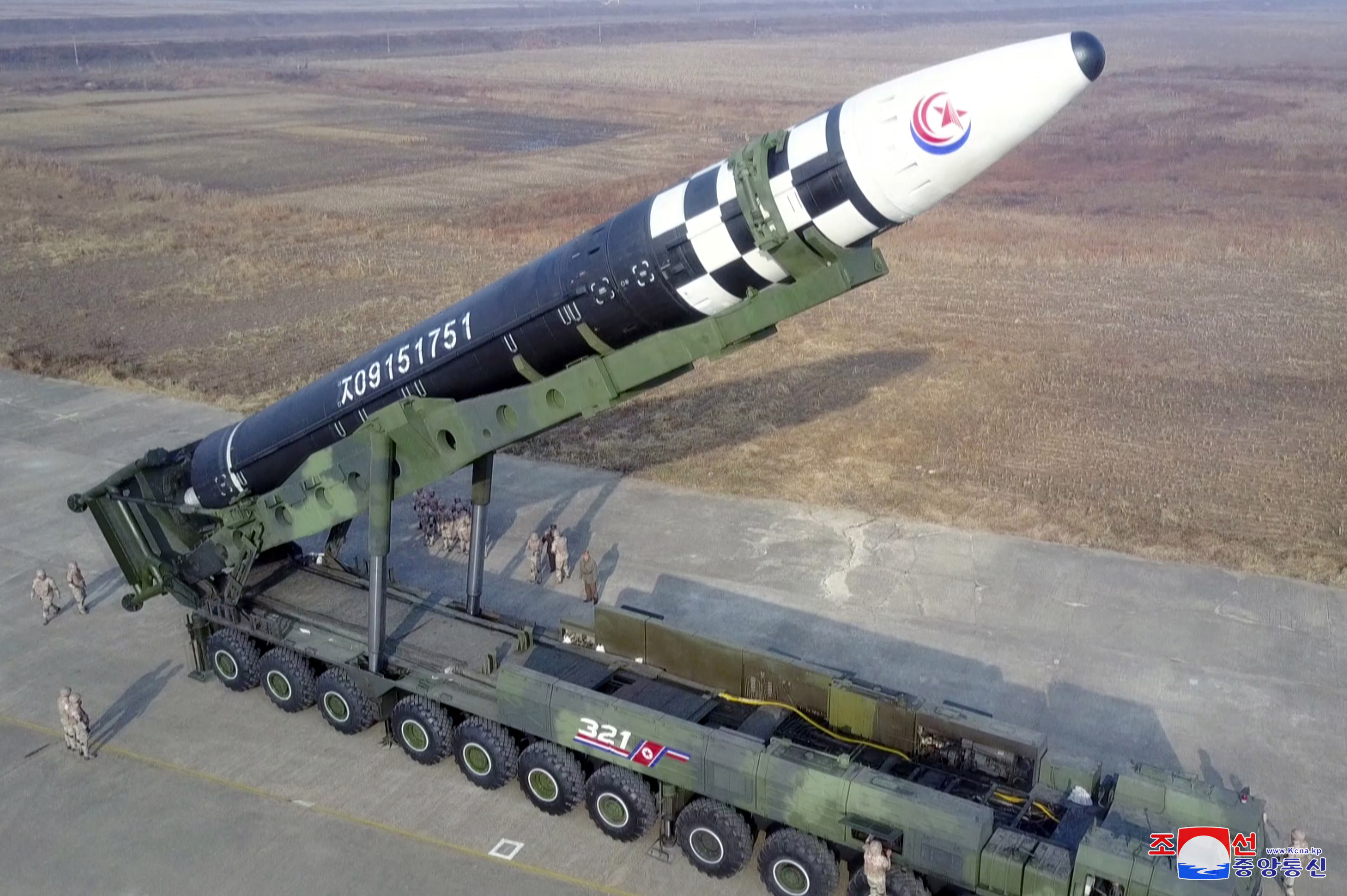

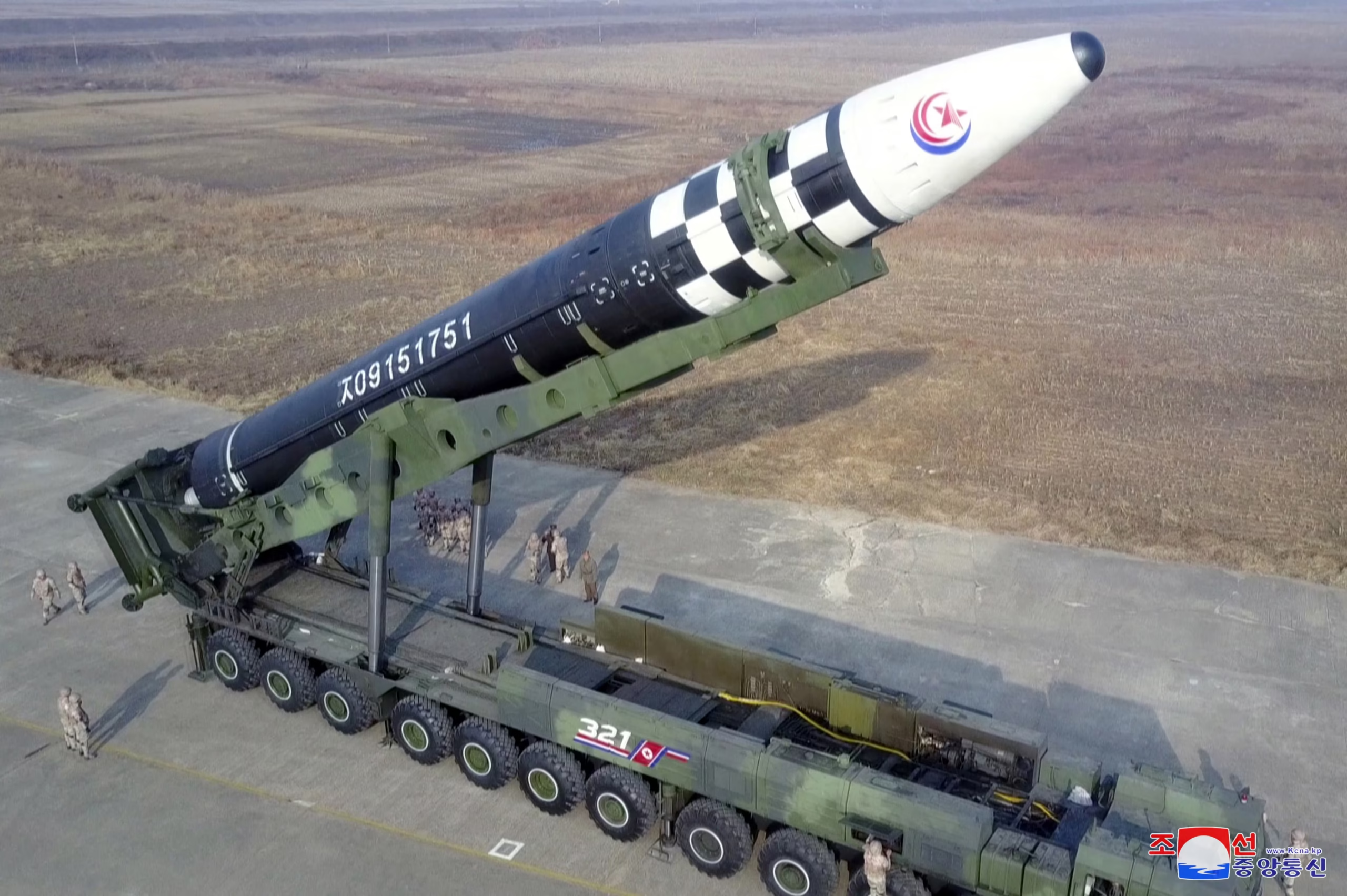


On the morning of May 27, 2025, North Korea shocked the international community once again by launching an intercontinental ballistic missile (ICBM) from its eastern coast, triggering global alarm and immediate responses from world leaders. This latest provocation marks Pyongyang’s most advanced weapons test in recent years, raising renewed concerns over regional security, nuclear proliferation, and the stability of the Korean Peninsula.


The missile, reportedly capable of reaching targets across much of the continental United States, flew over 6,100 miles (approximately 9,800 kilometers) before landing in the Sea of Japan’s exclusive economic zone. This bold act, in direct defiance of multiple United Nations Security Council resolutions, has reignited fears of a possible military escalation in East Asia and further strained already fragile diplomatic channels.
Details of the Launch
According to South Korea’s Joint Chiefs of Staff (JCS), the missile was launched at 9:17 AM local time from Sunan, near Pyongyang International Airport—a site previously used for major weapons tests. The projectile reached an apogee of more than 3,500 kilometers, suggesting a steep trajectory likely chosen to avoid directly overflying neighboring countries such as Japan or South Korea.
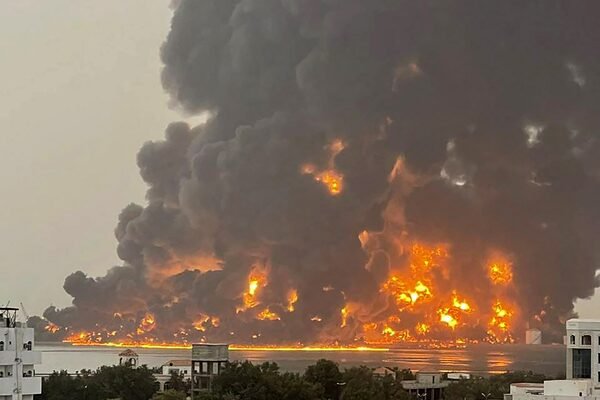
Japan’s Ministry of Defense confirmed the missile splashed down approximately 210 kilometers west of Hokkaido, within Japan’s Exclusive Economic Zone (EEZ), but no damage to vessels or aircraft was reported. Nevertheless, Tokyo immediately issued evacuation advisories to residents in northern prefectures and temporarily suspended train and air traffic for precautionary reasons.
Initial analysis by weapons experts suggests the missile was a Hwasong-18 variant—North Korea’s latest solid-fueled ICBM with advanced mobility and reduced launch preparation time, making it more difficult to detect and neutralize.
Pyongyang’s Official Statement
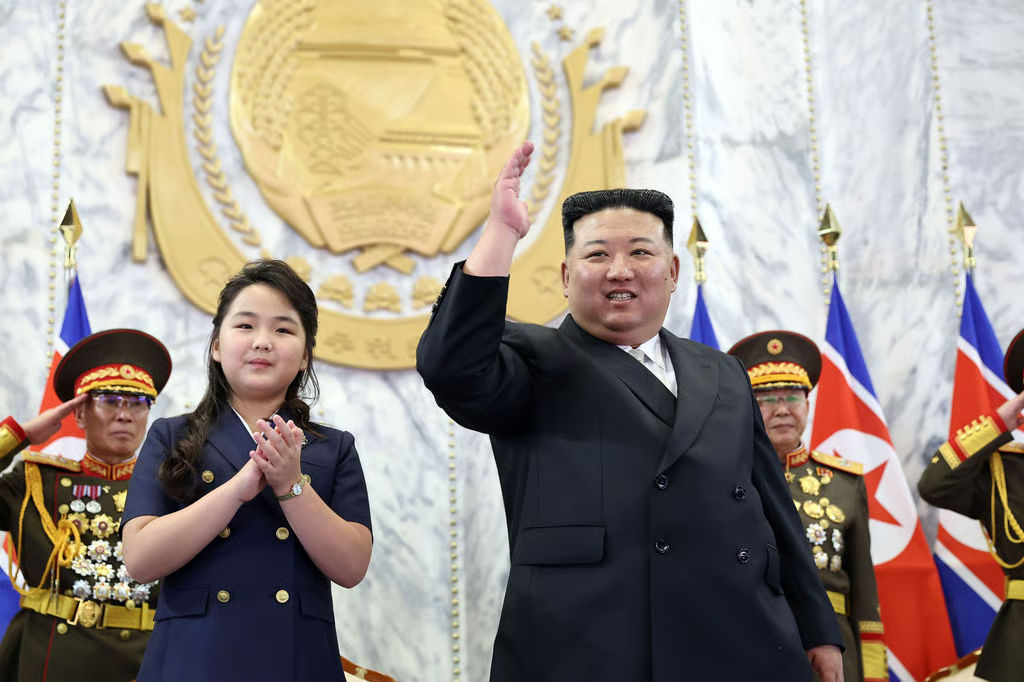
Hours after the launch, North Korean state media KCNA confirmed the test, boasting of its “successful demonstration of strategic deterrent capability” against what it described as “increasingly aggressive provocations” by the United States and its allies in the region.
In a statement released later in the day, North Korean leader Kim Jong-un praised the launch as “a proud achievement of our scientific, military, and revolutionary advancement” and warned that further tests would follow “unless hostile forces cease their nuclear intimidation and military exercises around our territory.”
Kim also accused the United States and South Korea of conducting “escalatory war rehearsals” through their recent joint drills, which included the deployment of U.S. strategic bombers and nuclear-powered submarines in the region.
Regional and International Responses
The global reaction to North Korea’s latest ICBM test was swift and stern. Nations around the world condemned the launch, calling it a flagrant violation of international norms and a direct threat to regional and global peace.
United States
President James Carlton convened an emergency meeting of the National Security Council and issued a statement calling the launch “a reckless and unlawful provocation that threatens the safety of the American people and our allies.” He reaffirmed the U.S. commitment to defending South Korea and Japan, and announced the deployment of additional missile defense assets to Guam and Hawaii.
White House National Security Advisor Elena Ford stated that the U.S. would be coordinating closely with allies and seeking “strong, unified action” from the United Nations Security Council.
South Korea
South Korean President Yoon Seok-yul denounced the launch as “an act of serious provocation” and ordered the military to maintain heightened readiness. In a joint press conference with U.S. military commanders, he reaffirmed the strength of the U.S.-ROK alliance and called for stronger sanctions and diplomatic pressure on Pyongyang.
The South Korean military responded by launching a series of live-fire drills near the Northern Limit Line and simulating precision strikes on North Korean missile facilities—a clear message of deterrence and preparedness.
Japan
Japanese Prime Minister Aya Kishida called the launch “absolutely unacceptable” and lodged a formal protest through diplomatic channels in Beijing, where North Korea maintains its few international embassies. Japan’s Parliament held an emergency session to discuss civilian protection and missile defense readiness.
The Japanese Defense Ministry also announced an expansion of its Aegis Ashore missile defense systems and reaffirmed its intention to collaborate with the U.S. and South Korea on regional security measures.
China and Russia
China and Russia, traditionally more cautious in their public criticisms of Pyongyang, both expressed “deep concern” over the missile test. China’s Foreign Ministry called on all parties to exercise restraint and avoid actions that could escalate tensions.
However, both Beijing and Moscow also criticized the recent U.S.-South Korea joint military drills, suggesting that continued military pressure was contributing to North Korea’s aggressive posture. Analysts note that China’s position is particularly delicate, as it seeks to balance regional stability with its strategic interest in avoiding a collapse of the North Korean regime.
Implications for Global Security
This missile launch represents far more than a regional threat—it underscores a growing challenge to the global nonproliferation regime and the limitations of current diplomatic efforts.
Nuclear Capability
North Korea has made significant strides in its missile technology in recent years. The use of solid-fueled ICBMs demonstrates a maturing nuclear force capable of being deployed quickly and covertly. If these missiles are paired with miniaturized nuclear warheads, North Korea would possess a credible second-strike capability.
While analysts continue to debate whether Pyongyang has successfully developed reliable reentry vehicles or warhead miniaturization, few doubt its determination to eventually perfect these technologies.
Undermining Deterrence
The latest test also threatens to undermine regional deterrence structures. As North Korea’s missile arsenal becomes more sophisticated, traditional missile defense systems may no longer guarantee adequate protection, prompting discussions in Tokyo and Seoul about expanding their own military capabilities.
In South Korea, a once-taboo debate about domestic nuclear armament is gaining traction, while Japan is increasingly vocal about preemptive strike capabilities—ideas that would have been politically unthinkable just a decade ago.
Diplomatic Breakdown
The test is a stark reminder of the collapse in diplomatic engagement with North Korea. Since the failed Hanoi Summit in 2019, there has been little meaningful dialogue. Efforts by the Biden and Carlton administrations to restart talks have been rebuffed by Pyongyang, which demands sanctions relief as a precondition for any negotiations.
The current cycle of provocation and response threatens to spiral into open confrontation unless new diplomatic channels can be forged.
Calls for Renewed Diplomacy
Despite the escalation, some voices around the world are urging a return to the negotiating table. United Nations Secretary-General António Guterres condemned the missile launch but also appealed for “open, inclusive dialogue to ease tensions and address security concerns on the Korean Peninsula.”
Sweden and Switzerland—two nations historically involved in Korean peace efforts—have offered to mediate talks, while the European Union has urged all sides to explore diplomatic solutions rather than military escalation.
Humanitarian organizations have also highlighted the danger that increased sanctions and isolation could worsen the already dire conditions in North Korea, where millions face food insecurity and a crumbling healthcare system.
Media and Public Reactions
The launch dominated international headlines, and news broadcasts showed dramatic footage of citizens in Japan seeking shelter during the missile’s flight. On social media, hashtags like #NorthKoreaICBM and #KoreanPeninsula trended globally, with public sentiment divided between fear, outrage, and calls for action.
In South Korea, candlelight vigils were held in major cities demanding peace and de-escalation, while in the U.S., lawmakers from both parties called for a more assertive stance on North Korea, including stronger sanctions enforcement and international pressure on China to rein in its ally.
Conclusion: A Tense Road Ahead
The launch of another intercontinental ballistic missile by North Korea is a stark reminder that the Korean Peninsula remains one of the most volatile flashpoints in global geopolitics. As Pyongyang continues to defy international pressure, the risk of miscalculation and escalation grows ever more real.
For global leaders, the path forward requires a delicate balance of deterrence, diplomacy, and strategic patience. The international community must respond with unity and resolve while leaving the door open for negotiations that can deescalate tensions and ultimately lead to denuclearization.
The world watches closely, hoping that this latest provocation does not become the spark that ignites a broader conflict—and that reason can prevail before rhetoric turns into war.