






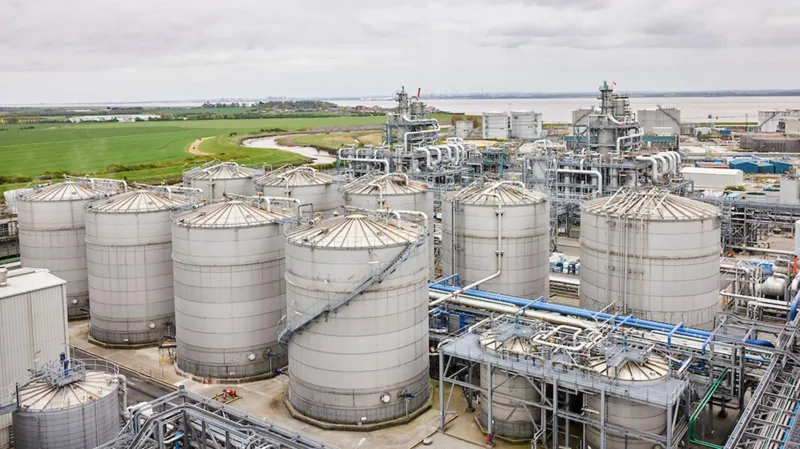


The UK’s bioethanol sector faces an unprecedented crisis following the government’s decision to remove a key import tariff. Associated British Foods (ABF), the company operating Vivergo Fuels — the UK’s largest bioethanol plant located in Saltend, near Hull — has warned that it may soon initiate a redundancy consultation unless urgent government support is provided. The move comes in response to the elimination of a 19% tariff on ethanol imports from the United States, a decision that industry leaders say is jeopardizing the domestic market and risking hundreds of skilled jobs.


I. Policy Shift Sparks Industry Turmoil
1. Elimination of US Tariff Shakes Domestic Production
The UK government’s recent trade deal with the United States, which included the removal of tariffs on imported ethanol, has sparked concern among bioethanol producers. Paul Kenward, Chief Executive of ABF Sugar — a subsidiary of Associated British Foods — emphasized that this change has effectively handed over the entire UK bioethanol market to foreign suppliers.

Kenward noted that domestic producers are now struggling to compete on a level playing field, as cheaper US ethanol floods the market. “The government has, in essence, given away the UK’s entire bioethanol sector,” he stated in a BBC Radio Four interview. Without immediate intervention, he warned that facilities like Vivergo may be forced to downsize or even shut down entirely.
2. Consultations on Redundancies Loom
Kenward confirmed that unless the government takes concrete action, Vivergo will begin formal consultations regarding job redundancies. While the company is not seeking ongoing financial assistance, Kenward explained that a temporary “bridging support” would help the industry survive until common-sense regulatory adjustments are implemented.
Industry leaders, including representatives from Vivergo and other facilities, have already met with government officials, including Business Secretary Jonathan Reynolds. However, the lack of a timely response has left employers with no choice but to prepare for potential layoffs. “We’ve extended the government’s requested deadline, but if we don’t hear anything by June 25, we’ll be forced to start the consultation process,” Kenward added.
II. Industry-Wide Impact and Political Reactions
1. Ensus Plant Faces Similar Challenges
The warning from ABF follows closely on the heels of a similar statement from Ensus, which operates a bioethanol plant in Redcar. Ensus chairman Grant Pearson echoed Kenward’s concerns, stressing the urgent need for government action to safeguard jobs and preserve the bioethanol industry in northern England.
Pearson described the situation as critical and emphasized that without intervention, the region risks losing highly skilled labor and substantial economic activity. Ensus, like Vivergo, has invested heavily in facilities that are now being undermined by sudden policy shifts.
2. Government Responds but Offers Limited Assurance
In response to the outcry from industry leaders, a government spokesperson stated that the trade agreement with the United States was designed to benefit the broader UK economy and preserve thousands of jobs. The spokesperson insisted that the government is acting in the national interest and acknowledged that discussions have taken place with bioethanol representatives to explore possible solutions.
While these talks are ongoing, there has yet to be a concrete proposal addressing the concerns of domestic producers. The lack of clarity has deepened uncertainty across the industry, with many fearing that further delays could result in irreversible damage to the UK’s bioethanol capabilities.
3. Environmental and Agricultural Implications
The implications of a potential plant closure extend beyond job losses. Vivergo Fuels is a key producer of E10 bioethanol — a fuel blend containing up to 10% renewable ethanol, introduced in the UK in 2021 to reduce vehicle carbon emissions. The company also produces high-protein animal feed as a by-product of its ethanol operations, supplying a vital component of the country’s agricultural sector.
The loss of such output would not only hinder the UK’s environmental goals but also create ripple effects throughout the farming industry. A reduction in domestic feed supply could lead to increased reliance on imports, potentially raising costs for British farmers and consumers alike.
III. The Case for Strategic Support
1. Not a Bailout, But a Lifeline
Industry stakeholders are keen to distinguish their requests from conventional bailout demands. Kenward made it clear that the sector is not looking for indefinite government subsidies. Instead, they are asking for short-term assistance that would allow them to stay afloat while awaiting necessary regulatory reforms.
This form of support, he argues, would be a cost-effective way for the government to protect local employment, energy independence, and environmental progress — all without committing to long-term expenditure.
2. Regulatory Adjustments Could Provide Relief
The bioethanol industry has also emphasized the role that regulatory reforms could play in restoring balance to the domestic market. Adjustments in import quotas, sustainability standards, or minimum blending requirements could provide the necessary framework to support UK producers.
Currently, the government’s delay in implementing such measures is seen as a missed opportunity to secure the future of a vital green energy sector. Without regulatory support, stakeholders fear that UK-based ethanol production will be squeezed out entirely by cheaper imports.
3. Protecting the UK’s Green Transition
As the UK works to reduce its carbon footprint, renewable energy sources like bioethanol are increasingly important. The sudden disruption in the bioethanol supply chain threatens to undermine progress made in decarbonizing transport.
E10 petrol, which contains bioethanol produced by plants like Vivergo, plays a crucial role in meeting emissions targets. Shuttering these facilities could jeopardize those goals and force the UK to backtrack on its environmental commitments.
Conclusion
The future of the UK’s bioethanol industry now hangs in the balance. The removal of the US ethanol import tariff has created a shockwave that threatens the viability of domestic producers, risking hundreds of jobs and critical contributions to the environment and agriculture. Industry leaders are pleading for swift, strategic government support to bridge the gap until appropriate regulatory reforms can be enacted.
This is not merely about protecting one sector — it’s about safeguarding green energy, local employment, and the UK’s broader economic interests. The government must act decisively before irreversible damage is done.