









Britain is set to unveil a major change in its trade approach, pivoting from ambitious, sweeping trade deals to more targeted and pragmatic agreements. Ministers argue that focusing too heavily on large-scale pacts—once seen as a key benefit of leaving the European Union—has diverted attention from achievable gains. The new strategy emphasizes support for key domestic sectors like services and steel while adapting to a global trend of rising protectionism.


I. Rethinking Britain’s Trade Priorities
1. Moving Beyond Traditional Free Trade Agreements
In a significant policy shift, the UK government is stepping away from its post-Brexit pursuit of broad free trade agreements (FTAs) with major economies like the United States and India. These deals, once touted as flagship achievements of Brexit, have proved difficult to finalise and deliver limited immediate benefits. Instead, the UK now plans to focus on agreements that are more practical and faster to implement.

2. Focus on Sector-Specific and Targeted Deals
Business Secretary Jonathan Reynolds explained that the new direction prioritises agile, sector-focused deals aimed at high-growth industries. Examples include pacts for mutual recognition of professional qualifications, which could boost the UK’s dominant services sector. Reynolds emphasized that while complex FTAs like the one negotiated with India offer long-term gains, quick and focused deals are more suited to the UK’s current economic and geopolitical environment.
II. Evaluating Recent Trade Agreements
1. US and India Trade Deals: Limited but Strategic
Recent trade arrangements with the US, India, and the EU mark a departure from comprehensive trade frameworks. Though not full FTAs, these agreements contain sectoral benefits, such as tariff reductions on automobiles and aircraft parts. However, critics argue they lack the depth of prior ambitions. In the case of India, the government offered tax incentives to Indian workers—an approach the previous Conservative administration avoided—leading to political scrutiny.

2. Incomplete Implementation and Ongoing Negotiations
Despite the positive outlook, some trade aspects remain unresolved. The US deal, in particular, was fast-tracked, and discussions over key points—like the removal of steel tariffs—are still ongoing. The UK hopes to finalize these elements to give businesses full access to tariff reliefs. The agreement is set to partially come into effect soon, offering reduced tariffs on industrial goods, although questions linger around compliance and certification requirements, especially for companies like Tata Steel.
III. Strengthening Domestic Economic Defenses
1. Addressing the Global Shift Toward Protectionism
The government’s new trade strategy reflects the evolving global climate, where many countries are erecting trade barriers instead of removing them. Ministers acknowledge that the current trade environment requires Britain to be both opportunistic and defensive—actively seeking small wins while safeguarding core domestic industries.
2. Steel Industry Protection Measures
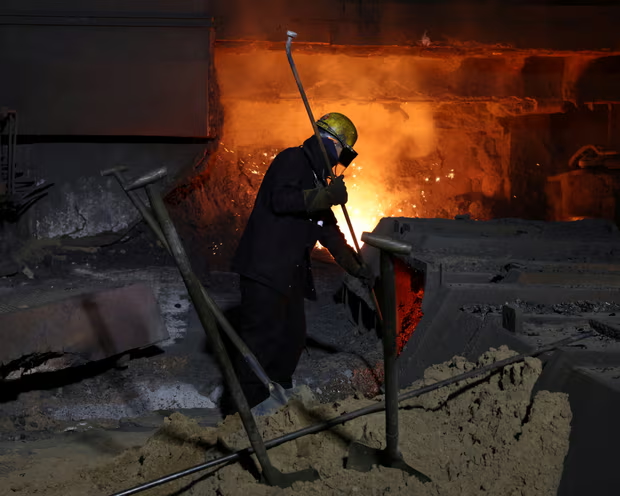
A focal point of the updated policy is the steel industry. The government has made clear its intention to continue protective measures, particularly as existing safeguards expire in June 2026. While the UK is still exploring how to extend these without breaching World Trade Organization (WTO) rules, ministers are exploring creative legal frameworks to prevent a “cliff edge” scenario feared by British steel manufacturers.
3. WTO Commitments and Strategic Flexibility
Despite its defensive turn, the UK insists it remains committed to multilateral trade norms under the WTO. Trade Minister Douglas Alexander said the strategy is about “sharpening our defensive toolkit” without abandoning global trade rules. Officials note that the government is “agnostic” on the specific mechanisms it may use, but remain determined to support industries like steel, where global competition is fiercest and the risk of foreign market dumping is high.
IV. Targeted Deals to Support Growth Sectors
1. Emphasis on Services and Skilled Professions
One of the main goals of the new trade framework is to lift barriers that hinder UK service exports. This includes agreements on the mutual recognition of professional certifications and licensing across borders. Given that services make up about 80% of the UK economy, these tailored deals could deliver a much-needed boost.
2. Sector-Specific Opportunities Over Blanket Agreements
Rather than trying to cover a broad range of industries in a single FTA, the UK aims to prioritize sectors that generate the most economic value. These include technology, digital services, finance, and clean energy. This more nuanced approach is designed to respond quickly to opportunities and changing global trends.
3. Ensuring Trade Works for British Workers
Ministers have stressed that the new trade direction is not only about economic gains but also about protecting jobs and domestic capabilities. By narrowing the focus of trade talks and responding to industry-specific concerns, the government hopes to deliver tangible benefits for British workers across a range of sectors.
Conclusion
Britain’s revised trade strategy signals a pragmatic response to the evolving global landscape and the limitations exposed by Brexit. By moving away from unwieldy free trade agreements and toward targeted, sector-specific deals, the UK aims to better serve its national interests and economic strengths. At the same time, the government is taking a more assertive stance on defending key industries like steel, reflecting a broader shift toward resilience and realism. While critics remain skeptical of how protective measures will coexist with WTO rules, the new approach is designed to offer flexibility, speed, and greater alignment with global economic realities.








