






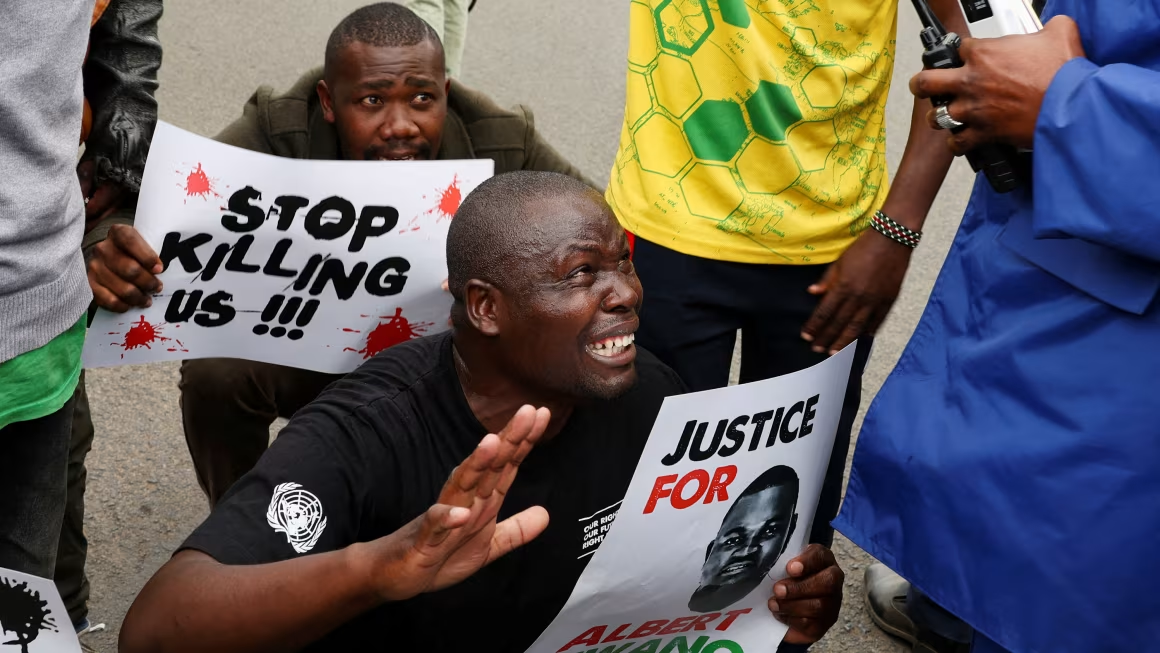


The death of a Kenyan teacher and social activist while in police custody has ignited widespread protests and public anger across the country. Outrage intensified after an autopsy challenged the initial police claim that Albert Ojwang died from self-inflicted injuries, fueling concerns about misconduct and brutality within the police force. The incident has triggered renewed calls for accountability and justice, particularly among Kenya’s youth, who have increasingly voiced frustration over government repression.


I. CONTROVERSIAL DEATH IN DETENTION
1. Police Statement Sparks Backlash
The Kenyan National Police Service initially stated that 31-year-old Albert Ojwang had died after allegedly hitting his head on a cell wall while in custody. This statement, released on Sunday, followed Ojwang’s arrest two days earlier on charges of “false publication.” However, the explanation was met with skepticism, especially from human rights groups and citizens already wary of police conduct.
According to police, Ojwang was found unconscious during a routine inspection of his holding cell. The official statement suggested that his injuries were self-inflicted. But these claims were quickly disputed by family members, human rights advocates, and the medical community.
2. Eyewitness Testimonies and Medical Findings
Amnesty Kenya reported that Ojwang’s last communication before his death was a request for bail, casting doubt on the notion that he would have taken his own life. On Wednesday, government pathologist Dr. Bernard Midia revealed the results of an autopsy conducted by a team of five specialists. The examination uncovered extensive head trauma, signs of neck compression, and multiple bruises throughout his body—injuries inconsistent with suicide.
“These injuries strongly suggest he was assaulted,” Dr. Midia said. “The nature and spread of the wounds make it highly improbable that they were self-inflicted.”
II. NATIONAL REACTION AND DEMANDS FOR JUSTICE
1. Public Protests Erupt Across Kenya
Demonstrations erupted on Monday, the day after police released their initial statement. Protesters took to the streets in Nairobi and other cities, demanding accountability for Ojwang’s death. By Thursday, the protests had intensified, with law enforcement deploying tear gas in an attempt to disperse demonstrators.
Many protesters view Ojwang’s death as part of a troubling pattern of state violence, especially targeting young activists who have criticized the government. Tensions were already high after a 2023 protest movement successfully forced the government to withdraw a controversial finance bill. Since then, numerous critics of the administration have reportedly disappeared under suspicious circumstances.
2. Activist’s Background Fuels Public Sympathy
Ojwang was not just a teacher and father—he was a recognizable figure in the digital activism space. According to The Daily Nation, he was an online influencer with a notable presence on social media, where he led campaigns addressing corruption and human rights. His role as a vocal government critic added a layer of significance to his arrest and subsequent death, intensifying public anger.
3. Allegations Against High-Ranking Officers
Police Chief Douglas Kanja disclosed on Wednesday that Ojwang’s arrest stemmed from a complaint by his deputy, Eliud Lagat, who was accused of corruption in one of Ojwang’s social media posts. Protesters are now calling for Lagat’s dismissal, claiming that Ojwang was targeted for exposing misconduct.
III. OFFICIAL RESPONSES AND INVESTIGATIONS
1. Government Retracts Initial Claims
Under mounting pressure, Police Chief Kanja retracted the initial statement regarding the cause of death. Speaking before a parliamentary committee, Kanja apologized for the misinformation, stating that his earlier comment was based on preliminary reports that turned out to be inaccurate.
“I deeply regret the error,” Kanja said. “It is now clear that he did not hit his head on the wall. The initial account was incorrect.”
2. President Ruto Condemns the Incident
Kenyan President William Ruto responded on Wednesday, expressing “shock and dismay” over Ojwang’s death. In a strongly worded statement, he described the incident as both “heartbreaking” and “unacceptable,” demanding a transparent and swift investigation into the matter.
“This tragic occurrence, at the hands of the police, is heartbreaking and unacceptable,” Ruto said. “I have instructed that those responsible be identified and prosecuted in accordance with the law.”
3. Oversight Authority Launches Independent Probe
The Independent Policing Oversight Authority (IPOA), which monitors police conduct in Kenya, has opened a formal investigation into the case. Six officers involved in Ojwang’s detention are currently under scrutiny, according to a report from the national broadcaster KBC.
Human rights organizations are closely watching how the investigation unfolds, warning that a failure to hold perpetrators accountable could deepen public mistrust in law enforcement and the justice system.
IV. WIDER IMPLICATIONS FOR POLICE ACCOUNTABILITY IN KENYA
1. Pattern of Abuses Against Activists
Ojwang’s death fits into a larger narrative of intimidation and violence against activists in Kenya. Over the past year, youth-led movements have faced growing hostility from authorities, including arrests, threats, and alleged disappearances. The activist’s death has become a symbol of the risks faced by those who dare to challenge the political status quo.
2. Role of Social Media in Activism and Risk
As an influencer with a substantial online following, Ojwang used platforms like X (formerly Twitter) to spotlight injustices and call out corruption. His digital presence made him both influential and vulnerable. Many activists fear that speaking out online now carries the risk of offline retaliation, highlighting the need for legal protections for digital expression.
3. Call for Institutional Reform
In the wake of Ojwang’s death, advocacy groups and lawmakers are pushing for broader reforms to Kenya’s policing and justice systems. Proposed changes include stricter oversight mechanisms, mandatory body cameras, and independent detention monitoring to prevent abuse.
Observers argue that unless systemic issues within the police force are addressed, individual investigations will do little to restore public confidence. “We must move beyond apologies and take concrete steps to ensure justice,” said one Nairobi-based human rights lawyer.
Conclusion
Albert Ojwang’s death in police custody has reignited urgent questions about accountability, transparency, and human rights in Kenya. The conflicting narratives, followed by a damning autopsy, have cast a harsh light on the country’s law enforcement system and the treatment of dissenting voices. As protests continue and investigations unfold, the tragedy may become a turning point in Kenya’s struggle for justice and institutional reform. Whether real change follows will depend on the resolve of the nation’s leaders and the power of its citizens to demand it.