








For centuries, oil paintings have suffered the slow but inevitable effects of aging. Cracks, discoloration, and pigment loss can leave once-vibrant works looking fractured and faded. Traditional restoration methods can take conservators months—if not years—of meticulous work, often reserved only for the most historically significant or valuable pieces. However, a new AI-assisted approach developed at MIT offers a promising solution, enabling restorations to be completed in just hours and at a fraction of the cost.


I. A New Frontier in Art Restoration
1. Merging AI with Traditional Art Techniques
The groundbreaking method, developed by Alex Kachkine, a graduate researcher at the Massachusetts Institute of Technology, harnesses the power of artificial intelligence and modern imaging tools to digitally reconstruct damaged artwork. The process involves scanning the painting to identify deteriorated areas, digitally correcting the damage, and then overlaying a printed polymer mask directly onto the artwork.
This approach differs sharply from conventional conservation, which often involves painstaking manual repainting and retouching. With AI assistance, even paintings in poor condition that wouldn’t typically qualify for restoration can now be revitalized quickly and accurately.
2. Demonstrating the Innovation on a Historic Piece
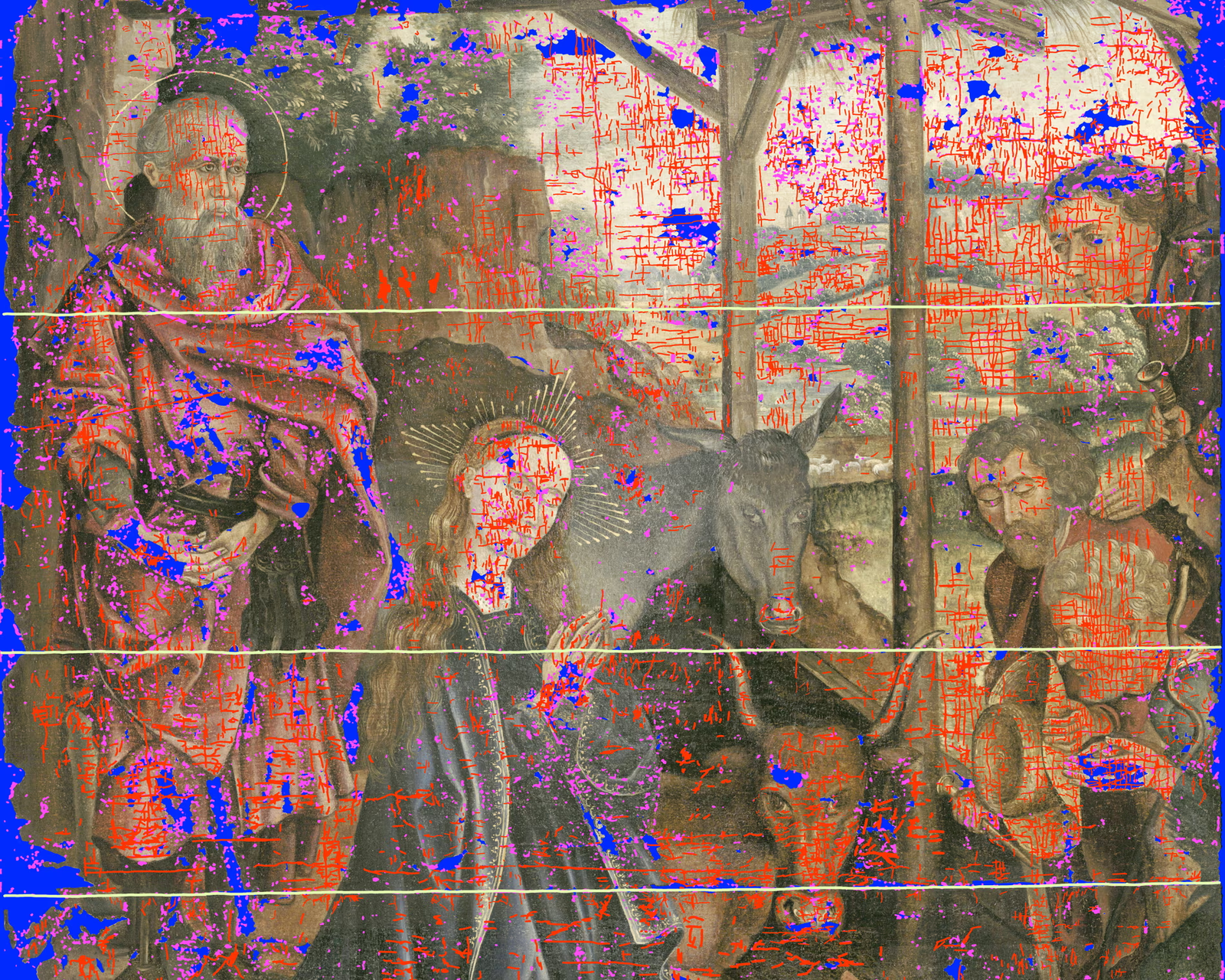
Kachkine’s method was put to the test on a 15th-century oil painting attributed to the Master of the Prado Adoration, a Dutch follower of Martin Schongauer. The artwork, visibly aged and split across four wooden panels, was riddled with cracks and more than 5,000 paint losses. Restoring such intricate detail through traditional means would have taken over 200 hours. Using this new technique, the painting was digitally repaired and restored in significantly less time.
II. The Restoration Process Explained
1. High-Resolution Scanning and Damage Mapping
The process begins with a detailed digital scan of the artwork to locate every damaged or missing element. In the case of the Prado Adoration painting, the scan identified 5,612 distinct flaws. Using image-editing software like Adobe Photoshop, Kachkine then created a digital “mask” that reconstructs the missing features by referencing existing portions of the painting or, in some cases, other works by the same artist.
This digital reconstruction matches colors, patterns, and textures with remarkable accuracy. For areas like the missing face of a child in the painting, Kachkine borrowed a similar face from another work by the same painter, ensuring artistic consistency.
2. Printing and Application of the Restoration Mask
Once the digital mask was complete, it was printed onto a transparent polymer sheet. This sheet was varnished to prevent smudging and then carefully placed over the original painting. The result is a near-seamless restoration that corrects imperfections without altering the original canvas.
The overlay used in Kachkine’s test incorporated 57,314 color variations to match the original pigment tones precisely. Although the printed mask does not replicate the exact brushwork of the original artist, it offers a visually cohesive and minimally invasive restoration.
III. Ethical and Practical Considerations
1. The Debate Over Authenticity and Viewer Experience
While this new method offers significant time and cost savings, it also raises questions about authenticity and presentation. Should viewers be informed when a painting includes digitally reconstructed elements? Does overlaying a transparent film interfere with the aesthetic or historical integrity of a piece?
Kachkine himself acknowledges these concerns. He believes open discussion is needed to determine when and where this method should be used—especially when digital reconstructions involve artistic interpretations, such as copying facial features from other artworks.
2. Limitations and Future Applications
Currently, this restoration technique is suitable only for varnished paintings with flat surfaces—essential for the overlay to adhere evenly. Additionally, the polymer sheet can be removed without damaging the original, offering flexibility and reversibility that traditional methods do not.
According to Professor Hartmut Kutzke of the University of Oslo’s Museum of Cultural History, the method holds the most promise for paintings of lesser market value—artworks that are often neglected due to high restoration costs. By restoring these pieces, museums and galleries can bring long-forgotten works out of storage and into public view, enriching cultural access and appreciation.
IV. Transforming the Art Conservation Landscape
1. Accessibility and Efficiency
One of the most compelling aspects of this AI-driven approach is its ability to democratize art restoration. Historically, only the most valuable or famous works receive the attention and resources required for restoration. Now, thousands of lesser-known paintings stored in vaults and archives could find new life and new audiences thanks to this cost-effective and reversible method.
2. A Complement to Traditional Conservation
Rather than replacing traditional conservation methods, this new technology is best viewed as a complementary tool. For priceless masterpieces, traditional methods may still be preferred for their precision and adherence to classical techniques. However, for public galleries with limited budgets, the AI method offers a practical solution that maintains visual fidelity without the time and expense of manual restoration.
Conclusion
The fusion of artificial intelligence and art restoration marks a significant advancement in preserving cultural heritage. Alex Kachkine’s technique provides a fast, affordable, and reversible way to restore aging artworks—especially those previously deemed unworthy of conservation due to cost or complexity. While debates around authenticity and viewer transparency will continue, the potential benefits of this approach are clear.
By breathing new life into damaged paintings, this method promises not only to preserve history but also to make it more accessible to the public. As more galleries and institutions adopt this technology, the world could witness a renaissance in the way we view, restore, and engage with classical art.