









Allegations have emerged accusing the Indian government of forcefully deporting Indian Muslims to Bangladesh, raising serious concerns about human rights violations and growing anti-Muslim sentiment under the Bharatiya Janata Party (BJP) leadership. Human rights advocates claim that thousands, many of whom are legitimate Indian citizens, have been denied due process and coerced into crossing the border. With mounting cases of illegal deportations, including elderly and disabled individuals, this situation has triggered outrage both domestically and internationally, underscoring fears of an escalating campaign of religious and ethnic persecution.


I. Forced Deportations: A Growing Human Rights Concern
1. Mass Deportations Without Legal Recourse
In recent weeks, a significant number of individuals, predominantly Muslims suspected of being undocumented immigrants from Bangladesh, have been detained and expelled from India without proper legal proceedings. Human rights groups assert that many were denied basic legal protections, with some even being native Indian citizens. The deportations were carried out swiftly, often under cover of darkness and accompanied by threats from armed border officials.
2. Indian Citizens Among the Deported
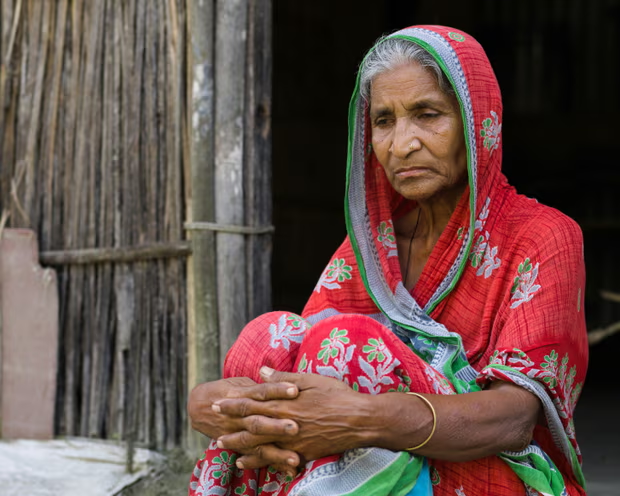
According to legal experts and firsthand accounts, numerous deportees held valid documentation proving Indian citizenship. For example, 62-year-old Hazera Khatun, a physically disabled grandmother, was forcibly removed despite having papers confirming her family had resided in India for generations. Khatun described being treated like an animal by India’s Border Security Force (BSF), who allegedly threatened to shoot the group if they refused to cross into Bangladesh.
II. Bangladesh Pushes Back Against Unilateral Actions
1. Bangladesh Denounces India’s Border Policies
Bangladesh’s government has voiced strong opposition to India’s actions, accusing it of violating both national and international norms. The country’s foreign ministry stated it had sent formal letters demanding that deportations be halted and proper vetting procedures reinstated. However, these diplomatic appeals have reportedly gone unanswered by New Delhi.
2. Bangladeshi Authorities Return Indian Citizens
Many of those deported were turned back after Bangladeshi authorities determined they were Indian citizens. These individuals, including Khatun and others, were temporarily held in makeshift camps before being instructed to walk long distances through difficult terrain to re-enter India. Some, like Khatun, returned in fragile physical condition, emotionally shattered by their ordeal.
III. Political Context Behind the Deportations
1. BJP’s Nationalist Agenda
The mass deportations are taking place against the backdrop of a broader campaign driven by the BJP’s Hindu nationalist ideology. Following a deadly Islamist militant attack in Indian-administered Kashmir in April, which killed 25 Hindu pilgrims and a local guide, the BJP government intensified its rhetoric against so-called “outsiders,” vowing mass expulsions in retaliation.
2. Operation Sindhoor and Anti-Muslim Crackdown
In May, India launched Operation Sindhoor, a military and domestic crackdown targeting neighboring Muslim-majority Pakistan and alleged extremist elements. This operation coincided with a spike in mass detentions of Muslims in India, especially in the northeastern state of Assam, where efforts to expel “infiltrators” have escalated under the BJP-led state government.
3. Citizenship Discrimination in Assam
The targeting of Muslims is particularly evident in Assam, where hundreds have been summoned before “foreigners tribunals” to prove their nationality. A controversial citizenship survey conducted in 2019 left thousands in detention centers. Under BJP policy, only Muslims must verify their citizenship, while Hindus, Sikhs, and others are exempt—a practice that has drawn widespread criticism for institutionalized religious discrimination.
IV. Personal Stories of Trauma and Loss
1. A Terrifying Ordeal for the Elderly
One of the most harrowing accounts involves 67-year-old Maleka Begam, a resident of Assam, who was among a group of about 20 Muslims forced into Bangladesh late at night. Speaking from a border village in Bangladesh, Begam, who is physically frail and cannot walk unassisted, expressed fear and confusion. Her son, Imran Ali, confirmed that she has valid Indian citizenship documents, adding that the family is deeply distressed and unsure how to bring her home.
2. Psychological Toll and Physical Hardship
For those who managed to return, the journey back has been traumatic. Victims reported being forced to walk through forests and rivers, terrified of being recaptured or shot by border guards. Many arrived home physically injured and emotionally devastated. Khatun’s family described her as covered in bruises and mentally broken by the experience.
V. Widening Scope of Deportations
1. Expansion Beyond Assam
While Assam remains the epicenter of these actions, deportations have also occurred in major cities like Delhi and states such as Gujarat, Rajasthan, and Maharashtra. In Gujarat alone, police detained more than 6,500 individuals suspected of being Bangladeshi. However, subsequent investigations revealed that only 450 had questionable immigration status, raising concerns over the accuracy and motives of these mass sweeps.
2. Migrant Workers Wrongly Deported
In another case, four Muslim men who had been working in Mumbai were deported, only to be rejected by Bangladesh’s border force after it was found they were Indian laborers from West Bengal. Such incidents underscore the lack of thorough verification and the human cost of these heavy-handed policies.
3. International Condemnation
Bangladesh’s top border security official, Maj Gen Mohammad Ashrafuzzaman Siddiqui, criticized India’s actions as inhumane and contrary to global standards. He condemned the practice of abandoning people in forests or rivers, calling it a breach of dignity and international law. These statements reflect the growing diplomatic strain between the two countries.
Conclusion
The surge in forced deportations of Indian Muslims under the BJP-led government marks a deeply troubling development in South Asia’s geopolitical and humanitarian landscape. Driven by nationalist fervor and security concerns, the Indian government appears to be bypassing legal protocols and targeting vulnerable communities. With Bangladesh pushing back diplomatically and returning citizens who were wrongly expelled, the situation demands urgent international attention. For those caught in this crisis—many of them elderly, disabled, or poor—the ordeal is not just a legal injustice but a profound human tragedy.








