






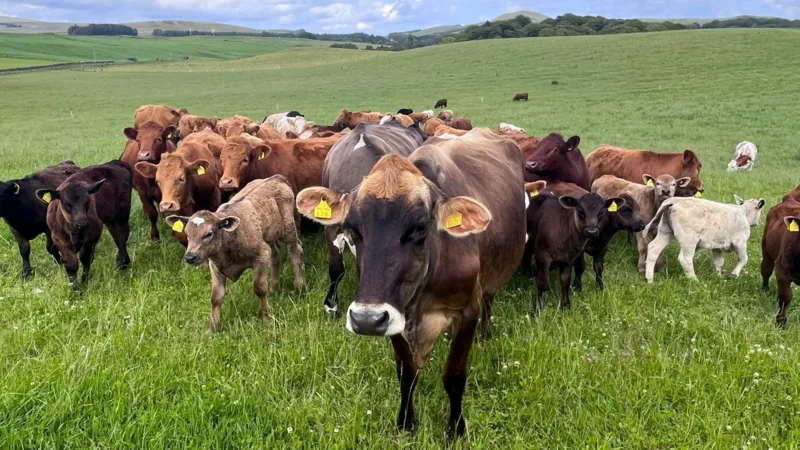


As the UK continues to expand its global trade partnerships post-Brexit, Scotland’s meat industry is voicing increasing concern over the gradual rise in imported meat from countries such as Australia, New Zealand, and Brazil. While trade agreements are creating new export opportunities, industry leaders warn that the cumulative effect of multiple deals could destabilize Scotland’s food and farming sectors if not properly managed.


I. Mounting Pressure from International Imports
1. Cautious Optimism Amid Growing Concerns
At the opening of the Royal Highland Show in Edinburgh, farming unions acknowledged that new trade agreements were opening up promising avenues for growth. However, Quality Meat Scotland (QMS), the body representing Scotland’s meat sector, urged lawmakers to assess the combined impact of these agreements rather than evaluating them individually.

Sarah Millar, QMS’s chief executive, emphasized the need for balance: “We’re not anti-trade. We want Scotland’s meat products on the premium global stage. But trade must be fair and equitable,” she told BBC Scotland News.
2. Rising Risk to Domestic Producers
QMS warned that increasing imports from countries with different production standards could threaten the local meat market. The organization also pointed to U.S. beef shortages due to droughts, suggesting that Scotland could benefit from exporting more meat to America—if domestic cattle numbers, which have been falling, can be rebuilt.

Their analysis estimates that 79,000 additional cows would be needed by 2030 to fully replace imported beef with Scottish-reared cattle. That would require each herd to increase by at least two animals per year, with even more needed if Scotland aims to grow its export footprint.
II. Post-Brexit Trade Deals: Opportunities and Fallout
1. Australia and India Among Key Partners
The UK’s post-Brexit trade strategy has seen deals signed with roughly 70 countries. The agreement with Australia, finalized in 2021 and enacted in 2023, was met with criticism by British farmers who felt it offered too many concessions. More recently, a deal with India halved the excise duty on Scotch whisky, a move welcomed by the Scotch Whisky Association, which believes it could increase exports by £1 billion over five years and generate 1,200 jobs.
This agreement also bodes well for Scotland’s arable farmers. Barley growers in particular anticipate increased demand, as the grain is a critical ingredient in whisky production. Neil White, an arable farmer near Duns, noted that if market conditions improved, he could significantly expand the portion of his land used for barley cultivation. “It’s a cheap crop to grow and supports a prestigious, local market,” he explained.
2. Reconnecting with the European Union
Despite growing trade with other nations, the EU remains Scotland’s most vital market. Ms. Millar and other stakeholders have expressed strong support for any measures that facilitate smoother trade with the EU. The recent UK-EU trade and cooperation agreement has been met with optimism for reducing border bureaucracy and reviving trade links.
The seed potato industry, for example, claims it has lost around £75 million in revenue over the past five years due to EU market restrictions. Renewed trade relations may allow for recovery in this and other small agri-business sectors.
III. Navigating Future Standards and Safeguards
1. Upholding Domestic Production Standards
As the UK continues to sign new trade deals, concerns persist over the quality and safety of imported food. Jonnie Hall, Director of Policy at NFU Scotland, stressed the importance of maintaining strict standards. He called for continued adherence to the UK’s ban on hormone-treated beef from the U.S. and warned against compromising animal welfare and food production guidelines.
“It’s critical that anything brought into the UK market is produced to the same high standards we uphold here,” Hall said. He welcomed the opportunity to supply high-quality beef to the U.S., but insisted that imports must not be allowed to undercut Scottish producers unfairly.
2. Weighing the Details Before Judgement
While many farmers are hopeful about new markets and renewed ties with Europe, there is still considerable uncertainty over the exact implications of each trade deal. “Right now, we’re all speculating,” Hall added. “We need to see the fine print before we can truly evaluate the impact.”
Conclusion
Scotland’s agricultural sector is at a crossroads, with global trade agreements presenting both promise and peril. While some parts of the industry stand to gain from expanded access to international markets, others fear being undermined by cheaper imports produced under different standards.
Industry leaders are calling on policymakers to take a comprehensive approach, ensuring that future trade policy protects domestic food security, upholds animal welfare standards, and supports the sustainability of Scotland’s farming communities. In the face of shifting global trade dynamics, Scotland must find a way to balance opportunity with resilience.