







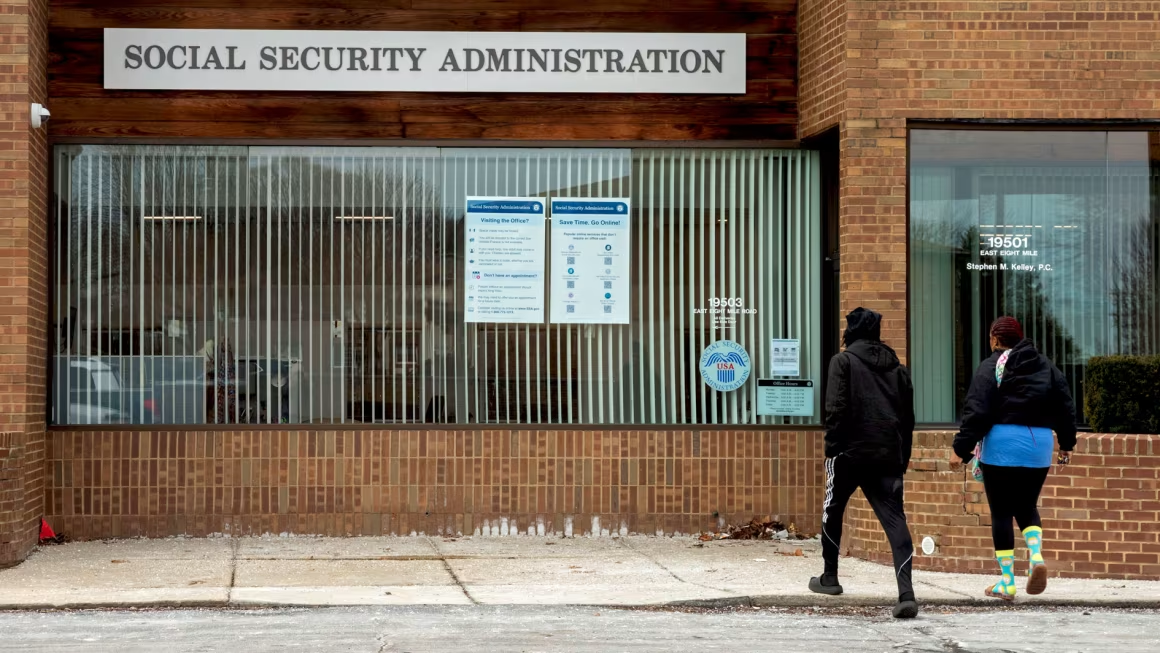


A month after sparking nationwide criticism over a controversial anti-fraud policy, the U.S. Social Security Administration (SSA) has quietly rolled back one of its core components. The agency will no longer impose a three-day delay on retirement benefit applications for fraud screening—a move prompted by mounting public backlash and a swelling backlog of nearly 575,000 unprocessed claims. The sudden policy change reflects broader challenges within the SSA, including staffing shortages and increasing demands from retiring Baby Boomers.


I. Policy Changes Trigger Confusion and Backlash
1. SSA Walks Back Fraud Screening Protocol
In an internal email obtained by CNN, SSA confirmed it had discontinued its practice of holding retirement claims for a three-day fraud check. This decision came in response to overwhelming pressure from advocacy groups and affected seniors who viewed the policy as unnecessarily burdensome—especially for those lacking digital literacy or access to local offices.

2. Original Proposal Barred Phone Applications
Initially driven by the Department of Government Efficiency, the agency’s earlier drafts of the anti-fraud initiative aimed to prohibit benefit applications over the phone. Instead, individuals would be required to verify their identities either online through their “my Social Security” account or by visiting a local SSA branch in person. Critics argued this approach disproportionately harmed vulnerable populations, including the elderly and people with disabilities.
II. Public Reaction and Revised Rollout
1. Concerns Over Identity Verification
Public concern peaked when beneficiaries started flooding SSA’s phone lines and offices, fearing that a failure to verify identity might interrupt their benefits. The agency responded by narrowing the policy’s scope to include only phone-filed claims and postponed implementation until mid-April.
2. Ineffectiveness of Fraud Detection
Data from internal SSA documents suggest the policy had minimal impact on fraud prevention. Out of over 110,000 reviewed claims, only two were flagged as highly likely to be fraudulent—less than 1%. Meanwhile, the added review delayed retirement claim processing by 25% and degraded customer service quality.
III. Mounting Pressure from Within and Outside the Agency
1. Growing Backlog of Retirement Claims
By mid-May, pending retirement benefit applications had climbed to nearly 575,000, including about 140,000 claims unresolved for over 60 days. The spike is attributed to a surge of Baby Boomers reaching retirement age and recent legislation enhancing benefits for roughly 3 million public-sector workers.
2. Urgent Appeal to SSA Staff
In an email urging staff to act, Deputy Commissioner Stephen Evangelista called for an immediate productivity increase of at least 10% throughout May. He emphasized the urgency of a “sprint” initiative to address the soaring backlog in retirement and survivor claims.
3. Workforce Shortage Compounds the Issue
Evangelista’s directive was poorly received by agency staff. Joel Smith, president of the American Federation of Government Employees Local 3184, criticized the move, saying it showed a lack of understanding from SSA leadership. The agency is in the process of reducing its workforce by 7,000 employees—roughly 12%—offering voluntary resignation and early retirement packages. While some personnel from SSA headquarters are being reassigned to field offices, training them will take time.
IV. Structural Challenges and Long-Term Outlook
1. Reduced Telework and Morale Impact
SSA employees have expressed growing dissatisfaction over leadership decisions, including reduced telework opportunities and what many see as a demotivating work culture. Critics say leadership’s actions have created operational roadblocks rather than solving problems.
2. Technology and Accessibility Gaps
Despite attempts to modernize with fraud-detection algorithms and digital filing systems, the SSA has struggled to balance security with accessibility. The brief suspension of phone claims alienated people who rely on traditional communication methods, underlining the digital divide that still exists in public services.
3. Minimal Fraud, Maximum Disruption
According to Kathleen Romig of the Center on Budget and Policy Priorities, the anti-fraud measures did more harm than good. “The policy created a customer service issue where none existed and failed to prevent fraud effectively,” said Romig, who served at SSA under the Biden administration.
Conclusion
The SSA’s decision to quietly end the controversial fraud hold policy is seen as a pragmatic response to growing public pressure and a rapidly expanding backlog. While fraud prevention remains essential, critics argue that it should not come at the cost of timely service and equitable access. The agency now faces the dual challenge of regaining public trust and improving operational efficiency as it navigates record-high demand and ongoing workforce constraints.








