






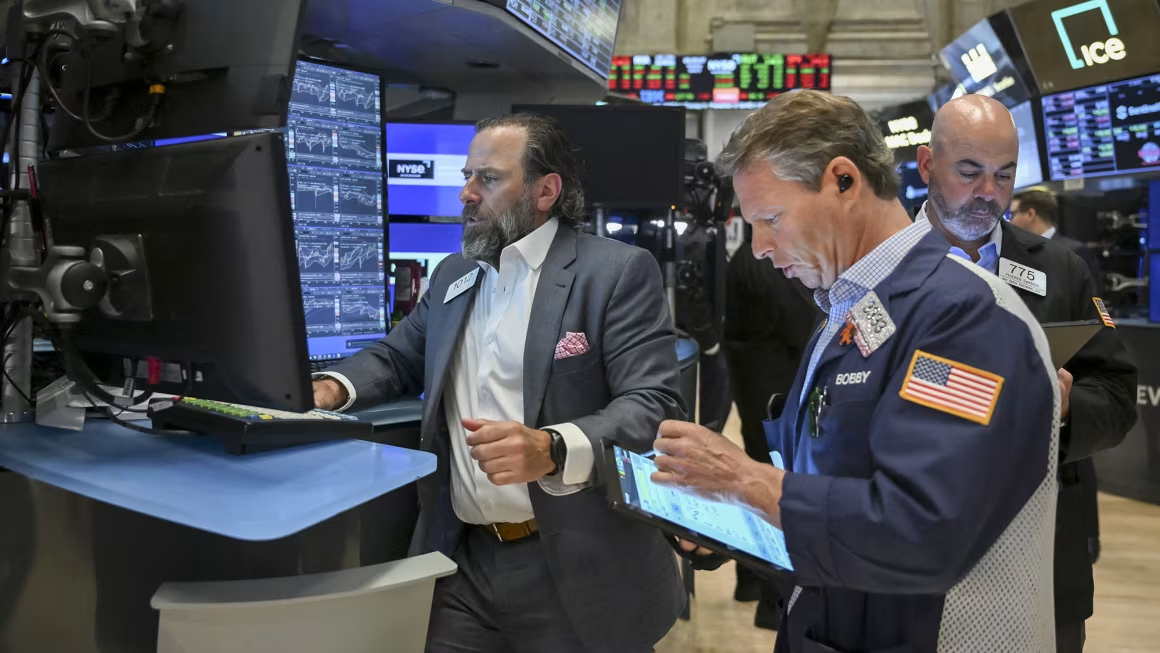


U.S. stock markets began the week on a positive note, as the S&P 500 inched closer to its all-time peak following the first round of high-level trade talks between Washington and Beijing in London. While the Dow Jones Industrial Average hovered near the flatline, both the S&P 500 and the Nasdaq Composite ended the day in the green — up 0.09% and 0.31% respectively. Though gains were modest, they reflected growing investor confidence that renewed negotiations could ease tensions between the world’s two largest economies.


I. Optimism Reemerges from U.S.–China Trade Discussions
1. Strong Market Reaction to Diplomatic Progress
Investor sentiment appeared buoyed by encouraging comments from members of the U.S. delegation, including Treasury Secretary Scott Bessent and Commerce Secretary Howard Lutnick. Both officials referred to the talks as “positive” and “fruitful,” signaling constructive progress. President Donald Trump, who commented from a White House roundtable, also expressed satisfaction, saying, “I’m only getting good reports.”

Chinese Vice Premier He Lifeng, leading the Chinese side, did not address the media, but his participation alone indicates the seriousness of the talks. Although no major breakthroughs were announced, the tone of the discussions provided a degree of reassurance to investors navigating a volatile policy environment.
2. S&P 500 Rallies Toward Historic Peak
The S&P 500 closed Monday at 6,005.88 — its highest level since late February — and just 2.3% below its all-time record of 6,144.15 set on February 19. The benchmark index had dropped as low as 4,982.77 on April 8, marking an 18.9% decline from its record. Since then, it has staged an impressive rebound, rising over 20% as concerns about sweeping tariffs began to ease.

Investors interpreted the latest developments in the trade negotiations as a sign that extreme measures might be avoided, which helped propel the recent rally. After back-to-back weeks of gains, Wall Street is now riding a wave of cautious optimism.
II. Trade Policy, Tariffs, and Their Influence on Markets
1. Trump’s Evolving Trade Approach Calms Markets
Markets have reacted favorably in recent weeks to a shift in Trump’s trade rhetoric. While his initial proposals threatened to impose heavy tariffs across multiple sectors, the administration has since paused or softened many of those measures. Analysts note that this shift in tone has provided markets with some breathing room.
“Markets have moved higher on tariff postponement and the perception that they will be more moderate than initially announced,” said Richard Saperstein, Chief Investment Officer at Treasury Partners. He added that markets are likely to remain sensitive to headlines, given that trade agreements are complex and slow to finalize.
2. Export Restrictions and Rare Earth Demands
In a strategic move to reinvigorate trade dialogue, the Trump administration has signaled its willingness to ease some export controls on U.S. products previously restricted due to national security concerns. However, this relaxation would likely come with conditions.
According to sources, the United States is seeking access to large quantities of rare-earth elements from China in return. These minerals are vital for the production of electronics and defense equipment, making them a critical bargaining chip in trade negotiations.
Though details of the negotiations remain vague, the willingness to trade concessions in certain sectors shows that both sides may be searching for common ground.
III. Volatility and Sentiment: Wall Street’s Roller Coaster
1. Market Recovery After a Sharp Correction
The early part of 2024 saw intense volatility, with the S&P 500 dipping into correction territory — defined as a drop of at least 10% from a recent high. After bottoming out in April, the index rebounded sharply, fueled by easing trade anxieties and a string of stronger-than-expected economic indicators.
Sam Stovall, Chief Investment Strategist at CFRA Research, noted that surpassing the February high would officially mark the end of that correction. Historically, the S&P 500 tends to rise by an average of 10% over the following 127 days after emerging from a correction, although sustained growth is never guaranteed.
2. Analysts Adjust Market Forecasts
Wall Street banks have revised their outlooks multiple times in response to policy shifts and economic surprises. In May, Goldman Sachs raised its year-end target for the S&P 500 to 6,100 — a reversal from earlier cuts. UBS followed with a new projection of 6,000, while Deutsche Bank set its revised target at 6,550. JPMorgan Chase, which had also previously lowered its outlook, now sees the index ending the year at 6,000.
According to a note from Deutsche Bank, “The earnings outlook has been sensitive to policy decisions to an unprecedented degree, specifically on tariffs.” The bank now estimates that the negative economic drag from tariffs is only about one-third of what it had previously anticipated.
3. Greed Overcomes Fear — For Now
Investor sentiment appeared to lean toward risk-taking on Monday, as reflected in CNN’s Fear & Greed Index, which tilted heavily toward “Greed.” This metric, which measures market emotion through various indicators like stock price momentum and market volatility, suggests that many investors are betting on continued upside — even in the face of uncertainty.
However, such optimism could quickly reverse if trade talks stall or inflation data surprises to the downside.
IV. Tech Sector and Inflation Data in the Spotlight
1. Apple Shares Dip After Major Conference
Despite the overall upward market trend, not all stocks followed suit. Apple (AAPL) declined by 1.2% on Monday, following its annual Worldwide Developers Conference in Cupertino, California. While the event generated interest in the company’s future roadmap, investors apparently expected more immediate catalysts to justify the stock’s recent run-up.
2. Inflation Data Ahead May Shape Market Direction
As the week progresses, investors will closely watch for new inflation figures for May. These data points will play a pivotal role in shaping market expectations around Federal Reserve policy and broader economic health. Rising inflation could renew concerns about the effects of tariffs, while softer figures may support continued market gains.
Conclusion
The U.S. stock market’s cautious climb toward record highs reflects a delicate balance of optimism and risk. Encouraging signs from trade negotiations between Washington and Beijing have helped revive investor confidence, but the path ahead remains filled with potential volatility. Markets are reacting swiftly to even minor changes in trade policy and economic signals, underscoring how sensitive this recovery remains.
If diplomatic progress continues and key economic indicators remain favorable, Wall Street could break new ground in the coming weeks. Still, seasoned investors know that in such an environment, momentum can shift quickly. For now, the markets are rising on hope — but headlines from London, Washington, or Beijing could change that in an instant.