







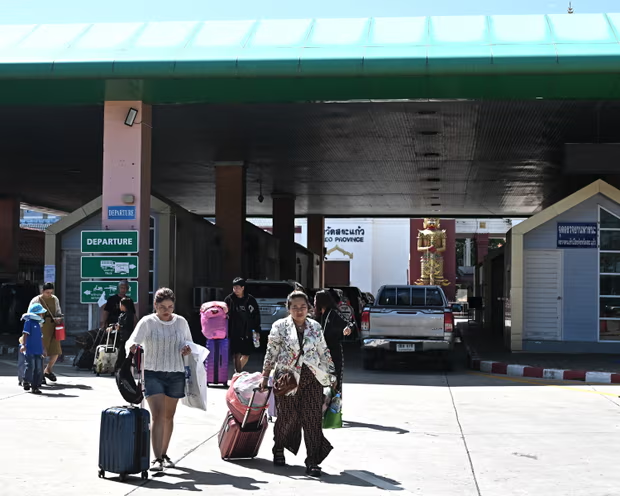


In a sharp escalation of diplomatic tensions, Thailand has shut down major border crossings with Cambodia, impacting travelers, traders, and tourists alike. This drastic measure, announced by Thailand’s military and navy, comes amid intensifying friction over a long-standing territorial dispute that recently flared into violence. With both nations exchanging retaliatory actions and nationalist sentiment rising, the crisis now threatens regional stability and presents political challenges at home for Thailand’s prime minister, Paetongtarn Shinawatra.


I. Heightened Border Tensions Between Thailand and Cambodia
1. Closure of Crossings Across Seven Provinces
Thailand’s armed forces have officially sealed off border access to Cambodia across seven provinces, halting the movement of all people and vehicles, including both Thai nationals and foreigners. The affected provinces include Ubon Ratchathani, Surin, Buriram, Sri Sa Ket, Sa Kaeo, Chanthaburi, and Trat. Exceptions will be granted only in limited cases, such as for medical patients and students traveling for educational purposes.
2. Triggered by Deadly Border Skirmish
The decision to close the borders follows a recent exchange of fire between Cambodian and Thai forces at a disputed area in May, which resulted in the death of a Cambodian soldier. This incident reignited hostilities and has since sparked a series of retaliatory moves by both governments. Nationalist fervor has grown on both sides, compounding the already fragile bilateral relationship.
II. Diplomatic Fallout and Escalating Retaliations
1. Cambodia’s Countermeasures
In response to perceived provocations, Cambodia has rolled out a string of economic and cultural sanctions. These include a ban on Thai films across cinemas and television, the restriction of internet bandwidth from Thailand, and the suspension of imports of Thai fruit, vegetables, gas, and fuel. These actions underscore the Cambodian government’s intent to put economic pressure on Thailand.
2. Thailand’s Tougher Border and Visa Policies
Thailand has mirrored these actions with stricter border controls and reduced visa validity for Cambodian visitors. This tit-for-tat dynamic has effectively disrupted people-to-people contact, regional trade, and tourism — sectors both countries heavily rely upon. These measures are part of a broader strategy to demonstrate political resolve during the dispute.
3. Political Storm Over Leaked Phone Call
Prime Minister Paetongtarn Shinawatra is now facing intense scrutiny and calls for resignation, particularly over her management of the situation. The controversy deepened after the leak of a phone call with former Cambodian leader Hun Sen. In the recording, she referred to Hun Sen as “uncle” and promised to “take care of” anything he needed, while simultaneously criticizing a senior Thai military official for trying to appear overly aggressive. The leak has been damaging, fuelling accusations of favoritism and weak leadership.
III. Domestic Political Fallout in Thailand
1. Coalition Instability
The fallout from the leaked conversation has led to significant political repercussions. One of the coalition partners in Paetongtarn’s government cited the phone call as a reason for withdrawing its support, exposing rifts within the administration. The remarks have also reignited tensions between her government and the military, which has long held political influence in Thailand and remains skeptical of the Shinawatra family’s role in politics.
2. Apology and Effort to Regain Unity
In the face of backlash, Paetongtarn issued a public apology, explaining that her comments were part of a diplomatic strategy aimed at de-escalation. She emphasized the importance of national unity and expressed regret over the controversy. However, critics continue to question her leadership and impartiality in dealing with a sensitive international conflict.
IV. Thailand’s New Cybercrime Strategy
1. Targeting Scam Operations in Cambodia
Amid border tensions, Thailand has also shifted focus toward combating transnational cybercrime. Paetongtarn announced that Thailand is exploring export restrictions to Cambodia on items that could be used in online scam networks. This initiative aims to weaken the operational capacity of criminal organizations running fraudulent schemes from within Cambodia.
2. Human Trafficking and Scam Centers
Cambodia has been repeatedly flagged by the United Nations and global human rights watchdogs as a major hub for cybercrime, particularly those involving trafficked individuals coerced into scam operations. Thailand has pledged to collaborate with other nations and international agencies to address this issue, which poses a serious humanitarian and security concern across Southeast Asia.
V. Nationalism and Historical Disputes Fueling Conflict
1. Deep-Rooted Territorial Dispute
The current standoff has revived decades-old territorial disagreements between Cambodia and Thailand. Though dormant for years, the conflict has never been fully resolved, and border skirmishes occasionally resurface. These flare-ups often incite nationalistic responses from both countries and present significant obstacles to diplomatic resolution.
2. Growing Nationalist Sentiment
Both Cambodian and Thai political factions have used the dispute to stoke patriotic fervor, sometimes as a means to rally public support amid domestic challenges. This surge in nationalism has hardened attitudes and made compromise more difficult, complicating efforts to reestablish normal diplomatic and trade relations.
Conclusion
The ongoing conflict between Thailand and Cambodia has taken a serious turn with the closure of key border crossings and a wave of mutual retaliations that risk long-term regional instability. While the deadly border clash and diplomatic blunders have ignited the present crisis, underlying historical disputes and rising nationalism continue to fuel the fire. As political pressure mounts on Thai Prime Minister Paetongtarn Shinawatra, her government is attempting to contain both domestic unrest and international fallout. Simultaneously, Thailand is expanding its focus to include a crackdown on cybercrime linked to Cambodia. With both countries entrenched in their positions, the need for diplomatic dialogue and regional cooperation has never been more urgent.








