





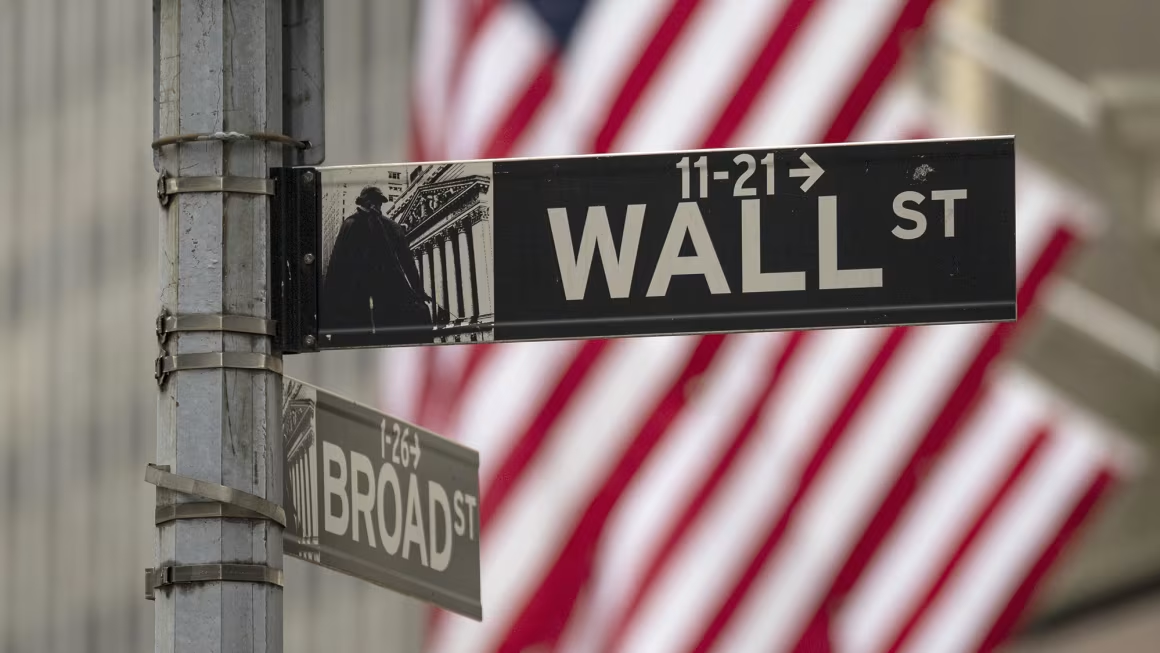

Wall Street wrapped up the second quarter of 2025 on a high note, marking a striking turnaround from a turbulent start to the year. Major U.S. stock indexes posted impressive gains in June, with both the S&P 500 and Nasdaq closing at new record highs. After enduring a rough first quarter marred by trade tensions and economic anxieties, investors have returned with renewed optimism. Still, even as volatility eases and equities climb, analysts caution that underlying economic uncertainties and the path of fiscal policy will play a critical role in shaping the rest of the year.


I. A Strong Finish to a Rocky Start
1. Major Indexes Surge in Q2
The Dow Jones Industrial Average closed Monday with a gain of 276 points, or 0.63%. The S&P 500 advanced by 0.52%, and the Nasdaq Composite rose 0.47%. This capped a robust second quarter where the S&P 500 gained 10.57%, bouncing back from a 4.59% decline in the first three months of the year. The Nasdaq, buoyed by tech giants like Nvidia and Microsoft, saw a stunning 33% increase since April 8, reflecting renewed enthusiasm around artificial intelligence.


According to Sam Stovall, Chief Investment Strategist at CFRA Research, the market’s Q1 dip was largely driven by fears that aggressive tariffs could trigger a U.S. recession. As those concerns faded, equities mounted a sharp V-shaped recovery, particularly in sectors previously hardest hit.

2. Tech Stocks Regain Leadership
The technology sector has been the standout performer in the recent rally. After being dragged down during the tariff-induced slump in March and April, tech stocks have powered ahead. Clark Bellin, President and CIO of Bellwether Wealth, noted that investor excitement about AI — which had waned earlier in the year — has returned in full force, pushing major tech names higher and reinforcing the sector’s leadership heading into the second half of 2025.
II. Currency and Commodities Shake-Up
1. Dollar Decline Raises Questions
Despite the stock market’s rally, the U.S. dollar has shown significant weakness. The U.S. Dollar Index, which compares the greenback against six other major currencies, fell 7% during the second quarter and is down 10.7% for the year. This marks the dollar’s worst first-half performance since 1973. The euro and British pound have appreciated significantly — 13% and 9% respectively — sparking concerns about diminishing global confidence in the U.S. economy and its financial policies.

Francesco Pesole, FX Strategist at ING, commented that the dollar’s traditional role as a haven during market stress has been undermined, suggesting that investor sentiment is shifting toward alternative safe assets.
2. Oil Volatility Amid Geopolitical Tensions
Oil markets have also seen considerable turbulence. In June, crude prices surged due to escalating tensions between Israel and Iran, with West Texas Intermediate peaking at $73.85 per barrel and Brent hitting $78.85. These price spikes mirrored reactions seen during the 2022 Russian invasion of Ukraine. However, as geopolitical fears eased, oil prices dropped sharply, with WTI settling at $65.11 and Brent around $66.61 per barrel.
3. Precious Metals See Renewed Demand
Silver and platinum have outperformed traditional safe haven gold in recent weeks. As gold prices stagnated in June — gaining just 0.1% — investors turned to alternative precious metals. Silver climbed nearly 10% in June and is up 24% year-to-date, driven by both investment demand and industrial usage. Platinum soared 28% in June and 49% this year, bolstered by a resurgence in jewelry demand, according to Bank of America analysts.
III. Calmer Markets, But Lingering Doubts
1. Volatility Index Drops
Wall Street’s so-called “fear gauge” — the CBOE Volatility Index (VIX) — plummeted in Q2. After surging to levels reminiscent of the 2008 financial crisis in early April amid tariff concerns, the VIX gradually declined, dropping nearly 27% in the quarter. On Monday, it traded near 17 points, a stark contrast from April’s highs above 50. This mirrors the shift in investor sentiment, with CNN’s Fear and Greed Index moving from “extreme fear” to a more neutral-to-greedy stance as the quarter progressed.
2. Bond Market Regains Stability
The Treasury market experienced notable turbulence at the start of the quarter as investors questioned U.S. economic resilience and debt reliability. However, confidence returned in June after a successful auction of 30-year Treasury bonds, easing concerns about waning foreign interest in U.S. debt. By Monday, the 10-year Treasury yield stood around 4.24%, while the 30-year yield hovered near 4.8%.
IV. The Road Ahead for Investors
1. Retail Investors Lead the Rally
Retail traders have played a crucial role in this year’s market upswing. Data from JPMorgan Chase’s strategist Emma Wu shows that individual investors poured $3.2 billion into equities between June 18 and June 24, signaling strong confidence despite previous market setbacks. In contrast, institutional and global investors have been more cautious, with significant amounts of capital still sitting on the sidelines.
2. A Market Searching for Direction
Looking ahead, analysts say the main challenge for investors is determining where to allocate capital next. Stocks are considered pricey by many measures, yet the momentum remains upward. Mohit Kumar, Chief Economist at Jefferies, noted that many portfolios remain underinvested in riskier assets, which has contributed to the current rally. However, he expects gains to be more gradual in the months to come rather than a continued sharp surge.
Even though the S&P 500 and Nasdaq have reached all-time highs, the Dow remains about 1,000 points — or 2.1% — shy of its own peak, signaling room for further movement depending on future economic data and policy direction.
Conclusion
Wall Street’s second-quarter performance offers a compelling snapshot of a market in recovery mode — resilient, yet cautious. From tech stock resurgence and falling volatility to a weakening dollar and rebounding oil and metal prices, the financial landscape is shifting on multiple fronts. As retail investors lead the charge and institutional capital waits for clearer signals, the second half of 2025 will likely hinge on upcoming economic indicators and policy decisions. The mood has certainly improved since early April, but with valuations high and geopolitical tensions still simmering, investors are advised to tread carefully in what remains an unpredictable environment.