






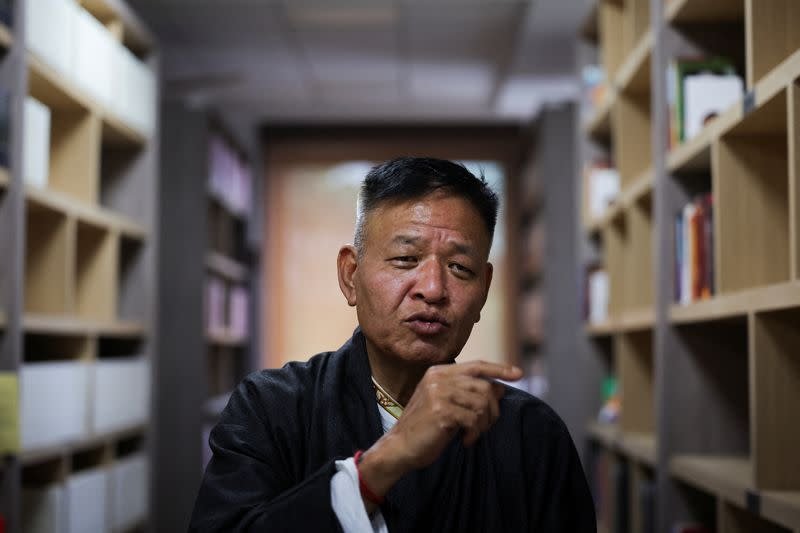


The Central Tibetan Administration (CTA) may pursue further informal dialogue with Beijing this year regarding Tibet’s autonomy. However, any substantial progress remains unlikely due to China’s inflexible position, according to CTA President Penpa Tsering.


Tsering shared these thoughts during an interview with Reuters, ahead of the 90th birthday celebration of the Dalai Lama. The Tibetan spiritual leader and tens of thousands of followers have been living in exile in northern India since fleeing Tibet in 1959 after an unsuccessful uprising against Chinese authority.
Although the exiled Tibetan community no longer demands full independence from China, their goal remains genuine autonomy to safeguard Tibet’s distinct cultural and religious identity.
I. Stalled Diplomatic Hopes
1. Back-Channel Efforts Continue Despite Stalemate
Tsering confirmed that informal communications with Beijing persist, but have produced no meaningful outcomes thus far. While more discussions may take place, he remains skeptical about their effectiveness.

2. No Willingness from Beijing
“There appears to be no room for negotiation or even basic reasoning,” Tsering said from a library dedicated to preserving Tibetan heritage. “When there’s no opening, it’s hard to justify investing much effort. Still, we maintain some discreet communication lines, although nothing substantial has come of them.”
The Chinese foreign ministry, which consistently labels the Dalai Lama a separatist, did not respond to requests for comment on the matter.
II. Dalai Lama’s Succession and China’s Claim
1. Dalai Lama Reaffirms His Successor’s Legitimacy
On Wednesday, the Dalai Lama reiterated that his reincarnation—whom he claims will be born outside of China—can only be officially recognized by the Gaden Phodrang Trust. He emphasized that this body alone has the authority to identify his successor.
2. Beijing’s Control Over Reincarnation
China maintains that it holds the right to approve both the Dalai Lama’s and the Panchen Lama’s successors, a claim rooted in traditions from imperial times. This long-standing dispute remains a critical point of friction between Tibetan exiles and the Chinese government.
III. India’s Quiet Support
1. Indian Minister’s Statement Stirs Response
Tsering praised Indian minister Kiren Rijiju for supporting the Dalai Lama’s stance on reincarnation, calling his comments a significant display of alignment with Tibetan sentiment. Rijiju’s remarks, rare for a senior Indian official, prompted a strong reaction from China.
Rijiju, a Buddhist and Minister for Parliamentary and Minority Affairs, later clarified that he spoke as a follower of the Dalai Lama. He is expected to attend the Dalai Lama’s birthday celebrations on Sunday, alongside other Indian officials.
2. India Maintains Religious Neutrality
India’s Ministry of External Affairs noted that the government does not officially comment on matters related to religious beliefs or spiritual traditions. Despite this, Tsering believes Rijiju’s words reflect broader public and governmental support.
IV. Global Support and Financial Realities
1. India and the U.S. Lead Humanitarian Aid
Tsering acknowledged India as the Tibetan community’s most significant humanitarian supporter. He also credited the United States, Canada, and Denmark for backing their efforts, particularly in education.
2. Funding Challenges Post-Trump
The Tibetan administration requires roughly $40 million annually to operate. Previously, the U.S. contributed about $14 million, but that figure dropped to around $9 million after foreign aid underwent review during Donald Trump’s presidency. Nevertheless, Tsering confirmed continued American support, including attendance by four U.S. State Department officials at the birthday event.
V. Demographic Shifts and Future Planning
1. Migration and Resettlement Trends
The Tibetan exile government is closely observing the trend of Tibetans relocating from India to other nations in search of better opportunities. The Tibetan population in India has decreased from nearly 100,000 to around 70,000, according to officials.
2. Long-Term Strategic Planning
Tsering emphasized the importance of adapting to demographic and social changes. “We’re monitoring the situation, reviewing data, assessing challenges and opportunities ahead—and preparing accordingly,” he said.
Conclusion
While the Tibetan exile administration remains open to dialogue with Beijing, there’s little optimism about tangible progress. With China holding firm and succession tensions continuing to brew, the exiled community looks to its global allies—particularly India and the United States—for support. As the Dalai Lama celebrates a milestone birthday, the CTA continues balancing diplomacy, cultural preservation, and strategic planning in an uncertain geopolitical climate.