






Timor-Leste has firmly rejected Myanmar’s objection to its upcoming membership in the Association of Southeast Asian Nations (ASEAN), calling the protest “irrelevant and inconsequential.” Despite Myanmar’s formal complaint accusing Timor-Leste of violating ASEAN’s core principle of non-interference, leaders in Dili assert that the path to full ASEAN membership is already settled and preparations for formal induction are well underway.

I. Myanmar’s Objection and Timor-Leste’s Response
1. Myanmar Alleges Violation of ASEAN Principles
According to media reports on July 2, Myanmar submitted an official complaint to Malaysia, the current ASEAN Chair, claiming that Timor-Leste fails to uphold the bloc’s non-interference principle. The letter, signed by Myanmar’s Director General Han Win Aung, argued that Dili’s continued actions should disqualify it from membership consideration.

2. Timor-Leste Calls Objection Baseless
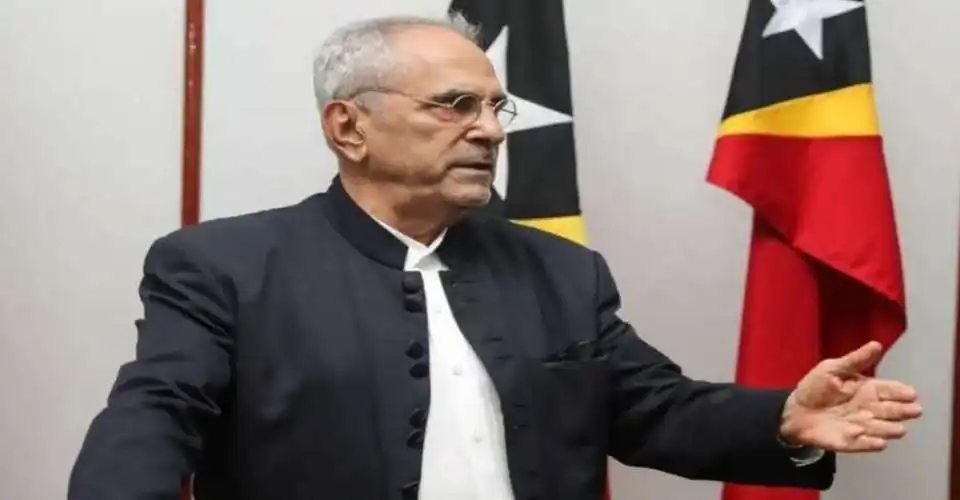
President José Ramos-Horta dismissed Myanmar’s protest, affirming that Timor-Leste’s membership has already been confirmed in ASEAN’s final communiqué. He emphasized that any response to Myanmar’s objection would be at the discretion of the ASEAN Chair but stated clearly that the ceremony marking full membership is scheduled for the ASEAN Summit in October.

II. Democratic Support as a Source of Tension
1. Solidarity With Myanmar’s Democratic Movement
Valentin da Costa, Executive Director of the Timor-Leste NGO Forum (FONGTIL), argued that Myanmar’s resistance stems from Timor-Leste’s unwavering support for democracy and human rights. Both Prime Minister Xanana Gusmão and President Ramos-Horta have publicly denounced the military junta and voiced their backing for the National Unity Government (NUG), Myanmar’s parallel government formed by ousted lawmakers.
2. A Model of Democratic Courage
Da Costa further explained that Timor-Leste’s commitment to democratic values represents a threat to the junta. Unlike authoritarian regimes, Timor-Leste provides an example where dissent is tolerated and leadership is accountable—qualities that stand in stark contrast to the military-led government in Myanmar.
3. Past Actions Fueling Discontent
Timor-Leste’s stance has not been limited to rhetoric. In August 2023, Gusmão warned that his country could withdraw its ASEAN bid if the bloc continued legitimizing autocratic regimes. Later, Ramos-Horta extended formal invitations to NUG representatives for events in Dili, leading Myanmar’s junta to expel Timor-Leste’s chargé d’affaires in protest.
III. Timor-Leste’s Continued Advocacy
1. Ongoing Support for Myanmar’s Civil Society
In March 2024, Prime Minister Gusmão met with Myanmar diaspora groups in Melbourne, reaffirming his support for their cause and urging the junta to adhere to ASEAN’s Five-Point Consensus—a peace plan that remains unimplemented since the 2021 coup.
2. Commitment to Democratic Values in ASEAN
Timor-Leste’s leadership continues to use its regional platform to promote human rights and democratic governance. Despite pressure, the country has not backed down from its position and instead reinforced its message that ASEAN must uphold democratic integrity among its members.
3. Preparing for Membership with Purpose
As the ASEAN Summit in October approaches, Timor-Leste is set to become the regional bloc’s 11th member. Beyond seeking a seat at the table, the nation aims to strengthen ASEAN’s credibility as a defender of civil liberties and democratic values in Southeast Asia.
Conclusion
Myanmar’s challenge to Timor-Leste’s ASEAN membership has done little to delay the country’s progress. Instead, it has highlighted Timor-Leste’s firm commitment to principles often lacking in regional diplomacy—democracy, accountability, and human rights. As Dili prepares to join ASEAN formally this October, it enters not merely as a new member, but as a principled voice pushing the bloc to live up to its founding ideals.