







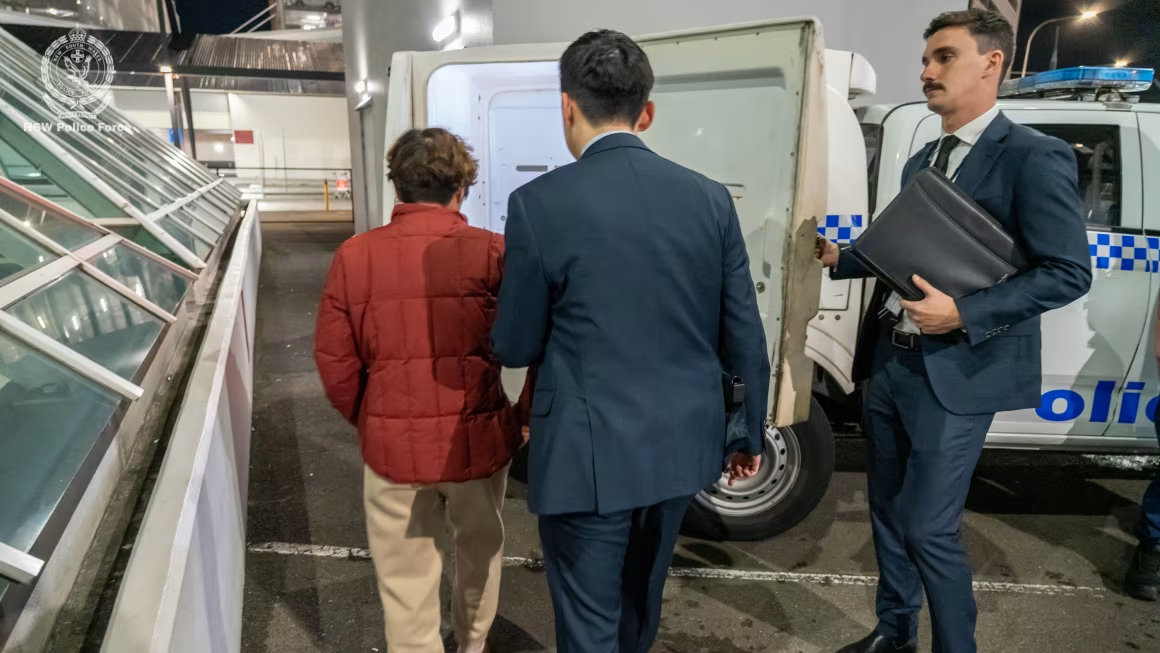
Two individuals have been arrested by Australian authorities following investigations into a series of deceptive “Chinese blessing scams” that have tricked elderly victims out of large sums of money. The fraudulent scheme, which has been reported globally over the past 25 years, centers on exploiting the superstitions and trust of elderly Asian women through elaborate spiritual deceptions.


I. The Spread and Nature of the Scam
1. Global Incidents of the Blessing Scam
The so-called Chinese blessing scams have surfaced in various countries, including the United States, the United Kingdom, Canada, and New Zealand. The scam typically involves deceiving older Asian women into believing a family member is cursed and requires a spiritual cleansing that involves their valuables.

2. Psychological Manipulation of Victims
Scammers claim that only a ritual involving the victim’s wealth can remove the curse. Victims are persuaded to gather their cash and jewelry for a fake blessing ritual, believing they are protecting their loved ones from harm.

II. Law Enforcement Action in Australia
1. Arrests Following Task Force Investigations
A 63-year-old woman was apprehended at Sydney International Airport after thorough investigations by Strike Force Sentinel, which was launched in April to probe 80 related cases involving an estimated AU$3 million ($2 million USD). A second suspect, also 63, was detained the following day in Brisbane while attempting to board a flight to China.
2. Targeted Communities and Modus Operandi
Detective Superintendent Guy Magee emphasized that the offenders primarily prey on vulnerable elderly Asian women. They exploit community superstitions by pretending to be spiritual figures who can lift curses through ritual blessings.

3. Elaborate Role-playing by Offenders
Magee described the scam as an orchestrated act with assigned roles for each participant. The elderly victim is often taken to someone pretending to be a spiritual healer, who instructs them to place their valuables in a bag for blessing and not open it for months—only for the victims to later discover the bag is empty.
III. Specific Cases and Broader Impact
1. Case in Parramatta Involving AU$130,000
The two recently arrested suspects are accused of defrauding a 77-year-old woman in Parramatta, Sydney, stealing approximately AU$130,000 ($85,000 USD) in cash and jewelry during June.
2. Widespread Involvement and Ongoing Investigations
NSW Police have identified 50 individuals potentially linked to the scam, naming 25 and capturing the others on surveillance footage. Eleven arrest warrants have been issued so far. Authorities believe the crime is significantly underreported due to victims’ shame and reluctance to come forward.
3. Similar Scams in New Zealand
In a related incident, New Zealand police detained three Chinese nationals last November as they prepared to fly back to China. The suspects allegedly scammed two elderly individuals out of approximately NZ$30,000 ($18,000 USD) shortly after their arrival in the country. Police were able to recover a large portion of the stolen funds.
IV. Public Warnings and Preventative Advice
1. Community Alerts from Police
Authorities are urging communities to be vigilant, warning against assisting strangers asking for directions to herbal doctors or spiritual healers. The NSW Police strongly advise against allowing unfamiliar individuals into one’s home or participating in any blessing rituals involving valuables.
2. Key Safety Measures
The police specifically warned not to give jewelry or money to unknown persons and to avoid putting valuables into any bag under the guise of a spiritual blessing, as this is a hallmark tactic of the scam.
Conclusion
Authorities across multiple countries are intensifying efforts to crack down on fraudulent spiritual scams that exploit cultural beliefs and target elderly individuals. The recent arrests in Australia and New Zealand highlight a broader international pattern of deception that requires vigilance, community awareness, and swift law enforcement action to prevent further victimization.








