





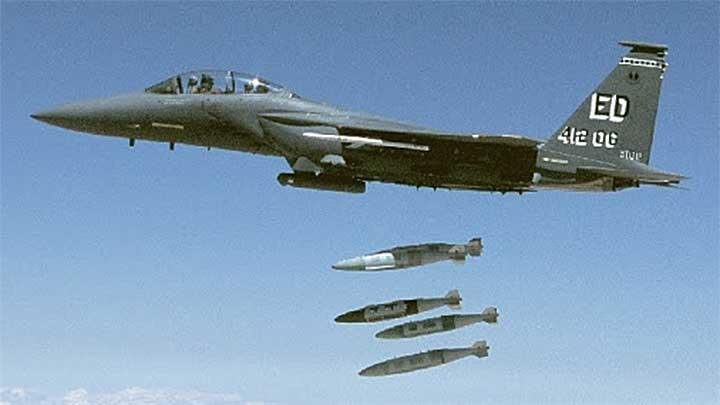

The United States has authorized a substantial arms deal with Israel, valued at approximately $510 million (or Rp8.25 trillion). The package includes thousands of Joint Direct Attack Munition (JDAM) guidance systems designed to enhance the precision of aerial bombs. Announced on July 1, 2025, by the U.S. Department of State and the Defense Security Cooperation Agency (DSCA), the decision comes at a time when Israel remains deeply involved in military operations in Gaza—sparking renewed international scrutiny and condemnation.


I. Details of the U.S.-Israel Military Deal
1. Precision Bomb Kits and Logistic Support
The military package features 3,845 KMU-558B/B JDAM kits, which are compatible with BLU-109 bombs, and 3,280 KMU-572 F/B kits designed for MK 82 bombs. These JDAM systems convert unguided bombs into precision-guided munitions using GPS technology, allowing for more accurate strikes. Alongside the equipment, Israel will receive technical assistance and logistics support to integrate and maintain these systems effectively.


2. Strengthening Israel’s Defensive Capabilities
According to the DSCA, this proposed sale aims to bolster Israel’s defensive readiness against current and emerging threats. It emphasizes the importance of protecting Israel’s borders, critical infrastructure, and civilian populations. The agency assured that the sale would not disrupt the military equilibrium in the region and would not involve deploying additional U.S. personnel or contractors to Israel.
II. U.S. Justification and Strategic Interests
1. Reinforcing U.S.-Israel Security Ties
The DSCA underscored that the arms deal aligns with the strategic objectives of U.S. foreign policy in the Middle East. “It is essential to U.S. national interests to support Israel in maintaining a robust and effective self-defense capability,” the agency stated. The move reaffirms Washington’s long-standing alliance with Israel, particularly in defense and intelligence cooperation.
2. Congressional Oversight and Approval Process
The proposed sale is still subject to final approval by the U.S. Congress. A formal notification has already been sent, initiating the legislative review process. Analysts suggest that while the arms deal is likely to pass due to strong bipartisan support for Israel in Congress, it may face growing scrutiny given the worsening humanitarian crisis in Gaza and international legal proceedings involving Israel’s leadership.

III. Mounting Global Backlash Against U.S. Military Support
1. Civilian Casualties in Gaza Prompt International Outrage
The announcement coincided with reports from Anadolu Agency indicating that at least 97 Palestinians were killed in Israeli air and artillery assaults on July 1. These strikes reportedly targeted multiple areas within Gaza, including zones designated for civilian refuge. Since hostilities escalated in October 2023, over 56,500 Palestinians—mostly women and children—have reportedly died as a result of Israeli military action, according to health officials in Gaza.
2. Accusations of Enabling Human Rights Violations
Critics argue that continued U.S. military support enables Israel to carry out operations that result in mass civilian casualties. Humanitarian organizations and international observers have expressed deep concern that Washington’s weapons supply to Israel contradicts its stated commitment to human rights and international law. The optics of approving a major arms deal amidst a deadly conflict are intensifying debates within the international community and among American lawmakers.
IV. The Trump Administration’s Position on the Gaza Conflict
1. President Trump’s Push for a Ceasefire
Despite authorizing the arms deal, President Donald Trump has reportedly been advocating for an immediate ceasefire in Gaza. According to White House spokesperson Karoline Leavitt, the president views ending the war as a top priority. She confirmed that Israeli Prime Minister Benjamin Netanyahu has requested a meeting with Trump, and both parties are currently working to finalize the timing.
2. Humanitarian Concerns and Diplomatic Intentions
Leavitt emphasized the emotional toll the conflict has taken on President Trump, citing his reaction to disturbing images from Gaza. “The president is committed to stopping this brutal war,” she said, highlighting his dual-track approach: supporting Israel’s right to defend itself while also pursuing an end to the ongoing violence. The administration’s messaging aims to balance strategic support with humanitarian diplomacy.
V. Legal Challenges Facing Israel on the International Stage
1. ICC Issues Arrest Warrants for Israeli Leaders
Israel’s ongoing military campaign in Gaza is not only under political scrutiny but also under legal challenge. In November, the International Criminal Court (ICC) issued arrest warrants for Prime Minister Netanyahu and former Defense Minister Yoav Gallant. The charges include alleged war crimes and crimes against humanity, relating to actions carried out during the Gaza operations.
2. Genocide Allegations in the International Court of Justice
In parallel, the International Court of Justice (ICJ) is proceeding with a case that accuses Israel of committing acts of genocide in Gaza. This case has further fueled calls for international accountability and has increased pressure on the United States to reconsider its unconditional military backing of Israel. The legal proceedings may set a precedent for how nations navigate arms agreements during active conflict zones.
Conclusion
The approval of a $510 million arms sale from the United States to Israel highlights the complexities of foreign policy amid a humanitarian crisis. While Washington continues to reinforce its strategic alliance with Tel Aviv by providing advanced military technology, the decision comes at a time of heightened civilian casualties and escalating legal challenges against Israel. As President Trump pushes for a ceasefire and weighs a possible meeting with Netanyahu, the U.S. faces growing global and domestic pressure to reconcile its military commitments with its diplomatic and ethical responsibilities. The unfolding events in Gaza, paired with the international response, may significantly shape the future of U.S.-Middle East relations.