








In a startling escalation of hostilities, a drone strike reportedly originating from Ukraine has targeted a government building in central Moscow, according to Russian officials. The alleged attack, which occurred early Monday morning, has not only raised the stakes in the ongoing war between Russia and Ukraine but also sent shockwaves across the international community, as it marks one of the few instances of direct assault on the Russian capital since the conflict began.


As the smoke settled over the iconic skyline of Moscow, questions loomed over the true nature and intention of the attack, the implications for civilian safety, and the broader geopolitical consequences. While Ukrainian authorities have not officially claimed responsibility, anonymous sources within military and intelligence circles suggest the operation was a calculated move designed to challenge Russia’s sense of security on its own soil.
The Incident: What Happened in Moscow?
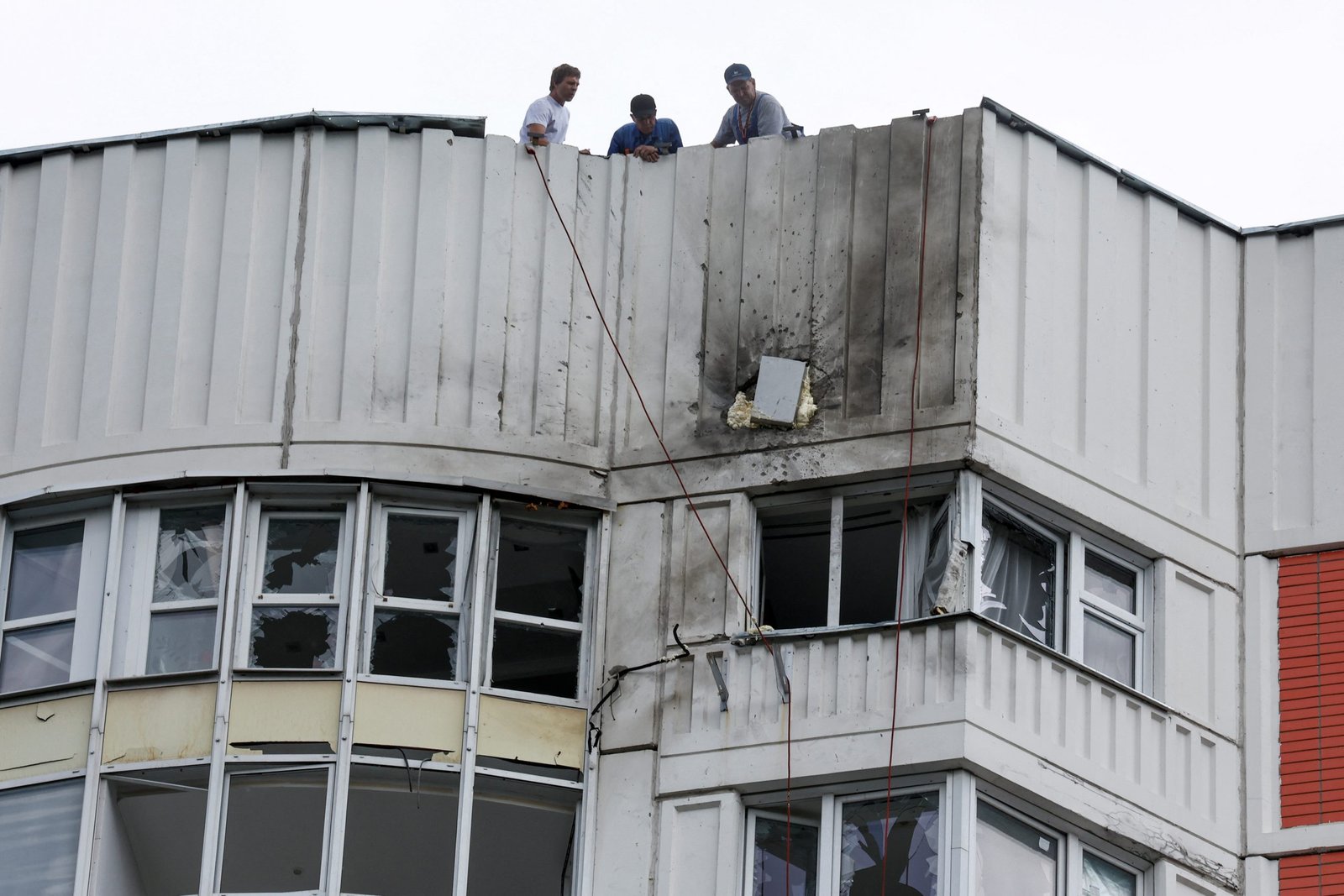
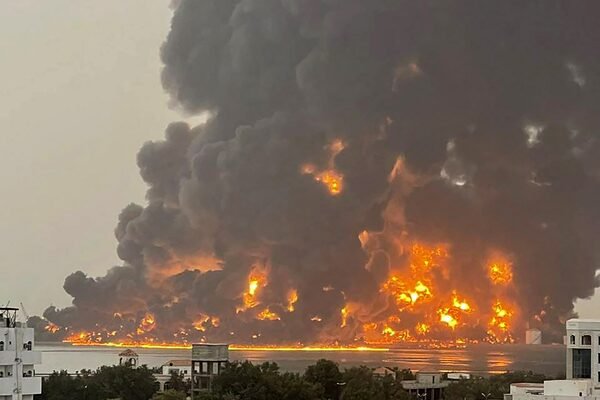
At approximately 4:15 AM local time, loud explosions were heard near the administrative district of Moscow, not far from the Russian Duma and several high-profile federal buildings. Videos circulated rapidly across social media platforms, showing plumes of smoke rising above central Moscow, emergency vehicles rushing to the site, and shattered windows in surrounding buildings.
The Russian Ministry of Emergency Situations confirmed that a drone, allegedly equipped with an explosive payload, struck the top floors of a government administration office. No fatalities were reported, but five people suffered minor injuries from flying debris, and several government employees were treated for shock.
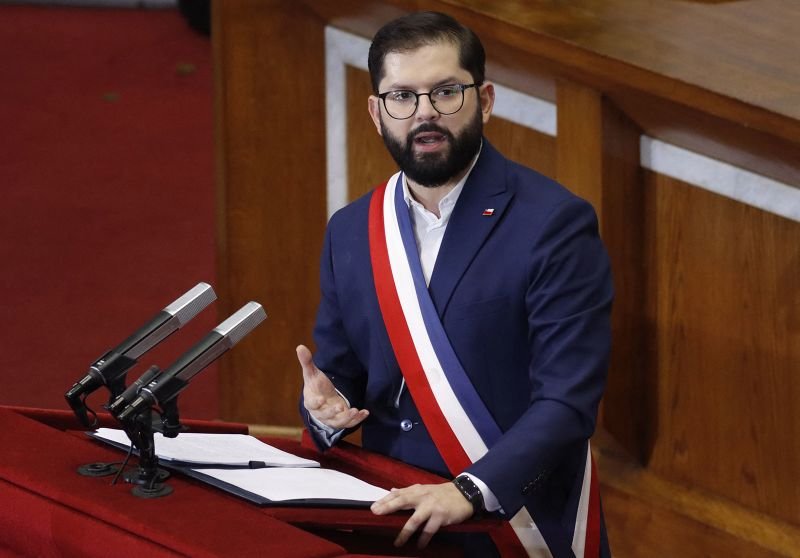
In a televised address, Moscow Mayor Sergey Sobyanin stated, “This is a direct attempt to terrorize our citizens and destabilize our governance. We are investigating all aspects, including where the drone was launched and how it breached our air defenses.”
Ukraine’s Ambiguous Response
Kyiv has neither confirmed nor denied involvement in the incident. Ukrainian presidential adviser Mykhailo Podolyak tweeted cryptically, “The war is returning to where it began—Russia must feel the consequences of its invasion.”
Ukrainian officials have long maintained that their military efforts are focused on liberating occupied territories rather than attacking Russia proper. However, as the war stretches into its third year, Ukraine’s strategy appears to be evolving, especially in light of growing frustration with Russian missile and drone attacks on Ukrainian civilian infrastructure.
While the Ukrainian military has successfully conducted cross-border operations before—such as targeted drone strikes on Russian oil depots and logistical hubs—this event marks the boldest move yet if it is confirmed to have originated from Ukraine.
The Nature of the Drone
Preliminary analysis from military experts suggests the drone used was a modified long-range fixed-wing UAV, possibly launched from Ukrainian-held territory or a forward-operating position within Russian borders. Satellite imagery and eyewitness accounts point to a drone flying low to avoid radar detection, and maneuvering precisely before impact—suggesting a sophisticated level of control and coordination.
Russian state media claimed that air defense systems in the Moscow region attempted to intercept the drone but were unsuccessful. This has led to renewed concerns about the vulnerabilities in Russia’s domestic airspace security, particularly around critical government sites.
Reactions From the Kremlin
The Kremlin’s response was swift and severe. President Vladimir Putin condemned the attack as “a cowardly act of aggression” and vowed retaliatory measures. In an emergency meeting of the Russian Security Council, Putin warned that “any nation supporting or facilitating such attacks will be viewed as a co-belligerent.”
Russian lawmakers have already called for an escalation in military efforts, with several urging the complete mobilization of reserves and intensified strikes on Ukrainian infrastructure. Defense Minister Sergei Shoigu stated that “Russia reserves the right to respond in a manner and time of its choosing.”
The incident has also sparked discussions in Russian state media about enhancing homeland defense capabilities, including radar networks and anti-drone technologies, particularly around Moscow.
Global Reactions
The international community has reacted with caution. The United Nations issued a statement urging restraint, warning both parties against actions that could widen the conflict and endanger civilians. The United States and NATO members have reiterated their support for Ukraine’s right to self-defense but expressed concern over attacks that could provoke uncontrollable escalation.
NATO Secretary-General Jens Stoltenberg commented, “We stand with Ukraine in its fight against aggression. At the same time, we urge all parties to consider the broader consequences of striking targets outside of the war zone.”
China and India, both of which have maintained a neutral stance throughout much of the war, called for a renewed diplomatic push to end hostilities. Beijing’s Foreign Ministry described the drone strike as “alarming” and warned against any moves that could lead to the war spilling beyond Ukraine’s borders.
Potential Consequences and Strategic Implications
If confirmed, Ukraine’s decision to strike a symbolic target within Moscow represents a dramatic shift in the war’s trajectory. Analysts believe this was not merely a tactical strike, but a symbolic one—designed to send a message to the Russian leadership and populace that the conflict can no longer be confined to Ukrainian territory.
Strategically, such attacks might serve to:
-
Undermine Russian morale by demonstrating that even the capital is vulnerable.
-
Disrupt governmental operations and communications.
-
Divert Russian military resources away from the frontlines and towards homeland security.
However, the risk of retaliation is high. Russia could respond with increased missile strikes on Ukrainian cities, further curtail civil liberties at home, or even expand the war into neighboring territories deemed complicit.
Psychological and Political Impact Inside Russia
The drone strike has had a chilling psychological effect on the Russian public. For many Muscovites, the idea that their capital could be targeted was once unthinkable. Now, with tangible evidence of vulnerability, public confidence in the government’s ability to protect its citizens may be waning.
Several independent Russian media outlets, operating from exile, reported a spike in online searches for “bomb shelters near me” and “evacuation procedures” in the hours following the attack. Meanwhile, opposition voices have criticized the Kremlin for focusing too heavily on foreign aggression while neglecting domestic security infrastructure.
In the political realm, hardliners within the Russian parliament are seizing the moment to push for even more aggressive policies, including the possible expansion of conscription and martial law in strategic regions.
Media and Information Warfare
Both Russia and Ukraine are leveraging the incident in their information campaigns. Russian state-controlled outlets have portrayed the attack as evidence of Ukraine’s “terrorist” tactics and Western complicity. Conversely, Ukrainian media and pro-Kyiv digital networks are framing the strike as a necessary act of resistance against a nation waging war on civilians.
Misinformation has also flourished. Unverified reports, manipulated videos, and false flag theories are circulating widely, complicating the task of verifying facts. International media organizations are urging readers and viewers to rely on confirmed, credible sources.
The Broader War Context
The alleged drone strike comes amid an intensifying phase of the war. Ukraine’s counteroffensive efforts have met with mixed success, while Russia has increased its use of Iranian-made drones and long-range missiles to pound Ukrainian power grids and civilian infrastructure.
This asymmetrical escalation—drones in exchange for missiles—may now become a central theme in the conflict. Both nations are heavily investing in UAV technologies, remote warfare capabilities, and electronic countermeasures.
Legal and Ethical Considerations
The legality of the drone strike under international law is a complex issue. While Ukraine is at war and may argue that targeting command-and-control centers in an aggressor nation is justified, the distinction between military and civilian targets becomes critical.
Human rights organizations have called for an independent investigation into whether the building struck had active military functions or if civilians were placed at risk. The outcome could influence future interpretations of international humanitarian law in asymmetric warfare scenarios.
What Comes Next?
The drone strike on a Moscow government building, whether confirmed or not, signals a dangerous new chapter in the Russia–Ukraine conflict. It shatters previous assumptions about the war’s geographic boundaries and challenges policymakers, militaries, and civilians alike to rethink their strategies and expectations.
If Ukraine continues to bring the war to Russian soil, and if Russia responds with harsher measures, the potential for regional destabilization grows exponentially. Diplomatic channels may come under increasing strain, and global powers could find themselves pulled deeper into the conflict—either through alliances, economic ramifications, or humanitarian crises.
Conclusion
The alleged Ukrainian drone strike in Moscow is more than a military event; it is a political and symbolic turning point. Whether seen as a bold act of defiance or a dangerous provocation, it has reshaped the landscape of the war and brought new urgency to calls for peace, diplomacy, and global vigilance.
As the world watches and waits for the next move, one truth remains indisputable: the conflict between Russia and Ukraine has entered uncharted territory—and the consequences may reverberate far beyond the borders of either nation.








