







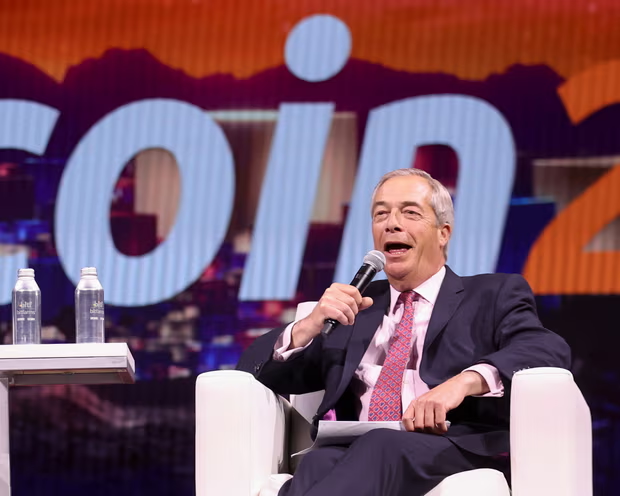


In a groundbreaking move that signals a shift in British political funding, Reform UK has become the first political party in the United Kingdom to officially accept donations via cryptocurrency. Announced by Nigel Farage during his appearance at the Bitcoin Conference in Las Vegas, this new direction showcases the party’s intent to align with digital financial innovation and appeal to a tech-savvy electorate. Farage’s stance makes it clear that crypto and blockchain are now part of Reform UK’s political DNA.


I. Reform UK Opens Its Doors to Crypto Donations
1. A Historic First in British Politics
Speaking to an international audience in Las Vegas, Nigel Farage revealed that eligible UK citizens can now support Reform UK financially through digital assets such as bitcoin. This bold initiative makes Reform UK the first political organization in Britain to offer such an option. As of Thursday, their official website was updated to reflect this change, complete with a disclaimer noting that all contributions must comply with Electoral Commission regulations—meaning anonymous donations remain prohibited.

2. Reinforcing Transparency and Compliance
While Reform UK’s move into crypto donations may seem radical, the party has emphasized that all contributions must align with existing UK election laws. Farage and his team are positioning this development not as a workaround, but as a leap toward modern financial integration. “Innovation” was the word Farage used at the conference—framing the new policy as both progressive and necessary in the 21st-century political landscape.
II. Reform’s Vision for a Crypto-Friendly Britain
1. A Comprehensive Crypto Legislative Plan
Beyond donations, Reform UK has crafted a detailed proposal aimed at revolutionizing the UK’s digital finance infrastructure. According to Farage, their upcoming cryptoassets and digital finance bill will include significant changes to tax policies and financial practices. One headline measure is the proposed reduction of capital gains tax on crypto holdings—from the current 24% to just 10%. This move, Farage claims, would attract more crypto investors and position the UK as a global hub for digital assets.

2. Bitcoin Reserve at the Bank of England
One of the most ambitious proposals within the Reform crypto bill is the establishment of a bitcoin digital reserve managed by the Bank of England. This suggests a vision where cryptocurrency is not just a speculative tool, but an integral part of national fiscal policy. Although still theoretical, such a reserve would mark an unprecedented fusion between decentralised finance and the UK’s central banking system.
3. Protecting Crypto Users From Financial Discrimination
Reform’s draft legislation would also seek to ban financial institutions from “debanking” individuals simply for participating in crypto trading. This protection could serve to safeguard crypto users from what many see as unfair treatment by traditional banks, fostering a more inclusive financial environment for those embracing blockchain technology.
III. Taking a Jab at the Establishment
1. Farage Critiques Political Inaction
Farage didn’t hold back when pointing fingers at other UK political factions. He criticized both the current Labour administration and the previous Conservative government for their lukewarm engagement with crypto policy. Rishi Sunak, he noted, had only made a single speech about crypto during his short-lived term as prime minister, with no real action following it. Meanwhile, Farage derided Labour for being “entirely disconnected” from private enterprise, claiming that none of their cabinet members had real business experience.
2. Comparing the UK to the US Crypto Landscape
During his appearance in Las Vegas, Farage also praised the United States for its comparatively advanced approach to digital finance. He pointed out that America was “ahead” in terms of recognizing crypto’s role in modern economies and urged Britain to catch up. “My message to the British public,” Farage said, “is to help us bring the UK properly into the 21st century.” His appeal was especially directed at younger voters—those who are more digitally native and open to alternative financial systems.
IV. Reform UK’s Organizational Structure and Control
1. A Unique Political Model
Reform UK stands apart from traditional British political parties in its organizational framework. Unlike Labour or the Conservatives, which are member-based associations, Reform UK is officially listed as a private company. According to Companies House records, the party is primarily controlled by Nigel Farage, who owns it through a not-for-profit entity named Reform 2025.
2. Tight Leadership and Financial Oversight
Reform 2025 has only two members and two directors: Farage himself and Zia Yusuf. This tight leadership structure allows Reform UK to move quickly on issues like crypto without needing wide consensus from a sprawling membership. While critics argue this centralization limits democratic decision-making, Farage’s supporters say it allows the party to act decisively and avoid bureaucracy.
Conclusion
Nigel Farage and Reform UK are clearly betting big on the future of cryptocurrency. By becoming the first British political party to accept donations in bitcoin and other digital assets, they’ve signaled their commitment to a tech-driven political agenda. With bold legislative proposals—including tax cuts, anti-debanking measures, and even a bitcoin reserve at the Bank of England—Reform UK is seeking to reshape Britain’s financial identity for the digital age. Whether or not these efforts will bear fruit remains to be seen, but one thing is certain: the political and financial worlds in the UK are inching closer than ever before.








