






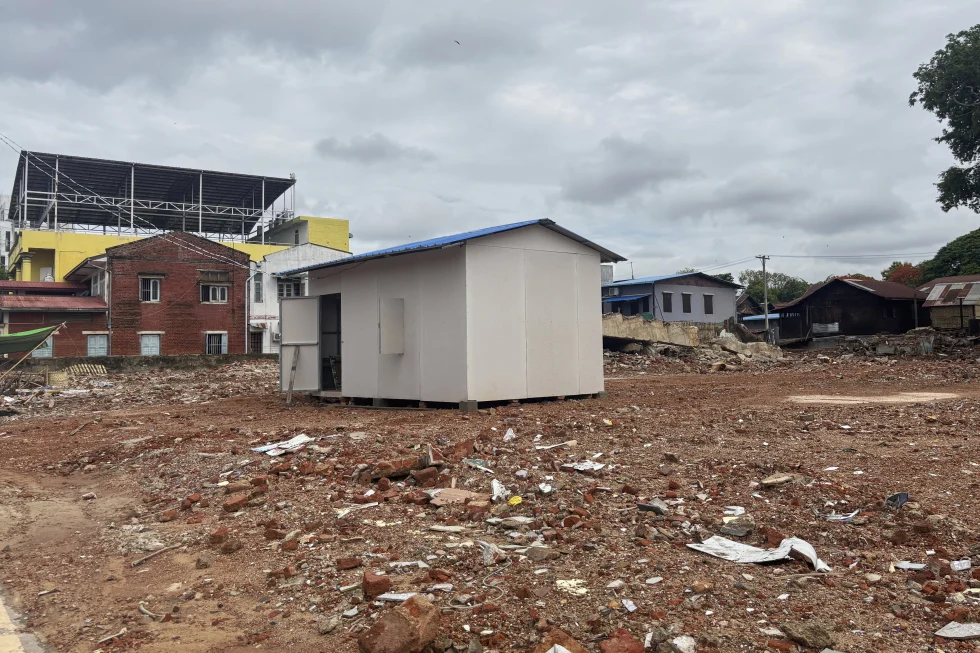
The United Nations has issued a dire warning that Myanmar is headed toward self-destruction if the ongoing violence in the country does not cease. UN Special Envoy Julie Bishop delivered this stark message to the UN General Assembly, emphasizing that the humanitarian crisis has been compounded by a recent devastating earthquake, deepening the suffering of millions already caught in conflict.

I. Escalating Crisis Amid Natural Disaster
1. Earthquake Adds to Myanmar’s Turmoil
In late March, a powerful earthquake struck Myanmar, severely affecting Naypyitaw and Mandalay, killing over 3,000 people and injuring thousands more. Despite this natural disaster, hostilities between armed groups have continued, with ceasefires mostly ignored, leading Bishop to describe the situation as “a crisis within a crisis.”

2. Conflict Disrupts Humanitarian Aid
Bishop criticized all parties in the conflict for maintaining a zero-sum approach that obstructs humanitarian relief efforts. The influx of weapons into the country has heightened expectations for a military solution, further complicating attempts to address both the conflict and the post-disaster recovery.

II. Roots of Violence and Civil Resistance
1. Military Coup Sparks Armed Resistance
The ongoing unrest in Myanmar was ignited by the military’s seizure of power in February 2021, ousting the democratically elected government of Aung San Suu Kyi. This prompted widespread civilian protests and armed resistance, resulting in the deaths of over 6,600 civilians as reported by NGOs.
2. Rise of Pro-Democracy and Ethnic Militias
Following the coup, new pro-democracy militias allied with the National Unity Government (NUG)—formed by deposed lawmakers—emerged. They have joined long-established ethnic armed groups in resisting military control, particularly in border areas where calls for autonomy have spanned decades.
3. Political Detentions and Repression
Bishop reported that more than 22,000 political prisoners remain behind bars, including Suu Kyi and former President Win Myint. Suu Kyi, now 80, remains a symbolic figure of resistance as the military continues to crack down on dissent across the country.
III. Fragile Political Landscape
1. Limited Signs of Dialogue
Bishop noted minor indications of willingness for political talks, partly supported by regional actors. However, she stressed that there is no unified agreement on a path forward. Without meaningful engagement, she warned, Myanmar’s political divide will only widen.
2. Elections Could Worsen the Situation
The military junta’s plans to hold elections by late 2024 or early 2025 were also scrutinized. Bishop cautioned that elections held under current conditions—marked by violence and exclusion—would risk deepening instability rather than restoring order, unless reforms ensure they are inclusive and transparent.
3. ASEAN and UN Coordination
Bishop shared that she is working in tandem with ASEAN’s Special Envoy Othman Hashim, and they are planning a joint visit to Myanmar. This effort aims to advance regional engagement and pressure for peaceful political transition.
IV. Ongoing Rohingya Plight
1. Dire Conditions in Rakhine State
Bishop highlighted the severe conditions faced by the Rohingya in Myanmar’s northern Rakhine state. Up to 80% of civilians in the area live in poverty and are frequently caught in conflict between the military and the Arakan Army. Reports of forced recruitment and systemic abuses continue to emerge.
2. Legacy of 2017 Violence and Displacement
Since August 2017, more than 700,000 Rohingya Muslims have fled to Bangladesh following a violent military crackdown. The ethnic group continues to face systemic discrimination, statelessness, and a lack of basic rights within Buddhist-majority Myanmar.
3. Upcoming Conference Offers Hope
Bishop expressed optimism that a UN General Assembly-hosted high-level conference on September 30 could bring renewed international focus to the Rohingya crisis. The event is expected to advocate for lasting and humane solutions for the Rohingya and other marginalized ethnic communities.
Conclusion
Myanmar’s internal conflict, compounded by natural disasters and political repression, places the country on a destructive path. As the UN and ASEAN step up efforts to foster dialogue and address humanitarian needs, the international community faces mounting pressure to act decisively. The upcoming high-level discussions on minority rights and peacebuilding could be pivotal in redirecting Myanmar toward stability and inclusive governance.