







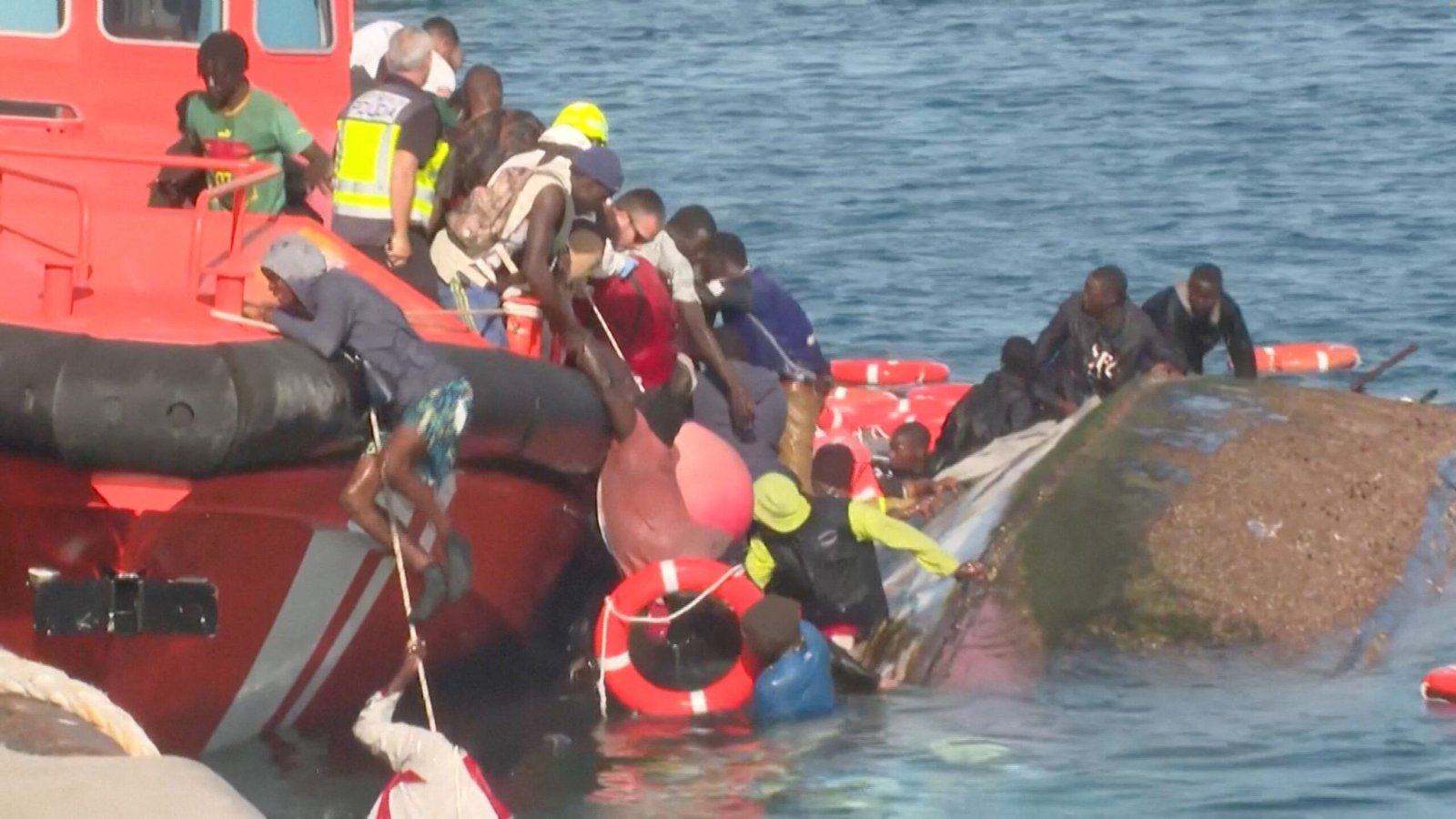


At least eight people have lost their lives and 22 others remain unaccounted for after a tragic incident off the coast of Djibouti, where smugglers reportedly forced a group of migrants to jump from a boat and swim ashore. The incident, which occurred on June 5, has drawn fresh attention to the perilous journeys faced by migrants along the Horn of Africa’s migration routes.


According to the International Organization for Migration (IOM), the affected group consisted of around 150 individuals. After being abandoned at sea, survivors were discovered in the desert by IOM patrol teams and transferred to a local migrant response center for assistance. A search and rescue operation remains ongoing to locate the missing.
I. DEADLY CROSSINGS AND INHUMANE SMUGGLING PRACTICES
1. Migrants Forced Into the Sea
The IOM confirmed that the migrants were traveling across the Red Sea when smugglers abruptly forced them to disembark far from shore, leaving them to swim through dangerous waters to reach land. At least eight of them drowned, while 22 others have yet to be located. The remaining individuals were rescued and are now receiving aid and support from humanitarian teams.
Celestine Frantz, the IOM’s Regional Director for East, Horn, and Southern Africa, condemned the smugglers’ ruthless actions, stating that such tragedies should never occur. “Every life lost at sea is a tragedy that should never happen,” she said, highlighting the dire risks migrants face and the callous disregard for human life exhibited by those who profit from their desperation.
2. Ongoing Search and Rescue Operations
Authorities in Djibouti, in collaboration with the IOM, have continued search efforts in hopes of locating any survivors. Rescue teams are combing the coastline and surrounding desert regions, though the chances of finding the missing alive diminish with each passing day.
This recent tragedy underscores the urgent need for stronger migration governance and increased regional cooperation to dismantle smuggling networks that prey on vulnerable populations.
II. THE PERILOUS MIGRATION ROUTE VIA DJIBOUTI AND YEMEN
1. A Key Transit Hub to Gulf Countries
Djibouti has become a critical crossing point for migrants originating from the Horn of Africa, particularly Ethiopia and Somalia, who are trying to reach the Arabian Peninsula. Most migrants aim to pass through Yemen—despite its ongoing conflict—in hopes of finding employment in Gulf countries like Saudi Arabia or the UAE.
Each year, hundreds of thousands of people embark on this route, risking arrest, injury, abuse, and even death. Yemen, despite its instability, serves as a central corridor due to its geographical proximity to East Africa.
2. Smugglers Exploit Desperation
The treacherous journey is often facilitated by human smugglers who exploit migrants’ desperation. Packed into overcrowded and unsafe boats, migrants are frequently subjected to abuse, violence, and forced disembarkation mid-sea. Survivors have recounted horrific experiences, including starvation, beatings, and extortion by traffickers.
Celestine Frantz reiterated that many migrants are left with no viable alternatives. “They are forced into impossible choices by smugglers who show no regard for human life,” she said. These human traffickers view migrants as mere cargo, often dumping them overboard to avoid detection by authorities or in response to navigational challenges.
III. THE BROADER CONTEXT OF IRREGULAR MIGRATION
1. Drivers of Migration: Poverty, Conflict, and Instability
The flow of migrants through Djibouti and Yemen is driven by multiple factors, including poverty, political instability, and lack of economic opportunity in countries across Africa and Asia. Many migrants come from regions plagued by conflict, famine, or authoritarian rule, and see the journey to the Gulf or Europe as their only hope for a better life.
Despite being fully aware of the risks involved, many choose to undertake the journey, driven by the dream of security and prosperity.
2. Europe and the Gulf as Ultimate Destinations
While some migrants aim to settle in Gulf countries for work, others continue their journey toward Europe. Routes through Yemen and the Middle East are seen as stepping stones to reach European shores. However, many migrants never make it past the initial crossings.
Smuggling networks, corruption, and limited legal migration pathways exacerbate the danger, pushing migrants to take increasingly hazardous and unauthorized routes.
IV. INTERNATIONAL RESPONSE AND CALL FOR ACTION
1. IOM’s Role in Rescue and Assistance
The IOM plays a crucial role in responding to such humanitarian disasters, providing emergency aid, medical support, and repatriation services for rescued migrants. In Djibouti, migrant response centers serve as critical lifelines for those who survive such perilous journeys.
The organization continues to advocate for safe and legal migration options, while working with governments and local authorities to dismantle human trafficking networks and improve migrant protections.
2. Regional Cooperation Needed to Save Lives
Experts agree that greater coordination between countries in the region is essential to preventing future tragedies. This includes sharing intelligence on smuggling routes, improving border security, investing in economic development at the source, and offering viable alternatives to migration.
Efforts must also be made to raise awareness in high-risk regions about the dangers of irregular migration. Many migrants are unaware of the real risks they face, making them easier targets for smugglers.
Conclusion
The tragic drowning of migrants off Djibouti’s coast is yet another reminder of the deadly risks faced by those seeking a better life. As long as smugglers continue to exploit vulnerable people and safe migration pathways remain limited, such calamities will persist. The international community, humanitarian organizations, and regional governments must work together to combat trafficking, strengthen migration infrastructure, and offer hope through opportunity and protection. Only through collective action can we prevent further loss of life and restore dignity to those forced to flee their homes.








