







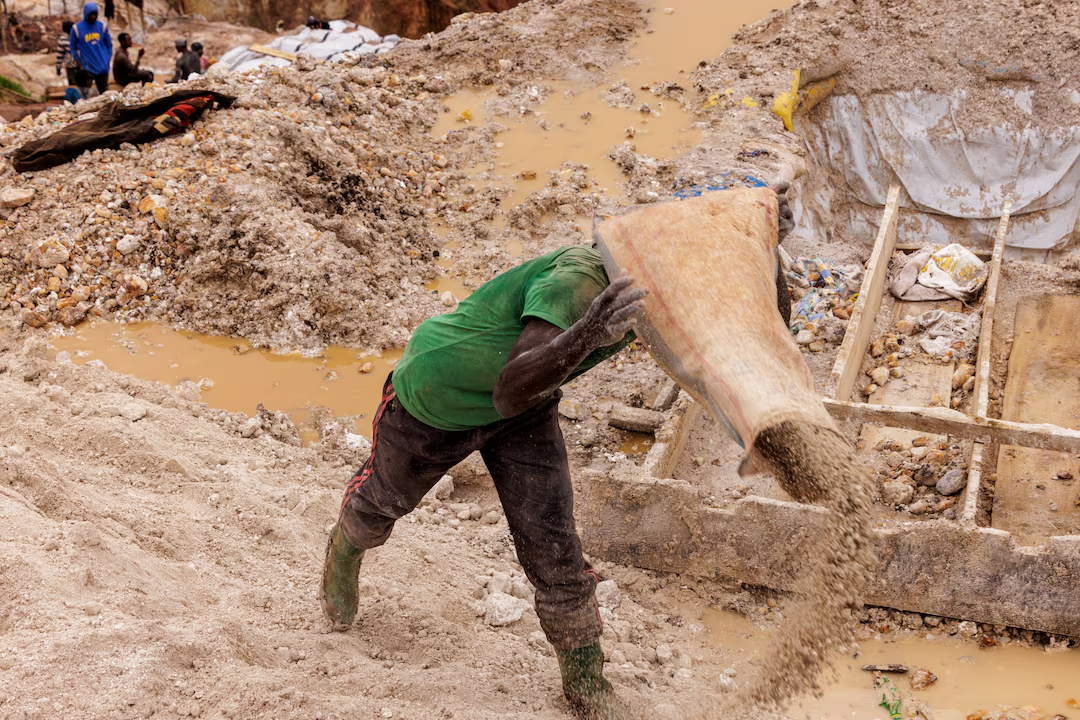

A soon-to-be-released United Nations report has revealed that Boss Mining Solution, a company based in Rwanda, allegedly acquired minerals illegally extracted from rebel-controlled areas in the Democratic Republic of Congo (DRC). The profits from this illicit trade reportedly financed the M23 rebel group, which has seized control of a large mining territory in eastern Congo.

This marks the first instance where the UN has explicitly named a company as complicit in smuggling conflict minerals from areas under M23’s control. The report highlights how the group’s territorial gains have heightened instability in a region already plagued by decades of violence and exploitation.
Boss Mining is run by Rwandan businessman Eddy Habimana, who was previously identified by UN investigators as a trafficker involved in mineral smuggling. The company has denied the allegations. Habimana stated that Boss Mining adheres to international standards that prohibit funding armed groups or violating human rights.
I. The Role of Boss Mining and M23
1. Allegations of Mineral Smuggling
According to the report, coltan – a highly valuable ore used in the production of smartphones and aerospace components – was extracted from mines in Rubaya, a region now under M23 control, and illegally transported into Rwanda. In just one week of March, investigators recorded 195 tons of smuggled coltan.

2. Denial from Involved Parties
Despite being named in the report, Boss Mining denied purchasing coltan from Rubaya. Rwandan government spokesperson Yolande Makolo also refuted the findings, stating the report mischaracterized Rwanda’s security concerns about Hutu militias that threaten Tutsis in both countries.
II. Widening Conflict and Funding Networks
1. Geopolitical Context
M23, allegedly backed by the Rwandan government, continues to destabilize eastern Congo by extracting and taxing minerals in areas under its control. The group reportedly earns $800,000 monthly from coltan mining operations. A parallel administration has been established by M23 to regulate and benefit from the mineral trade.
2. Global Response and Diplomatic Tensions
The Congolese government has long accused Rwanda of fueling conflict to exploit Congo’s mineral wealth. Diplomatic relations worsened after M23 captured the city of Goma, prompting DRC to sever ties with Rwanda in January. Rwanda denies supporting M23, though a confidential UN document indicates the presence of 1,000 Rwandan troops in eastern Congo.
III. Export Discrepancies and Murky Origins
1. Disproportionate Export Figures
Data analysis shows that Rwanda exported 2,300 tons of coltan in 2024, yet experts argue this volume far exceeds Rwanda’s production capacity. Mining consultant Bill Millman called the export figures “totally implausible.”
2. Disruption in Official Records
Shortly after M23 seized Rubaya, Rwanda’s central bank stopped publishing export statistics. The lack of transparency and regulatory oversight has made it difficult to verify the origin of Rwanda’s coltan exports.
IV. Business Structure and International Ties
1. Ownership and Operations
Boss Mining is co-owned by Eddy Habimana and two dual British-Russian citizens, Yuriy Tolmatchev and Alexander Konovalchik. Both men are long-time mining executives who currently reside in the UK. Corporate records show they also control Metarex Ltd. and Novacore FZE, which purchase coltan exported by Boss Mining.
2. Connections to Other Firms
Habimana is also affiliated with Speck Minerals, a Rwandan mining company. An employee of Boss Mining claimed that their coltan is sourced from Speck’s mines in Gakenke and Muhanga districts. However, there is no evidence of significant coltan deposits in these regions, further fueling suspicions.
V. International Concerns Over Supply Chains
1. Supply Chain Contamination
UN investigators argue that the mixing of smuggled Congolese coltan with Rwandan exports represents the most severe contamination of the mineral supply chain to date. This could have far-reaching implications for electronics manufacturers dependent on verified, conflict-free sources of coltan.
2. Industry Reactions and Compliance Risks
The findings raise concerns among tech companies and international buyers over the integrity of their supply chains. The current system of tracing mineral origins is being called into question, with potential consequences for trade compliance and ethical sourcing standards.
Conclusion
The UN’s upcoming report sheds light on the continued exploitation of Congo’s natural resources by armed groups, with the alleged complicity of private companies and foreign governments. As Rwanda and Congo attempt to implement a U.S.-mediated peace agreement, excluding M23 from its provisions, long-term peace and accountability remain uncertain. With global supply chains potentially tainted by conflict minerals, the international community must address both enforcement gaps and systemic corruption fueling the mineral trade in central Africa.








