








The decision by former U.S. President Donald Trump to grant refugee status to white Afrikaners has sparked deep divisions and intense debate in South Africa. While some white South Africans view the move as a lifeline, others—both Black and white—are angered by what they see as a misrepresentation of the country’s complex social realities. Trump’s executive order, issued in February, claimed Afrikaners face racial discrimination, yet many in South Africa argue that the move ignores the historical privilege and ongoing inequality rooted in the country’s past.


I. A Controversial Executive Order
1. Trump’s Refugee Plan and Its Repercussions
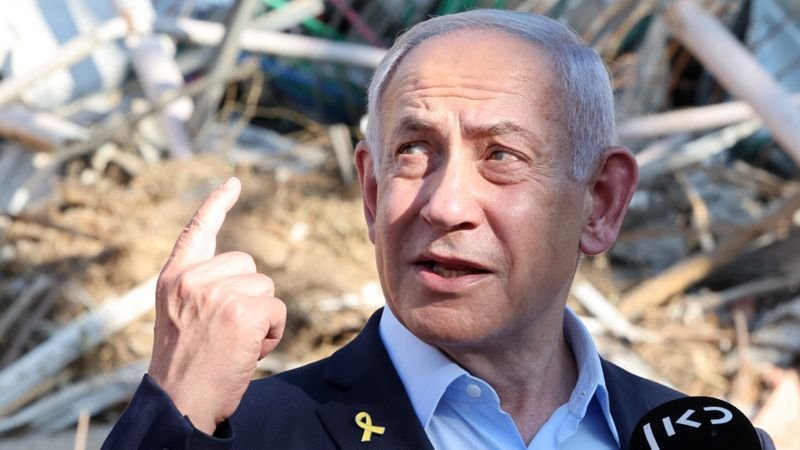
In February, Donald Trump signed an executive order cutting aid to South Africa and creating a refugee program for white South Africans, specifically Afrikaners. Citing “unjust racial discrimination,” Trump argued that Afrikaners—who make up roughly 4% of South Africa’s population—were in need of protection. The first group of these individuals arrived in the U.S. in May. For many, the image of white South Africans boarding U.S.-bound planes while refugees from conflict zones were being turned away was jarring.
2. A Community with a Complicated Past
Afrikaners, descendants of Dutch settlers and French Huguenots who arrived in the late 1600s, were central to the apartheid regime that began in 1948. This system oppressed the Black majority while protecting and enriching the white minority. Though apartheid officially ended in 1994, inequality in South Africa remains stark. According to the Review of Political Economy, white South Africans today still possess about 20 times the wealth of their Black counterparts.
II. Afrikaner Reactions: Mixed Emotions and Identity Struggles
1. Progressives Caught in the Crossfire
Not all Afrikaners welcomed Trump’s decision. For progressive white South Africans, especially those working toward national unity, the refugee label felt like a betrayal. Lindie Koorts, a historian at the University of Pretoria, expressed that being singled out in this way was deeply painful. She referred to the phrase “ons is nie almal so nie” (“we are not all like that”), used by liberal Afrikaners to distance themselves from conservative narratives while still embracing their cultural identity.
2. Cultural Preservation vs. Political Agendas
The right-wing Solidarity Movement, including the lobbying group AfriForum, has pushed hard for policies to protect Afrikaner culture. Their efforts include campaigning against educational reforms they believe threaten Afrikaans-language instruction. While the African National Congress (ANC) disputes such claims, these groups argue that their culture is endangered. Nonetheless, there’s limited polling data on Afrikaner political views, though the conservative Freedom Front Plus secured around 456,000 votes in South Africa’s 2024 national elections.
III. Voices from the Community
1. A Shift in Perspective
Emile Myburgh, a lawyer raised during apartheid, once believed Afrikaners were divinely chosen to lead southern Africa. Now an atheist, he feels alienated from the religiously conservative Afrikaner community. However, he disputes claims of cultural erasure, saying he regularly attends Afrikaans cultural events like book launches. “In my circles, Afrikaans is alive and thriving,” he said.
2. Young Afrikaners Embrace Change
Zahria van Niekerk, a 22-year-old fashion student, grew up bilingual to improve her access to university education. She sees no threat to Afrikaans, which is now spoken by a majority of non-white South Africans. “Everyone in my family speaks Afrikaans. That’s enough for me to keep it alive,” she noted.
3. Rethinking Rural Violence Narratives
Trump’s claim that white farmers are being targeted for their race was also met with skepticism. In the final quarter of 2024, only 12 farm murders were recorded among nearly 7,000 total killings, including incidents on Black-owned farms. Emil van Maltitz, a 21-year-old economics graduate and farmer’s son, said such violence is often misinterpreted. While acknowledging the dangers faced by farmers, he emphasized a lack of state protection rather than racial motives.
Van Maltitz, who speaks Afrikaans, Sesotho, and English, sees cooperation as the path forward. He recalled young Black farmers approaching his father for guidance—proof, he said, that collaboration benefits everyone. “I love diversity,” he added. “We need to work together.”
IV. Alternative Approaches to Unity
1. Building Bridges, Not Walls
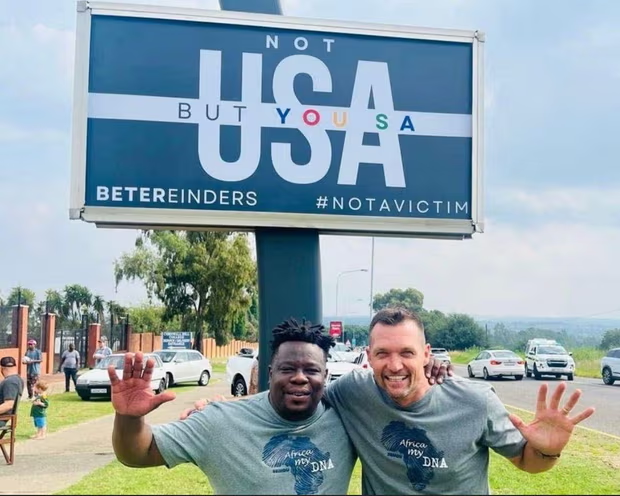
Schalk van Heerden, a minister in the Dutch Reformed Church, co-founded the group Betereinders in 2017 to encourage reconciliation. The organization regularly hosts “braais” (barbecues) in Black townships, bringing together up to 100 Afrikaners and 200 Black South Africans. The name “Betereinders” is a play on “bittereinders”—a term for Afrikaners who refused to surrender to the British after the Boer War—reframed to mean “those striving for a better ending.”
When Trump launched the Afrikaner refugee program, Betereinders responded with a bold message. The group placed billboards across Johannesburg and Pretoria that read, “Not USA. You, SA,” encouraging Afrikaners to invest in their homeland rather than flee it.
2. Acknowledging Privilege Without Denial
Van Heerden believes Afrikaners should be proud of their heritage—but not at the cost of denying reality. “We’re not the victims in this story,” he said. “We’re privileged. We’re grateful. And we need to stay and be part of building this country.”
Conclusion
Donald Trump’s refugee offer to white Afrikaners has reignited old tensions and exposed the fragile balancing act of race, privilege, and national identity in post-apartheid South Africa. While some Afrikaners view the initiative as a safeguard, others see it as an irresponsible attempt to rewrite history. South Africa is still grappling with its past, and efforts to foster inclusion and healing continue to face resistance from both ends of the political spectrum. Yet, as many Afrikaners like Van Heerden, Van Maltitz, and van Niekerk demonstrate, progress is possible when dialogue, mutual respect, and a shared commitment to the country take priority over division and escape.