





The Sahel region, a vast semi-arid stretch of land just south of the Sahara Desert, spans across several countries including Mali, Niger, Burkina Faso, Chad, and Mauritania. While historically rich in culture, trade, and resilience, today the Sahel has become a global symbol of fragility, insecurity, and persistent instability. Over the past decade, the region has witnessed a dangerous convergence of violent extremism, political upheaval, climate-induced challenges, and weak governance, creating one of the most complex and urgent crises in the world.

This essay explores the multiple, interconnected reasons why Sahel states are struggling to maintain security and stability, and assesses the implications for regional and global peace.
1. The Historical Context: Fragile Borders and Colonial Legacies
The foundations of instability in the Sahel lie partially in colonial-era borders that ignored ethnic, tribal, and linguistic realities. European colonial powers, particularly France and Britain, drew arbitrary lines that divided communities and forced rival groups to coexist under newly created national identities.
Post-independence governments inherited fragile institutions with limited legitimacy and struggled to establish strong central authority, especially in remote areas. This governance vacuum became fertile ground for rebellion, smuggling, and eventually, terrorism.
2. The Rise of Violent Extremism and Terrorist Networks
Since 2012, the Sahel has experienced a dramatic increase in jihadist violence. What began as an insurgency in northern Mali has metastasized across the region, driven by the rise of groups linked to Al-Qaeda and the Islamic State (ISIS).
a. Northern Mali Insurgency
In 2012, Tuareg rebels launched an uprising in Mali, soon hijacked by jihadist groups including Ansar Dine, Al-Qaeda in the Islamic Maghreb (AQIM), and MUJAO. French-led military intervention (Operation Serval) pushed them back, but the insurgents regrouped and spread.
b. ISIS and Al-Qaeda Rivalry
Two major terrorist alliances now operate in the Sahel:
-
Jama’at Nusrat al-Islam wal-Muslimin (JNIM), linked to Al-Qaeda, is active in Mali and Burkina Faso.
-
Islamic State in the Greater Sahara (ISGS), affiliated with ISIS, has expanded in the tri-border area between Mali, Niger, and Burkina Faso.
These groups exploit local grievances, recruit unemployed youth, and capitalize on the lack of government presence to control territory and levy taxes.
3. Weak State Institutions and Poor Governance
Governance failures lie at the heart of the Sahel’s security crisis. Many Sahelian states suffer from corruption, clientelism, and lack of state services, particularly in rural and peripheral regions.
a. Absence of State Authority
In large parts of Mali, Niger, and Burkina Faso, the state is either absent or represented by predatory officials and poorly equipped forces. Schools, clinics, and infrastructure are nonexistent, and justice systems are weak or corrupt, forcing people to seek protection from non-state actors, including jihadists.
b. Disillusionment and Legitimacy Crisis
Many citizens view their governments as distant, self-serving elites who have little interest in improving rural lives. This fuels support for extremist groups who present themselves as defenders of justice or providers of order, however brutal.
4. Coups, Political Instability, and Eroding Democracy
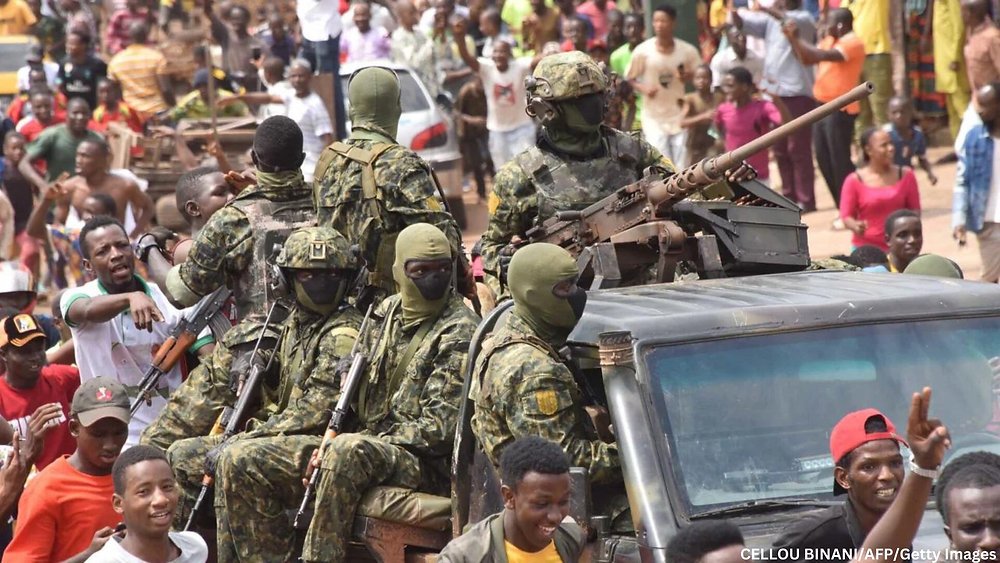
In recent years, the Sahel has experienced a wave of military coups, further destabilizing already fragile countries:
-
Mali (2020 and 2021)
-
Guinea (2021)
-
Burkina Faso (2022, twice)
-
Niger (2023)
These coups reflect growing frustration with civilian leadership’s inability to address insecurity. Military juntas often promise swift reforms but lack the capacity to govern effectively or build trust.
International actors, particularly ECOWAS and the African Union, have struggled to respond consistently. Sanctions and diplomatic pressure have been used, but with limited success.
The rise of military rule has also opened the door for authoritarian drift, suppression of dissent, and rejection of Western partners, complicating international cooperation.
5. Ethnic Tensions and Intercommunal Violence
The Sahel’s diverse ethnic makeup includes Fulani, Tuareg, Songhai, Mossi, Hausa, and many others. Jihadist groups have inflamed ethnic rivalries, often portraying themselves as defenders of marginalized groups.
a. Fulani Marginalization
The Fulani (or Peulh), a pastoralist group spread across West Africa, have often been accused of harboring jihadist sympathies, leading to retaliatory attacks by state-backed militias and community vigilantes. This cycle of violence fuels radicalization and deepens mistrust.
b. Local Conflicts Escalating
Resource competition—over land, water, and grazing areas—has intensified due to climate pressures. These disputes are increasingly politicized and militarized, turning local feuds into larger, deadly conflicts.
6. Climate Change and Environmental Degradation
The Sahel is on the front lines of climate change, with temperatures rising 1.5 times faster than the global average. Rainfall is increasingly erratic, droughts are more frequent, and desertification is advancing.
a. Livelihoods Under Threat
Millions of people in the Sahel depend on agriculture and livestock. As grazing lands shrink and harvests fail, food insecurity worsens, pushing youth toward migration, smuggling, or recruitment by armed groups.
b. Climate-Migration-Conflict Nexus
Climate stress contributes to forced displacement and competition over shrinking resources, which in turn fuel intercommunal violence and weaken state control. The link between climate and conflict is complex, but undeniable in the Sahel.
7. External Interventions and Their Limitations
Multiple international actors have engaged in the Sahel, but results have been mixed, at best.
a. France and Operation Barkhane
France, the former colonial power, deployed thousands of troops under Operation Barkhane to fight jihadists. While initially successful in preventing the fall of major cities, French forces have been accused of civilian casualties and a neocolonial agenda. Growing anti-French sentiment led to their expulsion from Mali, Burkina Faso, and Niger between 2022 and 2023.
b. UN Peacekeeping
The United Nations Multidimensional Integrated Stabilization Mission in Mali (MINUSMA) has struggled to operate effectively amid deteriorating security and political restrictions. It has also faced criticism for its inability to protect civilians.
c. Russia and Wagner Group
In a geopolitical shift, some Sahel states, particularly Mali, have turned to Russia and the Wagner mercenary group for security assistance. Wagner forces offer military support and regime protection but have been implicated in human rights abuses, including massacres of civilians. This pivot reflects the global competition for influence in Africa.
8. Humanitarian Crisis and Displacement
As violence spreads, so does humanitarian suffering. According to the UN Office for the Coordination of Humanitarian Affairs (OCHA):
-
Over 6 million people are internally displaced across the central Sahel.
-
More than 18 million need humanitarian assistance.
-
Attacks on schools and health facilities have deprived millions of basic services.
Aid delivery is increasingly difficult due to insecurity, bureaucratic hurdles, and targeting of humanitarian workers.
9. Regional and Global Implications
The Sahel’s instability poses a significant threat beyond its borders:
-
Migration flows toward North Africa and Europe are increasing.
-
Terrorist networks can use Sahelian territory to launch attacks or train fighters.
-
The region is becoming a strategic battleground for global powers, including the U.S., China, Russia, and Turkey.
-
Drug and arms trafficking from the Sahel is affecting coastal West Africa and Europe.
Without coordinated and sustained intervention, the crisis risks becoming protracted and irreversible.
10. Toward Solutions: What Needs to Change?
There is no single solution to the Sahel’s crisis. But a multidimensional, inclusive, and locally-led approach is essential.
a. Governance Reform and Local Inclusion
Rebuilding trust between governments and citizens is crucial. This means decentralizing power, investing in basic services, fighting corruption, and including marginalized communities in decision-making.
b. Security Sector Reform
Security forces must be better trained, disciplined, and accountable. Military action alone cannot defeat insurgencies—protecting civilians and building community trust are equally important.
c. Regional Cooperation
Sahelian states need to cooperate more effectively across borders, share intelligence, and align strategies. The G5 Sahel (now weakened by Mali’s withdrawal) could be revived or replaced with a more effective regional body.
d. Climate Adaptation and Economic Development
Investing in climate-resilient agriculture, water management, and green jobs can help reduce vulnerability. Programs like the Great Green Wall aim to combat desertification and restore degraded land.
e. International Support, Not Interference
Foreign partners must shift from military-first strategies to long-term development, diplomacy, and governance support. Aid must be aligned with local needs and managed transparently. Military partnerships must respect sovereignty and human rights.
Conclusion
The struggle for security and stability in the Sahel is among the most urgent challenges of our time. It is not simply a military problem, nor solely a governance issue—it is a complex intersection of historical injustice, environmental stress, socioeconomic marginalization, and global competition.
As jihadist groups expand, states collapse, and communities suffer, the Sahel could either descend into chaos or become a testing ground for innovative solutions rooted in justice, resilience, and cooperation. The stakes are not only regional—they are global.
The international community must recognize that a secure and stable Sahel is essential not just for Africa, but for the future of global peace and development.